
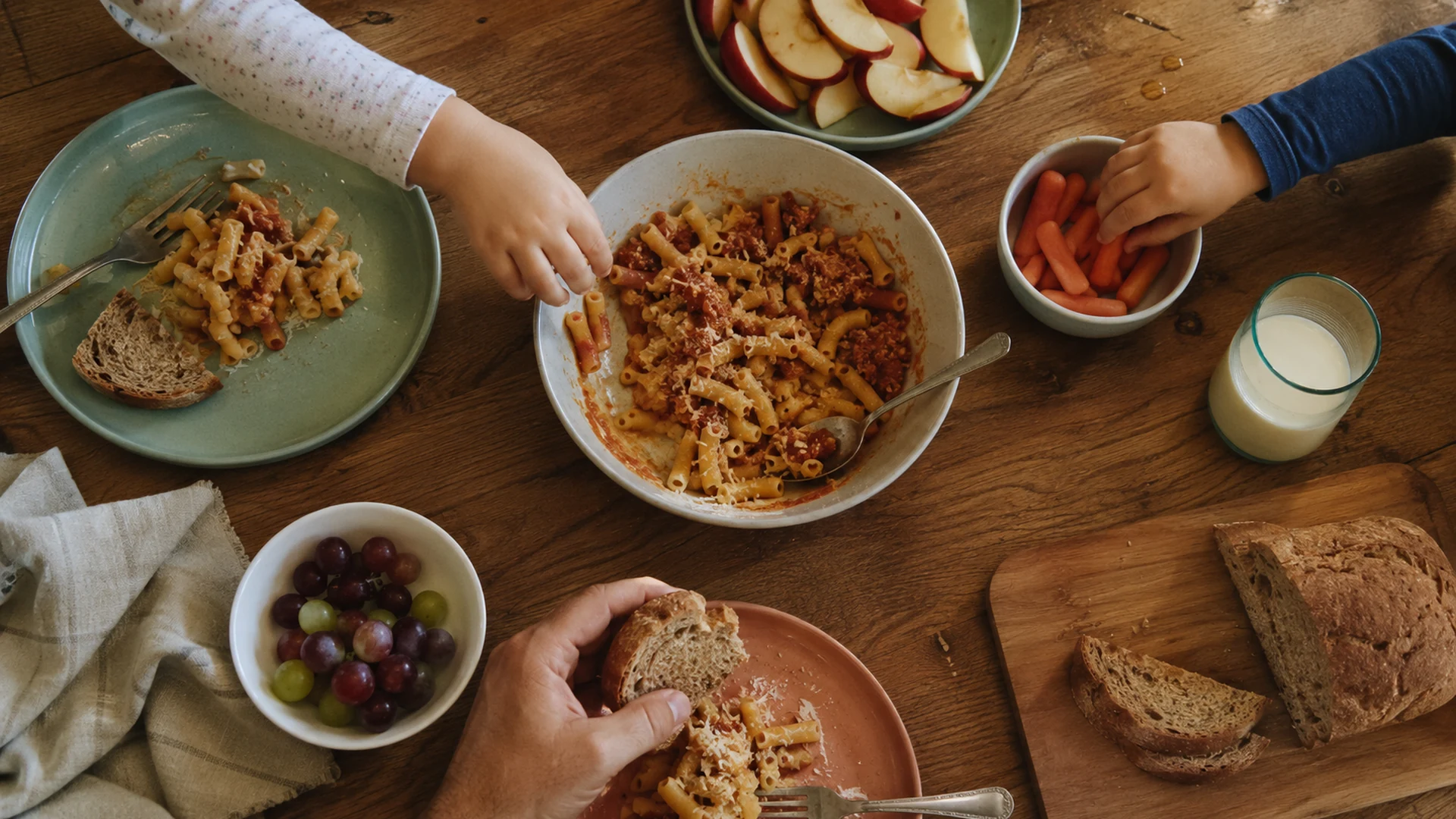
I had plenty of nutrition facts and no system for using them together. Hidden sugar, omega-3s, vegetables, protein, picky eating — each topic made sense on its own, but none of it answered the everyday question: what does “good enough” family nutrition actually look like across a week?
So I went back to the framework level: the 2025–2030 Dietary Guidelines for Americans, AAP recommendations, and a feeding model that makes the adult’s job at the table much clearer. This guide turns those pieces into one practical family nutrition system — built for ordinary meals, uneven appetites, picky phases, and kids who have opinions about dinner.
Table of Contents
- The Framework That Makes Dinner Less of a Negotiation
- What a Balanced Diet for Children Actually Means — Practically
- What a Real Day of Eating Looks Like
- Weekly Nutrition Coverage Checker
- Nutrition for Kids Ages 2 to 12: What Actually Changes
- The 5 Nutrients Worth Actually Knowing About
- The Picky Eater Reality (What Actually Works)
- What to Limit — Without Obsessing
- Kids Nutrition Tips That Actually Work in Real Life
- A Weekly Rhythm That Reduces Decisions
- Explore the Family Nutrition Guides
- Frequently Asked Questions
The Framework That Makes Dinner Less of a Negotiation
Before I get into what kids should eat, I want to tell you about something feeding expert Ellyn Satter developed decades ago that most general nutrition guides still don’t mention: the Division of Responsibility.
The idea is simple but it felt like a revelation when I first read it. In a healthy feeding relationship, parents decide what food is offered, when, and where. Kids decide whether to eat it and how much. That’s the whole thing.
It sounds obvious. And it is almost never what actually happens at the dinner table, because the second a kid starts refusing something, the natural parental instinct is to negotiate, cajole, bribe, or give up and make the plain pasta they’ll definitely eat.
Dinner can turn into a negotiation fast: one child wants plain crackers, another wants a different meal, and the adult at the table is trying to solve everyone’s appetite at once. By the end, the original dinner has become three separate meals and everybody is more stressed than when they started.
The problem in that pattern isn’t necessarily the food. It’s the adult taking on both roles: deciding what to offer and trying to control whether and how much a child eats. Children’s appetites naturally vary from meal to meal and day to day; the useful adult job is to offer appropriate foods and portions, then let the child decide how much to eat. The AAP’s guidance on portions and hunger cues makes that division much clearer.
The practical version is deliberately boring: make the meal, put it on the table, include at least one familiar food alongside anything new, and stop turning bites into a negotiation. The adult controls what, when, and where. The child controls whether and how much. That’s it.
The goal isn’t to make a child love everything. It’s to stop making each meal a test they have to pass. Variety can build gradually without somebody needing to “win” dinner by bedtime.
I’m putting this first because no nutrient list in any kids’ nutrition guide helps if you’re fighting over every meal. The framework is the foundation.
What a Balanced Diet for Children Actually Means — Practically
The USDA’s MyPlate model — half the plate fruits and vegetables, a quarter protein, a quarter grains, with dairy: a reasonable visual. But it describes an ideal plate, not a real Tuesday dinner with a 5-year-old who doesn’t like “green things touching anything.” Most family nutrition guides for kids describe the ideal; what actually helps is a working definition of “good enough.”
Here’s how I think about it instead. Balance isn’t per-meal — it’s across the week. If a single dinner is mostly pasta and some carrots they actually ate, that’s fine. What matters is whether the week as a whole covers the food groups, not whether every individual plate is perfect.
Three principles I would keep:
1. Build meals around a protein, a carb, and something colourful. You don’t need five food groups at every meal. If you consistently hit those three, you’re covering a lot of ground. The colourful thing rotates. Some weeks it’s cucumber, some weeks it’s sweet potato, some weeks it’s the blueberries they’ll eat in the car but not at the table. Fine.
2. Variety over weeks, not perfection at meals. The goal is exposure and rotation across time. One meal falling outside the usual pattern doesn’t hurt kids nutritionally. A balanced diet for children is measured across weeks and months, not individual plates. What hurts is a years-long rut with almost no variation. Keep rotating, keep offering, don’t track whether they ate it today.
3. Healthy eating for kids runs on habits, not rules. A child who grows up sitting down to real food most evenings, even imperfect real food, is building a different relationship with eating than a child whose family routinely defaults to ultra-processed convenience food. The habits matter more than any specific meal.
What a Real Day of Eating Looks Like
This is the section I always want when I read nutrition guides and never get: what does a normal day actually look like? Not the aspirational version — the realistic one.
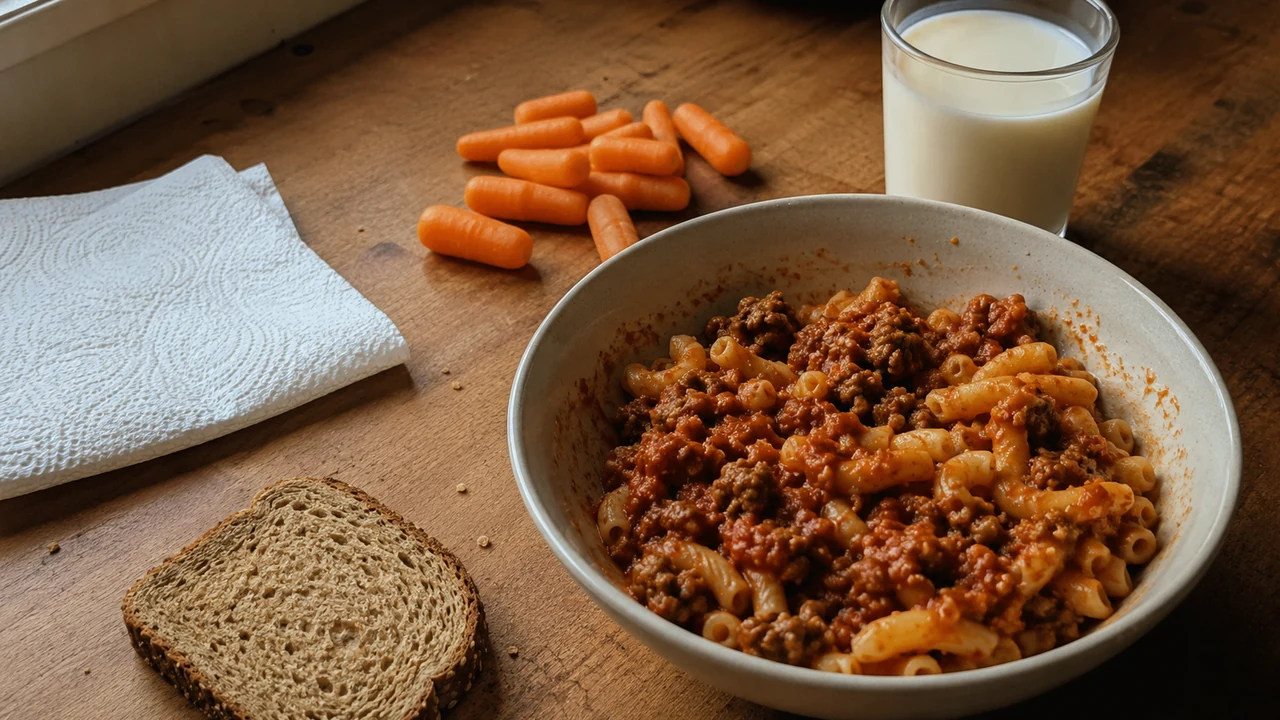
| Meal | On a good day | “It’s just a day” fallback |
|---|---|---|
| Breakfast | Scrambled eggs + whole wheat toast + fruit (banana or berries) | Whole grain cereal (under 6g added sugar/serving) + milk + whatever fruit they’ll actually eat |
| Morning snack | Apple slices + almond butter | Crackers + cheese |
| Lunch | Whole grain wrap with turkey, cheese, cucumber; fruit on the side | PB&J on whole grain + milk + baby carrots |
| Afternoon snack | Cheese + grapes or sliced veggies | Whatever’s in the snack drawer with under 6g added sugar |
| Dinner | Salmon or chicken + roasted sweet potato + broccoli (eaten by one kid, refused by the other) | Pasta with ground turkey meat sauce + any vegetable + a glass of milk |
Notice what the fallback days have in common: real food, minimal added sugar, protein and carbs at every meal, and something that at least resembles a fruit or vegetable. That’s the actual standard. Not perfect. Just consistently in the right zone.
Weekly Nutrition Coverage Checker
Not sure whether your kid’s week was good enough? Select the food groups they had at least three times to get a realistic weekly picture.
Protein sources
Vegetables
Fruit
Whole grains
Calcium source
Healthy fats
Your week at a glance
Choose the food groups that genuinely showed up about three times this week. This is a pattern check, not a grade.
Nutrition for Kids Ages 2 to 12: What Actually Changes
One frustration I have with most family nutrition guides: they treat “kids” as one category from toddler to pre-teen. But nutrition for kids ages 2 to 12 covers genuinely different needs as children grow — calorie requirements, portion sizes, and which nutrients matter most all shift. Here’s what the 2025–2030 Dietary Guidelines and AAP guidance actually show:
| Age range | Daily calorie range* | Key nutrition focus | What’s different at this stage |
|---|---|---|---|
| Ages 2–3 | 1,000–1,400 cal | Iron, calcium, vitamin D, healthy fats | Transition from baby food is complete. Still need whole milk (or equivalent) for fat and brain development. Portions are tiny — about one tablespoon per year of age. Expect huge day-to-day appetite variation; that’s normal. |
| Ages 4–8 | About 1,200–2,000 cal | Iron, calcium, vitamin D, fiber, protein | Growth is steady, not explosive. School introduces new food contexts. Picky eating often peaks here — this is where the Division of Responsibility matters most. Iron is critical for attention and cognitive function at this age. |
| Ages 9–12 | About 1,400–2,600 cal | Calcium, vitamin D, iron (especially girls), protein | Pre-puberty growth acceleration begins for many kids. This is a peak bone-building window — calcium and vitamin D requirements increase. Kids this age are also forming more independent food choices, so habits established earlier pay off here. |
*Broad orientation ranges, not daily targets. Federal energy tables vary by age, sex, and activity, and the current Dietary Guidelines also stress that calorie needs depend on age, sex, height, weight, and physical activity. Growth pattern and your pediatrician’s guidance matter more than hitting a number.
One significant 2025–2030 update: the guidance recommends no added sugar for children younger than 11. For adolescents and adults, it says no amount of added sugar is recommended or considered part of a healthy diet and advises no more than 10 grams in one meal. That is stricter than treating every child from age 2 onward as if the same daily budget applies.
The 5 Nutrients Worth Actually Knowing About
I’m not going to list every vitamin and mineral a child needs. That list is long, mostly covered by eating varied real food, and not useful for daily decisions. These five are worth understanding because families commonly have questions about their food sources or whether supplements are needed. Iron is a good example: fatigue or attention changes can have many causes, so symptoms alone cannot diagnose a deficiency. The iron-deficiency guide for children explains what can raise concern and why testing belongs with a clinician.
| Nutrient | Why it matters | Best food sources | Supplement note |
|---|---|---|---|
| Iron | Iron supports growth, development, and oxygen transport. Deficiency can contribute to fatigue and cognitive effects, but those signs are nonspecific. The AAP’s updated iron guidance explains the age- and risk-based approach. If focus and learning are a concern in your house, the brain development foods guide covers the broader food picture. | Red meat, dark poultry, beans, lentils, fortified cereals, spinach (pair with vitamin C to boost absorption) | Ask your pediatrician before supplementing. Universal screening is recommended around 12 months; later testing depends on age, symptoms, diet, and risk factors rather than happening at every routine visit. |
| Calcium | Bone density is built primarily in childhood and adolescence. The calcium a child banks between ages 4–12 matters for bone health decades later. | Dairy (milk, yogurt, cheese), fortified plant milks, sardines, broccoli, leafy greens | Dairy foods can contribute substantial calcium. If the diet is dairy-free, check the actual plant-beverage label for calcium and vitamin D because fortification varies by product. |
| Vitamin D | Works alongside calcium for bone development and has other roles throughout the body. Few foods naturally contain much vitamin D, so fortified foods are important sources. | Fatty fish, fortified milk and OJ, egg yolks, sunlight | The AAP lists 400 IU/day for infants under 1 and 600 IU/day for children over 1. Ask your pediatrician how food, fortified milk or formula, and any supplement fit together for your child. |
| Omega-3 (DHA/EPA) | DHA is linked to brain development and cognitive function. The research here is genuinely mixed — I’ve read studies pointing both ways on whether supplementation moves the needle beyond dietary intake. What the evidence does support clearly is that getting adequate omega-3 from food is worth prioritising. | Fatty fish provide DHA and EPA; walnuts, flaxseed, chia seeds, and some plant oils provide ALA, which the body converts to DHA/EPA only in small amounts. See the NIH omega-3 food-source guide. | If your kid won’t eat fish, an algae-based omega-3 is worth considering. The omega-3 for kids guide covers what the research actually supports versus what supplement marketing overstates. |
| Fiber | Supports digestion and helps prevent constipation. Many children do not get enough, especially when fruits, vegetables, beans, and whole grains are limited. | Fruits, vegetables, whole grains, beans, lentils, oats | Start with food: fruits, vegetables, beans, and whole grains. Persistent constipation or a very restricted diet is worth discussing with a pediatrician rather than self-prescribing a fiber supplement. |
One note from the 2025–2030 guidelines worth flagging: the new edition is more direct about prioritising protein foods at every meal. The “protein + carb + colour” framework already captures that in practice without turning dinner into a calculation. And if you’re wondering whether any of these nutrients warrant a supplement, the best vitamins for kids guide breaks down what’s genuinely worth buying versus what’s expensive gummies with marginal benefit.
The Picky Eater Reality (What Actually Works)
Hiding vegetables can solve one narrow problem — getting a vegetable into a familiar food — without solving the bigger one of helping a child become familiar with vegetables themselves. Blended spinach in a sauce can be a perfectly useful cooking technique; it just shouldn’t be the only way the food ever appears.
No family nutrition guide for kids is complete without a real answer to picky eating. Here’s the part of the research that translates most cleanly into everyday meals:
Repeated low-pressure exposure can help — but “low-pressure” is doing a lot of work in that sentence. The AAP’s picky-eating guidance recommends continuing to offer rejected foods while letting children choose what and how much to eat from what’s served. If you’re visibly anxious every time the food appears, or you say “just try one bite” in a way that means more than it says, the pressure is still there.
Texture can matter as much as taste for a picky eater. If a child refuses a vegetable, try changing the preparation before concluding they hate the food itself. A roasted carrot and a soft boiled carrot can feel like almost different foods. Work with the texture rather than treating one rejection as a permanent verdict.
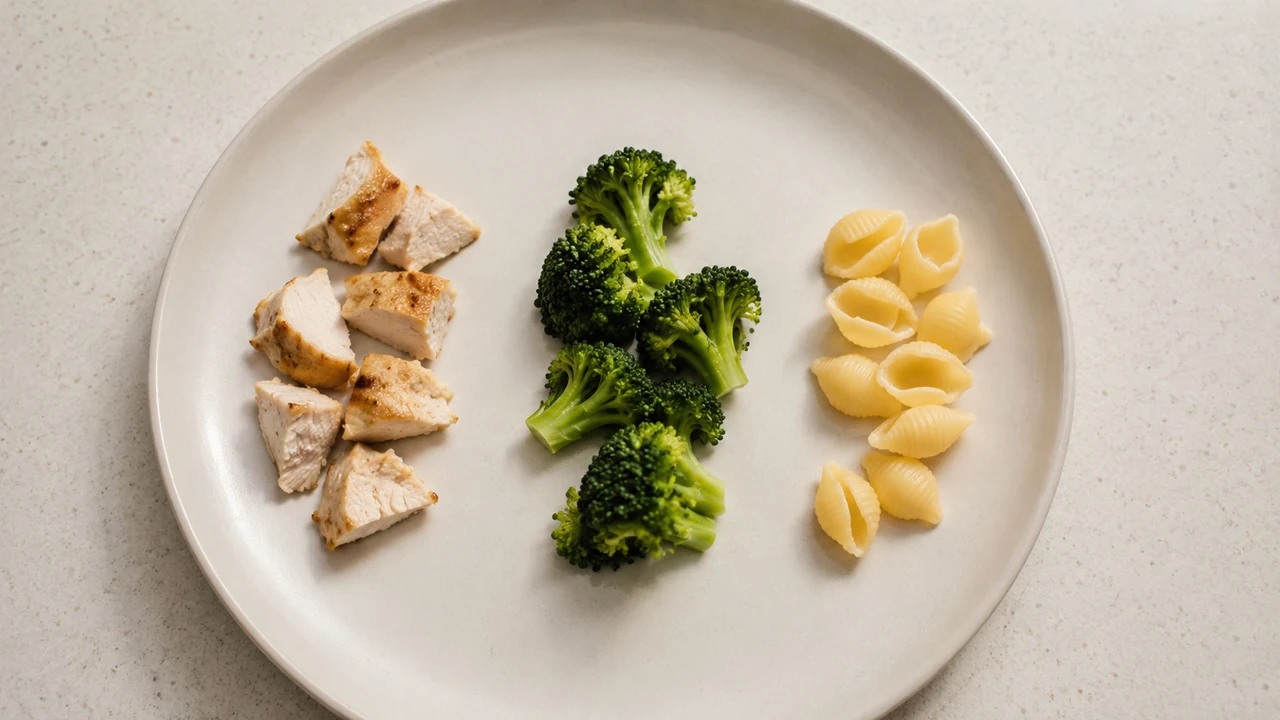
Deconstructed plates help. Keep components separate. Sauce on the side. This removes a surprising amount of resistance at no nutritional cost.
Involve kids in decisions within your structure. Not “what do you want for dinner?” but “we’re having chicken tonight — do you want roasted sweet potato or corn?” Two options, both yours. They choose. They feel heard. They’re slightly more likely to eat it.
The goal is good enough across the week, not a clean plate at every meal. Look for variety across time, steady growth, and whether whole food groups are disappearing for long stretches—not a made-up percentage of each plate. If the range keeps narrowing, growth changes, or eating causes significant distress, that is the point to involve your pediatrician or a pediatric dietitian rather than pushing harder at dinner.
What to Limit — Without Obsessing
The 2025–2030 Dietary Guidelines are more direct than previous editions about two categories worth actively limiting: added sugars and ultra-processed foods.
On added sugar: the 2025–2030 Dietary Guidelines avoid one simple daily budget. They recommend no added sugar for children younger than 11; for adolescents and adults, no amount is considered part of a healthy diet and one meal should contain no more than 10 grams. Separately, the AHA’s 25-gram daily ceiling for ages 2–18 remains a useful comparison benchmark. My guide on how much sugar kids should have per day explains how those two frameworks fit together. The hidden sugars post shows where added sugar appears on labels.
On highly processed foods: the current guidelines recommend reducing packaged foods high in refined carbohydrates, added sugars, sodium, and unhealthy fats while prioritising nutrient-dense meals. I don’t treat every packaged food as forbidden; the practical goal is to stop the least useful options from becoming the automatic daily default.
On plant milks: they are not nutritionally interchangeable. The AAP’s comparison of cow’s-milk alternatives notes that many provide less protein or fewer calories than cow’s milk, while calcium and vitamin D vary by product and fortification. Some sweetened versions also add sugar. Read the current label rather than relying on the front of the carton or an old brand comparison.
If added sugar is the part of this family-nutrition framework you want to audit first, start with the packages that repeat most often. The checklist below gives you a simple way to compare them without turning the whole pantry into a project.
Use the Hidden Sugar Checklist for the Foods You Buy Most
Inside: the 30-second label check, current label examples, common added-sugar names, practical swaps, and fridge-and-shop checklists.
Get the checklist and practical kids’ nutrition tips. Unsubscribe anytime.
Something went wrong. Please check your email address and try again.
Kids Nutrition Tips That Actually Work in Real Life
These are the kids nutrition tips I think are worth keeping, not because they’re clever, but because they reduce decisions rather than add them.
- Have a fallback food at every dinner. One thing you know they’ll eat: bread, plain rice, whatever. This isn’t short-order cooking if it’s already on the table for everyone. Fair warning: a child may choose only the familiar fallback for a while. That can be frustrating, but it does not mean the structure failed; keep the rest of the meal available without turning dinner into a pressure test.
- Stock the snack drawer deliberately. What’s in easy reach is what gets eaten. If the default options are reasonably good (crackers, cheese, fruit, plain yogurt), the snack situation mostly manages itself.
- Breakfast is a useful nutritional window. It is a predictable chance to combine a protein food, a grain, and fruit before the day gets chaotic. The 20 breakfast ideas post has options that work for picky eaters.
- Make water the default drink. Milk with meals, water otherwise. The AAP recommends limiting even 100% juice because whole fruit provides fiber and other nutrients that juice lacks; its healthy hydration guide gives age-specific limits. Having a bottle they actually like carrying around helps — the kids’ water bottles guide has the leak-proof picks that survive a backpack.
- Don’t use food as reward or punishment. “Eat your broccoli and you get dessert” teaches kids that broccoli is the obstacle and dessert is the prize. Over time this creates exactly the dynamic you don’t want.
A Weekly Rhythm That Reduces Decisions
This doesn’t need to be a rigid meal plan. A repeatable weekly structure is enough to stop dinner from becoming a brand-new decision every night. Think of it as the operational side of a family nutrition guide: fewer decisions, more autopilot.
- Two or three anchor dinners that are familiar, flexible, and realistic in under 30 minutes — pasta with meat sauce, sheet-pan chicken with a rotating vegetable, tacos, or whatever fills that role for your family. New meals can rotate around that stable baseline.
- One new meal per week. Usually a new protein preparation or vegetable, not a whole new cuisine. A new sauce on the same chicken is a much smaller ask than introducing an unfamiliar dish. Low pressure. If they eat it, great.
- A predictable snack rotation. Keep a short list of staples — cheese, fruit, crackers, plain yogurt, nut or seed butter where appropriate — so every snack doesn’t require a new decision. Consistent options make the week easier without turning food into a negotiation.
- A loose meal rhythm. Breakfast, school snack, lunch, afternoon snack, dinner — reasonably predictable timing can help children arrive at meals hungry without being ravenous.
That’s it. No colour-coded spreadsheet. A structure that runs mostly on autopilot once it’s set up. If the planning itself is the part that keeps breaking down, the family meal-planning apps guide compares simple ways to get the week’s decisions out of your head.
Explore the Family Nutrition Guides
The sections above give you the working framework. These focused guides are here when one part of the week needs a closer look.
- Best Vitamins for Kids — what’s worth buying, what the research actually says about multivitamins
- 12 Foods That Support Kids’ Brain Development — the nutrients and foods that matter most for focus
- Omega-3 for Kids: Do They Need It? — the research, the options, how to get it from food if your kid won’t touch fish
- 20 Healthy Breakfast Ideas for Kids — practical, lower-sugar ideas organized by prep time
- Best Kids’ Water Bottles — BPA-free, leak-proof picks that actually make kids want to drink more water
- Meal Planning for Families — apps and systems that make the weekly rhythm easier to maintain
- Signs of Iron Deficiency in Children — what can raise concern, what cannot diagnose it, and when to ask about testing
Frequently Asked Questions
Conclusion
You’re probably closer to doing this right than you think. “Good enough” is not a consolation prize — it’s the actual goal. A child who eats mostly real food across varied food groups most days, with occasional pizza and birthday party cake, is a child who is nutritionally well-served. This family nutrition guide for kids is built around that standard: not perfection, but a repeatable system that makes healthy eating for kids the default instead of another thing to manage. The cluster posts above are there when you’re ready to go deeper on any specific topic.
Nothing on this site is medical advice. I research pediatric nutrition guidance carefully, but I’m not a doctor or dietitian. Your child’s pediatrician knows their specific health and growth context; check with them before major dietary changes or supplementation.