
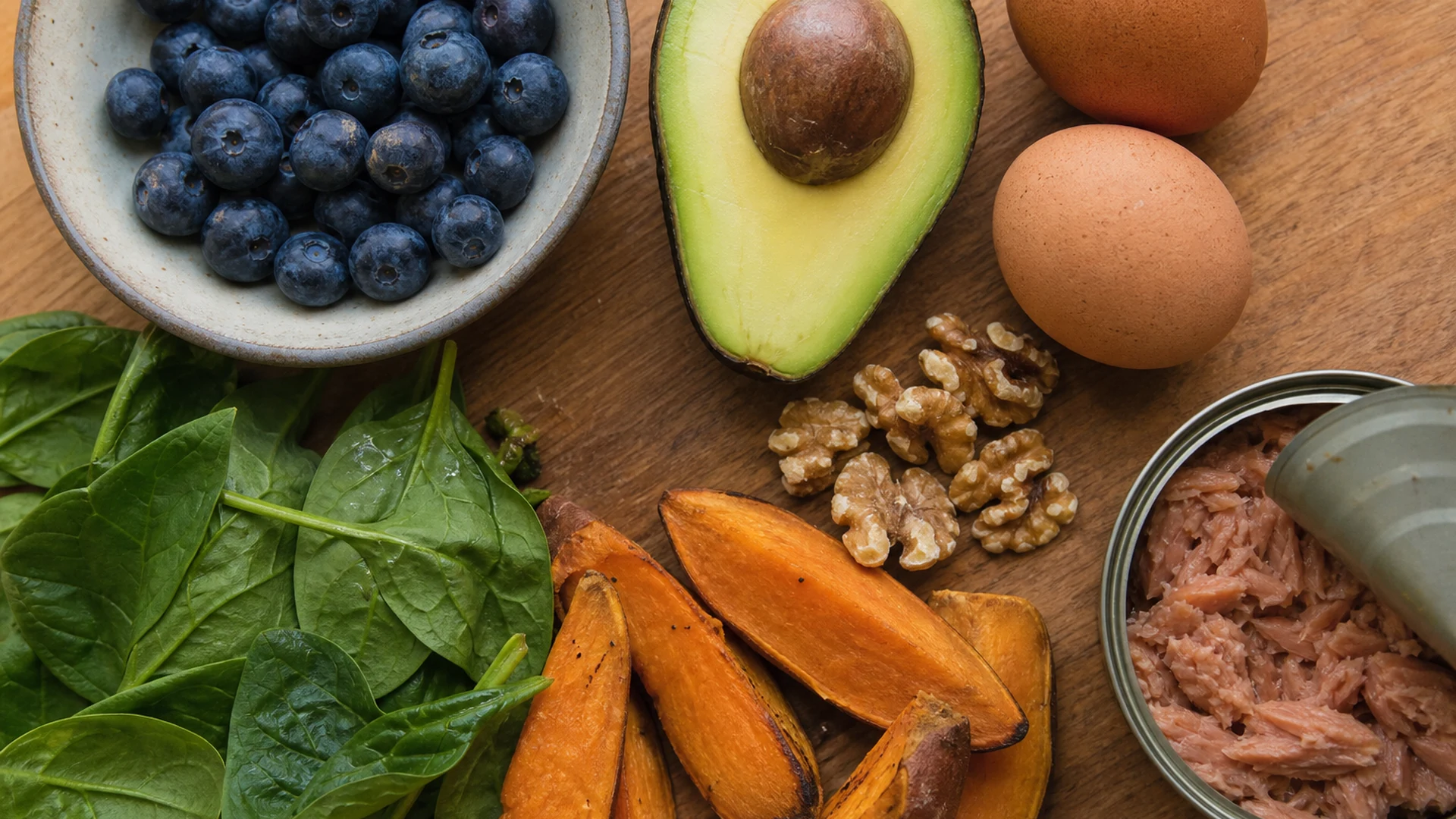
If focus is the concern, the internet gives you far too many “brain food” promises and not enough distinction between correcting a deficiency and “optimizing” an already well-nourished child. There’s a lot of noise around foods that boost brain development in kids; the useful part is figuring out where the evidence is actually strong.
When I went through the studies, the answer was more nuanced than the marketing: specific nutrients do matter for brain development, but the biggest effects often show up when a real deficiency or dietary gap is being corrected. The magic-food promises are mostly ahead of what the evidence supports.
This article is what I wish I’d had then. Not a list of 15 superfoods with vague “may help” claims — a grounded, honest look at what research says about brain foods for kids, what it doesn’t prove, and what you can realistically do this week. For a broader look at the nutrients behind all of this, see my complete family nutrition guide for kids.
Table of Contents
- What “Brain Development” Means Nutritionally
- A Note on the Research (Read This First)
- Brain Structure Foods (1–3)
- Oxygen & Energy Foods (4–6)
- Steady Focus Foods (7–9)
- Protection & Signalling Foods (10–12)
- The Non-Fish Omega-3 Path
- What’s Your Child’s Biggest Nutrition Gap?
- The Bigger Picture: Pattern Over Single Foods
- If You Only Do 3 Things This Week
- What to Limit (Without the Alarmism)
- When to Talk to Your Pediatrician
- Frequently Asked Questions
What “Brain Development” Means Nutritionally
When researchers talk about diet and kids’ brain development, they’re looking at a few specific biological processes. Myelination is the insulation of nerve fibers, coating the wires so signals travel faster and more reliably. Neurotransmitter synthesis is the production of signalling chemicals like dopamine, serotonin, and acetylcholine that regulate mood, focus, and memory. And neuroinflammation, meaning chronic low-grade inflammation, can impair how well both of those systems work.
These aren’t abstract. They’re happening actively during childhood, and certain nutrients play direct roles in each of them. No single food handles all three at once, and no food replaces a pediatrician’s assessment if something seems genuinely off. But diet quality does matter in ways that are measurable. The research has gotten specific enough to be actually useful.
A Note on the Research (Read This First)
Before the food list, one distinction that almost every other article skips — and it’ll change how you read everything that follows.
Most of the strongest evidence in this area is about correcting a deficiency, not supercharging an already well-nourished child. A child who’s low in iron and gets adequate iron starts performing better on attention tasks. A child barely getting any omega-3s who starts eating more fatty fish shows measurable reading improvements. That’s real. But giving extra omega-3 supplements to a child who already has plenty? The research is much thinner on that.
This matters for how you read food lists. When an article says “salmon boosts brain development,” what the underlying study often found is: “children with low omega-3 intake who ate more fatty fish showed improvements.” Meaningful — but not the same claim. I’ve flagged this distinction for each food below, rating each one Strong, Moderate, or Emerging based on the actual evidence. For a solid reference on what pediatric nutrition guidelines actually recommend, the American Academy of Pediatrics’ nutrition guidance is the clearest starting point.
How to read the evidence ratings: I use three labels below. Strong means multiple well-designed trials in children back the claim. Moderate means the mechanism is solid but the child-specific trial data is thinner. Emerging means the early results are promising but it’s too soon to call it settled. These are guardrails against overclaiming, not a ranking of importance.
The 12 foods below are grouped by the brain process they support — myelination, oxygen delivery, steady focus, or protection against neuroinflammation — rather than a random list. Each includes the evidence strength based on actual systematic reviews and RCTs. Most articles skip this part. It’s what makes the difference between “maybe try blueberries” and a plan that actually fits your family.
One more thing worth saying upfront: early childhood (roughly 0–5 years) is the period of fastest brain growth — the highest-sensitivity window. But brain development continues throughout childhood and into the teen years. If your child is 8 or 10 and you’re only now reading about this, you haven’t missed the window. The brain remains plastic and responsive to nutrition across all of childhood. Starting now still matters.
Group 1: Brain Structure — Building the Foundation
These foods supply the fats and compounds that literally become part of your child’s brain cell membranes and nerve insulation.
1. Salmon and Fatty Fish Strong evidence
Key nutrient: DHA (docosahexaenoic acid) — an omega-3 fatty acid that makes up a significant portion of the brain’s grey matter and drives myelination.
The DOLAB study from Oxford University gave DHA supplements to 362 underperforming school-age readers and found significant improvements in reading and behaviour scores versus placebo — one of the more rigorous trials in this space. A 2022 systematic review of 12 RCTs found that fatty fish meals (salmon or herring 3 times a week for 4 months) improved full-scale IQ and processing speed in preschoolers, including in well-nourished kids. This is among the strongest diet-cognition findings in pediatric nutrition.
Fatty fish is one of the most direct food sources of preformed DHA and EPA. There is no single U.S. DHA target for school-age children that lets me say one 3-oz salmon serving ‘covers’ everyone, so I would focus on regular age-appropriate seafood intake rather than a made-up weekly quota. If fish is off the table, see the non-fish omega-3 alternatives section below; algae-derived DHA is a direct non-fish source.
2. Eggs Strong evidence
Key nutrients: Choline and lutein. Choline is essential for producing acetylcholine (the neurotransmitter involved in memory and learning) and for myelination. Most children fall below adequate intake levels according to national dietary data (NHANES). The egg yolk is where both choline and lutein concentrate, so whole eggs matter here, not just whites.
Eggs are the richest dietary source of choline by a wide margin, and studies consistently link adequate choline to processing speed and memory. One egg a day covers a significant chunk of a child’s daily choline needs. Scrambled, in fried rice, in egg muffin cups — eggs are among the most picky-eater-friendly foods on this list. If there’s an egg allergy, legumes (lentils, chickpeas) provide choline as a secondary source, though less concentrated.
3. Walnuts Moderate evidence
Key nutrient: ALA (alpha-linolenic acid) — a plant-based omega-3. The honest catch: conversion of ALA to the longer-chain omega-3s EPA and DHA is limited, and the exact conversion varies; NIH describes it as very limited rather than giving one child-specific percentage. Walnuts are worth including, but they’re a supporting player, not a substitute for fish or algal oil. Don’t count on them as your main DHA source. A small handful chopped into oatmeal or banana bread is a reasonable addition — easy to sneak in. Walnuts also contain polyphenols that appear to support brain health in observational research.
Group 2: Oxygen and Energy — Keeping the Brain Fuelled
The brain depends on adequate oxygen and energy, but a food list cannot micromanage those systems meal by meal. The strongest nutrition point in this group is preventing or correcting real nutrient gaps — especially iron deficiency — while building an overall balanced diet.
4. Lentils and Beans Strong evidence
Key nutrients: Iron, folate, plant protein. Iron is one of the clearest diet-cognition links in pediatric research. A meta-analysis of 12 studies covering 7,607 children found iron deficiency tied to measurably lower IQ scores, worse visual processing, and poorer short-term memory. Even non-anaemic iron deficiency has cognitive effects. The WHO estimates iron deficiency affects roughly 40% of children globally — in the US, the CDC puts the figure closer to 7–14% for toddlers and young children, lower but far from rare.
Red lentils in soup or dal, black beans in tacos, chickpeas roasted as a snack. Plant-based iron (non-heme iron) absorbs better when eaten with vitamin C: tomato, bell pepper, or a small glass of OJ alongside helps. If your family already eats dal, rajma, or other legume-based dishes regularly, your kids’ iron intake from this source may already be solid.
5. Lean Meat and Poultry Strong evidence
Key nutrients: Heme iron (more bioavailable than plant-based iron), zinc, B12. Zinc supports neurotransmitter function and has been linked to attention in multiple studies. B12 is essential for myelination — deficiency causes measurable neurological effects and is a real concern in plant-heavy households. If a child eats no animal products, a reliable B12 source is essential. Because unfortified plant foods do not naturally provide B12, that usually means fortified foods and/or a supplement planned to reliably meet the need.
Ground turkey in pasta sauce, chicken strips as a dip vehicle, or thinly sliced deli turkey on sandwiches all count — the key is consistent frequency, not large portions. Even small amounts of heme iron daily add up faster than an occasional steak.
6. Leafy Greens Moderate evidence
Key nutrients: Iron, folate, iodine (in some greens), vitamin K. Iodine is the underappreciated one. It’s critical for thyroid hormone production, which drives myelination, and mild iodine deficiency has been linked to lower IQ scores in several observational studies — more common in inland areas away from coastal seafood diets. Spinach blended into smoothies is invisible and taste-neutral. Frozen works as well as fresh. If your family uses non-iodised sea salt and eats little dairy, mention it to your pediatrician.
Group 3: Steady Focus — Supporting Attention Through the Day
These foods make it easier to build a substantial meal with fiber, protein, and micronutrients. If you’re looking at foods that boost brain development in kids, I would frame this group around meal quality and satiety rather than promise that ‘stable blood glucose’ is a direct attention lever.
7. Oats Moderate evidence
Key nutrients: Complex carbohydrates, soluble fibre (beta-glucan), B vitamins. School-based studies consistently show that breakfast quality affects morning cognitive performance. Breakfast quality can matter for satiety and overall nutrient intake, but I would not reduce school-day attention to a universal sugar spike-and-crash story. Oats have been tested in some short trials with positive effects on memory and attention in children — the direct RCT evidence in kids specifically is thinner than the mechanism research would suggest, so I’d call this moderate. Adding protein or fat (peanut butter, Greek yogurt, nuts) alongside oats is the real win. Not the oats alone.
8. Greek Yogurt Moderate evidence
Key nutrients: Protein, iodine, probiotics. Dairy is a significant iodine source, worth knowing if you’re tracking that gap. The gut-brain connection (the link between gut microbiome health and brain function) is a growing research area, though the direct evidence in children specifically is still developing, so I’d file this as moderate for now, not settled science. Plain Greek yogurt with fruit or a measured amount of honey gives you more control over added sugar than many flavored versions; the tang and texture are the practical trade-offs.
9. Sweet Potato Moderate evidence
Key nutrients: Beta-carotene (converts to vitamin A), complex carbohydrates, B6. Vitamin A deficiency is linked to impaired cognitive development — less of a concern in well-nourished populations, but the relationship is real and well-documented in global health research. One medium sweet potato covers a child’s full daily vitamin A needs comfortably. It’s also one of the foods many picky eaters will actually eat, which matters more than any nutrient profile if the food never makes it to their plate.
Group 4: Protection and Signalling
These foods contain polyphenols and antioxidants that reduce neuroinflammation and support the brain’s signalling environment.
10. Blueberries Emerging evidence
Key nutrients: Flavonoids (anthocyanins), vitamin C, fibre. Small crossover RCTs in 7–10 year olds found that a flavonoid-rich blueberry drink improved delayed memory recall, executive function, and processing speed within a few hours — real effects in controlled conditions. Long-term data in children is thin and animal research is much stronger than the human trials so far. This is promising, not proven. A handful on oatmeal or yogurt is a good daily addition. Frozen blueberries are a practical alternative to fresh and can be served slightly thawed with yogurt if the frozen texture is too firm.
11. Broccoli Moderate evidence
Key nutrients: Sulforaphane, vitamin K, folate, vitamin C. Sulforaphane shows neuroprotective effects in animal and some human studies — it appears to activate the brain’s own antioxidant systems. Vitamin K supports sphingolipid metabolism, which is involved in myelin production. Roasted broccoli with olive oil and a little parmesan hits differently than steamed, which helps with resistant kids.
12. Pumpkin Seeds Moderate evidence
Key nutrients: Zinc, magnesium, iron, tryptophan. Zinc supports neurotransmitter function and has been studied in relation to ADHD symptoms, with evidence for modest effects. Magnesium supports normal nerve function; sleep is one of the biggest modifiable factors affecting school-day attention, memory, and emotional regulation. Toasted as a snack, mixed into trail mix, or ground into sauces — easy to sneak into things because they’re small and mild-tasting.
The Non-Fish Omega-3 Path
For kids who point-blank refuse fish, here’s the honest breakdown of what the alternatives actually deliver:
| Source | Type | Bioavailability | Practical note |
|---|---|---|---|
| Algal DHA oil | DHA (preformed) | High — same as fish | This is where fish get their DHA from. No fish taste. Add to smoothies or sauces. The real alternative for fish-refusing kids. |
| DHA-fortified eggs | DHA (preformed) | Moderate | Check the label — not all eggs are fortified. Look for “omega-3 eggs” (hens fed algae-enriched diets). |
| Walnuts | ALA | Low (~5–10% converts to DHA) | Worth eating for other nutrients. Not a primary DHA source. |
| Flaxseed / chia | ALA | Low | Same caveat as walnuts. Good for other reasons, not a DHA replacement. |
If you’re unsure which of these gaps applies most to your child, the quick tool below prioritises based on what they actually eat — and points to the highest-leverage change first.
What’s Your Child’s Biggest Nutrition Gap?
Answer 3 quick questions to get a prioritised recommendation.
Does your child eat fish (salmon, tuna, sardines) at least once a week?
The Bigger Picture: Pattern Over Single Foods
A recent systematic review of nutrition and neurocognitive development in school-age children found that overall diet quality — specifically Mediterranean-style eating patterns — was consistently linked to better academic performance and executive function. Individual foods mattered, but the overall pattern mattered more. Specifically, higher Mediterranean diet scores were linked to better math grades and executive function in school-age children — not just better nutrition markers. In other words, the foods that boost brain development in kids work best as a consistent dietary habit, not as isolated additions to an otherwise poor diet.
There’s a flip side that most brain-food articles skip entirely: ultra-processed foods (UPFs). Consistent observational data links high UPF intake to poorer attention and executive function in children. The mechanism isn’t fully settled: it may involve blood glucose volatility, micronutrient displacement (UPFs crowd out more nutrient-dense foods), or gut microbiome effects. The practical takeaway isn’t “never serve processed food.” It’s that consistent pattern determines outcomes. My article on how much sugar kids should actually have per day has a fuller breakdown of the sugar side of this.
If You Only Do 3 Things This Week
Here’s where the evidence is clearest and the lift is lowest — these are also the changes most consistently linked to foods that help kids focus through the school day. These three aren’t random: they’re where the research is strongest AND the practical barrier to getting started is lowest.
- Add an omega-3 food source. Fatty fish such as salmon is the most direct food source of DHA/EPA. If fish is not realistic, algae-derived DHA is an alternative worth understanding; supplement decisions still deserve a pediatrician-level dose check.
- Serve eggs more often. One egg a day meaningfully improves choline intake. Scrambled, in fried rice, as egg muffins — whatever your kid will eat. Eggs are the easiest practical win on this list.
- Make breakfast more substantial. Pairing carbohydrate with protein, fat, or fiber — nut butter on oatmeal, eggs with toast, Greek yogurt with fruit — can make breakfast more filling and nutritionally complete. I would judge that change by hunger and overall breakfast quality, not promise a 7–10 day focus transformation.
What to Limit (Without the Alarmism)
High-sugar breakfasts and focus: A breakfast dominated by added sugar can crowd out protein, fiber, and other nutrients that make the meal more substantial. That is a useful nutrition reason to rebalance breakfast; it is not evidence that every difficult afternoon is a blood-sugar crash.
Ultra-processed snack patterns: It’s not one cracker — it’s the pattern of frequent packaged snacks replacing real meals. These tend to displace protein, iron, and healthy fats: exactly the nutrients most tied to brain development.
Sugary drinks: Soda and other sugar-sweetened drinks can deliver a large amount of added sugar quickly, while whole fruit provides fiber and intact food structure that juice lacks. Even 100% juice is not nutritionally equivalent to whole fruit, which is why pediatric guidance puts limits around it.
The fuller picture on added sugar — including what the evidence does and does not support about behavior — is in the how much sugar kids should actually have per day guide.
When to Talk to Your Pediatrician
Dietary changes support the brain. They don’t override neurodevelopmental conditions. If your child has a significant attention issue, a learning difference, or a developmental delay, those aren’t nutrition problems, and no food list will address them adequately.
Signs worth a conversation with your pediatrician:
- Persistent pallor or fatigue, especially alongside iron-deficiency risk factors
- Attention and focus issues significantly affecting school performance or daily functioning
- A very restricted diet where you’re genuinely concerned about nutrient gaps
- Considering omega-3 or other supplements — dosing matters and your pediatrician can help calibrate
If there is a real concern about a nutrient deficiency, ask the child’s clinician which tests are actually indicated rather than ordering a generic ‘brain health’ panel. Iron, vitamin D, B12, and other labs are chosen based on symptoms, diet, age, risk factors, and clinical history; this article cannot tell you which one a child needs.
Frequently Asked Questions
Wrapping Up
I wasn’t looking for a perfect “brain diet.” I was looking for the small number of nutrition decisions that actually hold up when you read past the headlines. What survived was more manageable than the internet makes it sound: a few nutrients that genuinely matter, foods that reliably provide them, and the reminder that nutrition works best when you’re filling a gap — not chasing an edge.
That’s still what this article is about. Pick one realistic improvement from the list — maybe eggs, a reliable omega-3 source, or a more substantial breakfast — and make it repeatable. Nutrition patterns matter over time; this page should not promise a visible cognitive change on a countdown.
This article is for general nutrition education, not medical advice. I research pediatric nutrition evidence carefully, but I’m not a healthcare professional. Brain development is influenced by many factors beyond diet: sleep, physical activity, stress, relationships, and neurodevelopment among them. If you have specific concerns about your child’s development, nutrition, or a possible deficiency, consult your child’s pediatrician before significant dietary changes or supplements.