
Iron deficiency is the most common nutritional deficiency in young children in the US — and one of the easiest to miss, because almost every sign of it looks like something else. A tired toddler, a picky eater, a kid who catches every cold going around: none of that reads as “iron” on its own.
I went looking for the signs of iron deficiency in children specifically because the symptom lists I found online were vague enough to describe almost any child on an off week. Here’s what actually separates a useful signal from noise — and why the answer, in the end, is a blood test rather than a checklist.
Some links on this page are affiliate links, including Amazon links. As an Amazon Associate, I earn from qualifying purchases at no extra cost to you. I only recommend products I’d consider for my own family. See my full affiliate disclosure.
Signs of Iron Deficiency in Children: What Parents Actually Notice
Signs of iron deficiency in children vary by age and severity, but there are consistent patterns across the research. When iron stores fall low enough to affect red blood cell production, it becomes iron deficiency anemia in children — but fatigue, pallor, and other symptoms often start before that stage. The challenge is that most of these signs overlap with other common childhood issues, which is why iron deficiency goes unnoticed for longer than it should.
Unusual fatigue or low energy. Not “tired after a bad night” — persistent fatigue that doesn’t track with sleep. A child who seems low-energy even after sleeping well, or who naps more than peers the same age, is worth paying attention to.
Pale skin, pale inner eyelids, pale nail beds, or pale gums. Pallor in the inner eyelids, gums, or nail beds is one of the signs pediatricians look for clinically — but it’s a supportive observation, not a self-test. Skin tone, lighting, and normal variation make this genuinely hard to judge at home with any confidence, and it isn’t a substitute for a blood test either way. In more prolonged cases, some children develop koilonychia — nails that are thin, brittle, and slightly spoon-shaped — a known but less commonly mentioned sign of chronic iron deficiency.
Frequent illness. Iron plays a role in immune function, and some research links low iron stores to more frequent infections. This is one of the weaker, least specific signs on this list — kids get frequent colds for dozens of ordinary reasons — so treat it as a detail that adds context alongside other signs, not a signal on its own.
Irritability, emotional volatility, or mood changes. Iron is involved in neurotransmitter production, and iron deficiency can affect mood regulation in children. Persistent irritability without an obvious cause is worth noting.
Difficulty with attention or concentration. Low iron is associated with reduced cognitive performance and attention in some studies. This is particularly relevant for school-age children and is one of the reasons iron deficiency is screened for before formal ADHD evaluations in some pediatric practices.
Pica — cravings for non-food items. Craving and sometimes eating ice, dirt, clay, or paper is a known sign of iron deficiency, particularly in toddlers and young children. If your child is eating non-food items, bring it up with your pediatrician — it warrants a blood test.
Slowed growth or poor weight gain. In cases of more significant deficiency, growth may slow. This is more common in infants and toddlers than in older children.
Low Iron Kids Symptoms vs. Other Causes
The challenge with low iron kids symptoms is that every one of them has multiple explanations.
- Fatigue can be sleep, schedule, illness, or stress.
- Pale skin varies with natural complexion and lighting.
- Concentration issues can reflect developmental variation, screen time, sleep, or anxiety.
None of that means iron isn’t worth checking — it means context matters.
A few things suggest iron is worth investigating specifically:
Multiple signs together. One vague symptom is rarely diagnostic. Fatigue plus pallor plus frequent illness in a child with known dietary risk factors is a different picture.
Dietary context. If your child avoids meat, drinks large amounts of cow’s milk, or eats a limited diet, low iron is more plausible than if their diet is varied and iron-rich.
Age-appropriate risk. Toddlers 6–24 months, children on plant-based diets, and former premature infants are in higher-risk categories where a proactive check makes sense.
The diagnostic step is a blood test — ideally a complete blood count plus serum ferritin, which is the current standard the American Academy of Pediatrics recommends over hemoglobin alone. Hemoglobin can still look normal in early iron deficiency, before it progresses to iron deficiency anemia, so relying on hemoglobin by itself can miss it. None of the signs above are conclusive on their own.
Iron Deficiency in Kids: Who’s Most at Risk?
Iron deficiency in kids isn’t evenly distributed. These groups have meaningfully higher rates:
Toddlers 6–24 months. The highest-risk window. Iron stores from birth begin to deplete around 6 months; the transition to solid foods and cow’s milk can easily leave a gap if iron-rich foods aren’t consistently present.
Children who drink large amounts of cow’s milk. Cow’s milk is low in iron and inhibits iron absorption from other foods. A toddler who drinks more than 16–24 oz of cow’s milk per day — and fills up on it instead of iron-rich foods — is at significant risk. This is the most common dietary cause of iron deficiency in toddlers in the US.
Picky eaters who avoid meat. Heme iron from red meat and dark poultry is the most bioavailable form. Children who consistently avoid these foods rely on non-heme iron from plants, which is absorbed at a much lower rate.
Children on plant-based or vegetarian diets. Non-heme iron from plants requires more intentional dietary planning to reach adequate levels. Vitamin C with every iron-rich plant food, and avoiding calcium-rich foods at the same meal, can significantly improve absorption.
Premature or low birth weight infants. Iron stores accumulate primarily in the last trimester of pregnancy. Premature babies have fewer stores at birth and are screened more proactively as a result.
Children with heavy periods (adolescent girls). Iron loss through menstruation is a significant cause of iron deficiency in adolescent girls — worth knowing for when your kids get older.
Iron Rich Foods for Kids That Actually Work
Iron rich foods for kids fall into two categories with very different absorption rates, which matters practically:
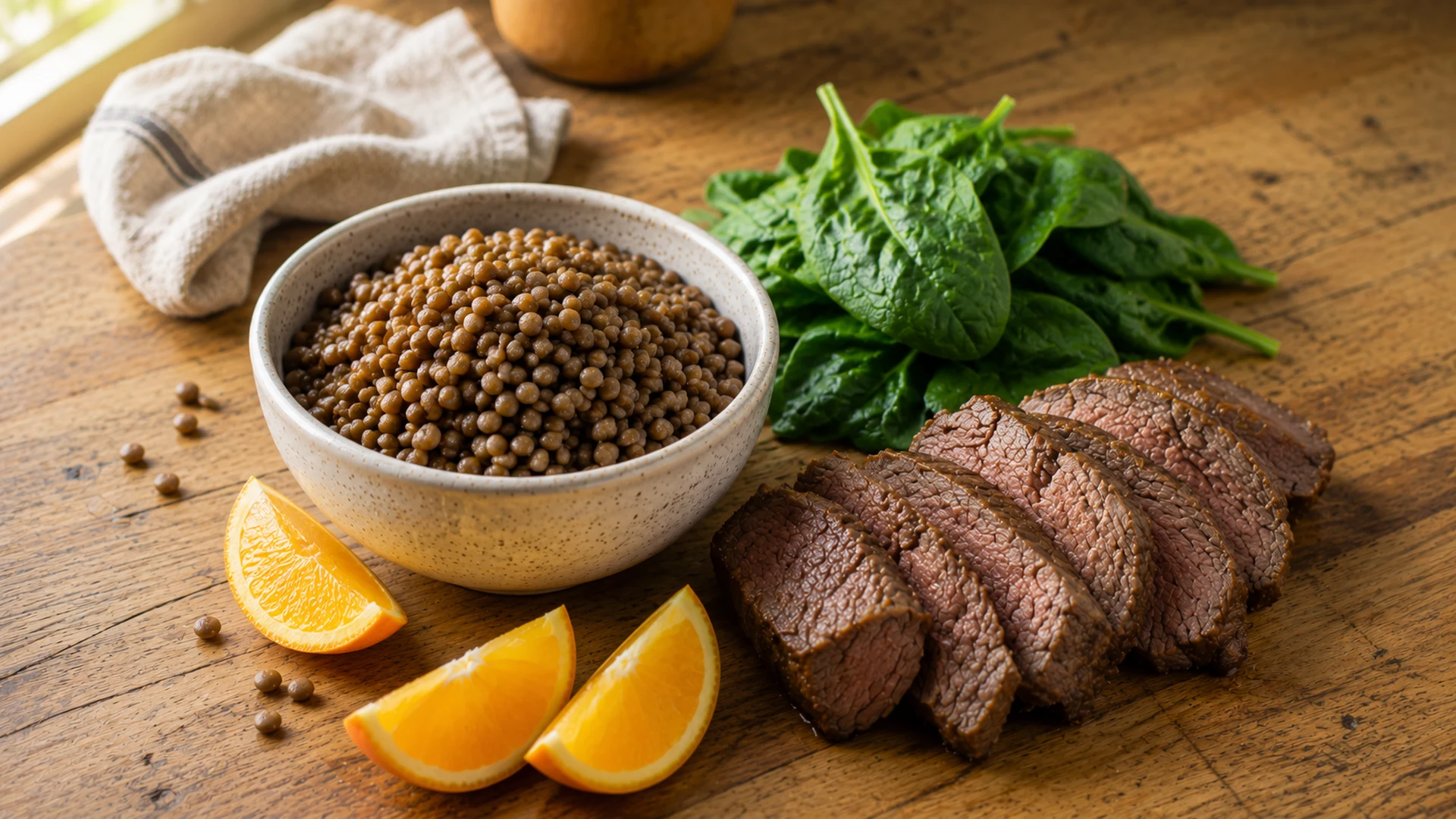
Heme iron (animal sources) — highest absorption (15–35%): beef, dark poultry meat (thighs, legs), oysters, sardines, liver. These are absorbed efficiently regardless of what else is eaten at the meal. For children who eat meat, regular inclusion of red meat or dark poultry (2–3 times per week) significantly reduces iron deficiency risk.
Non-heme iron (plant sources) — lower absorption (2–20%), highly variable: lentils, kidney beans, chickpeas, tofu, dark leafy greens (spinach, chard), fortified cereals, pumpkin seeds, dried apricots. The absorption rate is lower and more influenced by what’s eaten at the same meal.
Two things that make a real difference for plant-based iron:
Pair with vitamin C. Vitamin C (from citrus, bell peppers, strawberries, tomatoes) significantly increases non-heme iron absorption when eaten at the same meal. A spinach salad with bell peppers and citrus dressing absorbs more iron than the same spinach with nothing acidic.
Avoid calcium with iron-rich meals. Calcium inhibits iron absorption — this is why the pediatric advice to limit cow’s milk for toddlers is iron-related as well as calorie-related. Don’t serve milk or large amounts of dairy at the same meal as iron-rich foods if low iron is a concern.
Iron Deficiency in Toddlers: What’s Different
Iron deficiency in toddlers (ages 1–3) deserves its own section because the risk factors and presentation are distinct from older children.
The American Academy of Pediatrics’ current clinical report (2026, replacing its 2010 guidance) recommends laboratory screening — a complete blood count plus serum ferritin — timed to how a baby was primarily fed in the first year: around 9–12 months for infants who were primarily breastfed, and around 15–18 months for infants who were primarily formula-fed. If a full panel isn’t available, hemoglobin alone is the fallback, not the preferred test. The risk factors at this age are largely dietary: heavy cow’s milk consumption, delayed introduction of iron-rich solid foods, or exclusive breastfeeding past 6 months without iron supplementation.
The most important practical point: cow’s milk should be limited to 16–24 oz per day for toddlers ages 1–3. More than this routinely displaces iron-rich foods and directly inhibits iron absorption from whatever iron is eaten. This single change addresses the #1 risk factor for iron deficiency in this age group.
Signs in toddlers are similar to older children but may be harder to distinguish: overall low energy (some toddlers are just lower-energy by temperament), pallor, slow growth, and pica. If you’re uncertain, a blood test is the right move — guessing isn’t useful, and iron overload from unnecessary supplementation is a real concern.
When to Talk to Your Pediatrician — and What Happens Next
If your child shows multiple signs of iron deficiency or falls into a high-risk group, bring it up at the next well-child visit (or sooner if you’re concerned). The diagnostic step is a blood test — a complete blood count plus serum ferritin gives the clearest picture, with hemoglobin alone as a fallback when the fuller panel isn’t available — and it takes a few days for results. The good news is worth saying plainly: iron deficiency is one of the more treatable nutritional issues in kids. Most children respond within a few weeks of dietary changes or supplementation, with bloodwork typically rechecked around a month in to confirm the response.
Don’t supplement before testing. Iron overload is possible and has its own health effects. Supplementing without knowing your child’s baseline level is not recommended. The blood test comes first.
If the test shows iron deficiency, your pediatrician will guide the treatment — typically starting with dietary changes for mild cases and adding supplementation for moderate to significant deficiency. Dosage depends on the child’s age, weight, and deficiency level, and should come from your pediatrician, not a label.
If your pediatrician does recommend an iron supplement, liquid iron formulas tend to be better tolerated by young children than tablets, and are easier to dose precisely for smaller children. ChildLife Liquid Iron and Flora Floradix Kids Iron Formula are the two I’ve seen most frequently recommended in this context (paid links — always follow your pediatrician’s dosing guidance specifically).
Is Your Child at Risk?
Which situation best describes your child?
Frequently Asked Questions
The most common signs of iron deficiency in children include:
- Unusual fatigue or low energy
- Pallor (pale skin, pale inner eyelids, or gums)
- Frequent illness
- Persistent irritability
- Difficulty concentrating
- Pica (craving non-food items)
- Slowed growth (in more significant cases)
These signs individually have many explanations, but the combination of fatigue, pallor, and frequent illness in a child with dietary risk factors is worth discussing with a pediatrician. A blood test confirms iron status — symptoms alone aren’t diagnostic.
Low iron kids symptoms often present gradually: persistent fatigue that doesn’t improve with sleep, pale skin or pale inner eyelids, more frequent colds and infections, mood changes or irritability, and trouble with attention. In toddlers, low iron may also show up as slowed growth or unusual food cravings (eating ice, dirt, or non-food items). Because these overlap with many other causes, the reliable way to know if low iron is the issue is a blood test — a complete blood count plus serum ferritin is the current standard — ordered by your pediatrician.
It can. Iron is involved in neurotransmitter production, and low iron is associated with irritability, mood changes, and emotional volatility in children — particularly in toddlers and younger kids. Research also links iron deficiency to reduced attention and concentration, which is why some pediatric practices screen for low iron before starting a formal ADHD evaluation. These behavioral signs are more meaningful when they appear alongside other signs like fatigue, pallor, or known dietary risk factors. A blood test is the only reliable way to confirm whether iron is the underlying cause.
The most bioavailable iron rich foods for kids are heme iron sources: beef, dark poultry meat (thighs and legs absorb better than breast), oysters, and sardines. For children who don’t eat much meat, non-heme sources include lentils, kidney beans, tofu, fortified cereals, dark leafy greens, and pumpkin seeds. Pairing any plant-based iron source with vitamin C (citrus, bell peppers, strawberries) significantly improves absorption. Avoiding calcium-rich foods (milk, cheese) at the same meal also helps — calcium competes with iron for absorption.
Iron deficiency is the most common nutritional deficiency in young children in the US, affecting roughly 15% of toddlers. Toddlers 6–24 months are the highest-risk group. The primary cause at this age is heavy cow’s milk consumption — cow’s milk is low in iron, directly inhibits iron absorption, and fills toddlers up before they eat iron-rich foods. The AAP recommends limiting cow’s milk to 16–24 oz per day for toddlers ages 1–3, and its current clinical report recommends CBC-plus-ferritin screening timed to infant feeding history (around 9–12 months for primarily breastfed infants, 15–18 months for primarily formula-fed infants). If you’re concerned, ask your pediatrician to include iron in your toddler’s next well-child bloodwork.
Bring it up at your child’s next well-child visit if you’ve noticed signs like persistent fatigue, pallor, frequent illness, or pica — or if your child is in a high-risk category (toddler who drinks lots of milk, picky eater who avoids meat, plant-based diet). If symptoms are significant or you’re concerned, don’t wait for a scheduled appointment. Don’t start supplementing before seeing a doctor — iron overload is possible, and the dose needs to be based on your child’s specific levels, not general guidelines. My post on best vitamins for kids covers the supplements that actually have pediatric evidence behind them, including iron in the broader context of kids’ nutrition.
Final Thoughts
Signs of iron deficiency in children are easy to miss precisely because they look like so many other things. The most useful shift is thinking in risk factors rather than symptoms: watching cow’s milk intake in the toddler years, pairing plant iron sources with vitamin C, and treating the well-child visit as the place to raise it — instead of waiting for a symptom list to feel conclusive, which it rarely will.
If your child fits a risk category or you’re noticing multiple signs at once, the practical move is straightforward: bring it up at the next well-child visit and ask for iron to be added to the bloodwork. A serum ferritin or hemoglobin test takes a few days and gives you a concrete answer — always better than guessing.
Iron doesn’t work in isolation — it’s one piece of a bigger nutritional picture, the same one that shows up in foods that boost brain development in kids, where iron sits alongside omega-3s and other nutrients that matter for cognitive growth.
And if frequent illness is one of the signs you’ve been noticing, it’s worth also looking at supporting your child’s immune system naturally — iron status is one piece of that picture too.
Important: This is educational information from research, not medical advice, and I’m not a medical or nutrition professional. Iron deficiency should be diagnosed with a blood test, not from symptoms or this article alone, and treated under your pediatrician’s guidance. This is especially true for iron, which can be harmful in excess — dosage varies by age, weight, and deficiency severity, and supplementing without medical guidance can cause iron overload.