
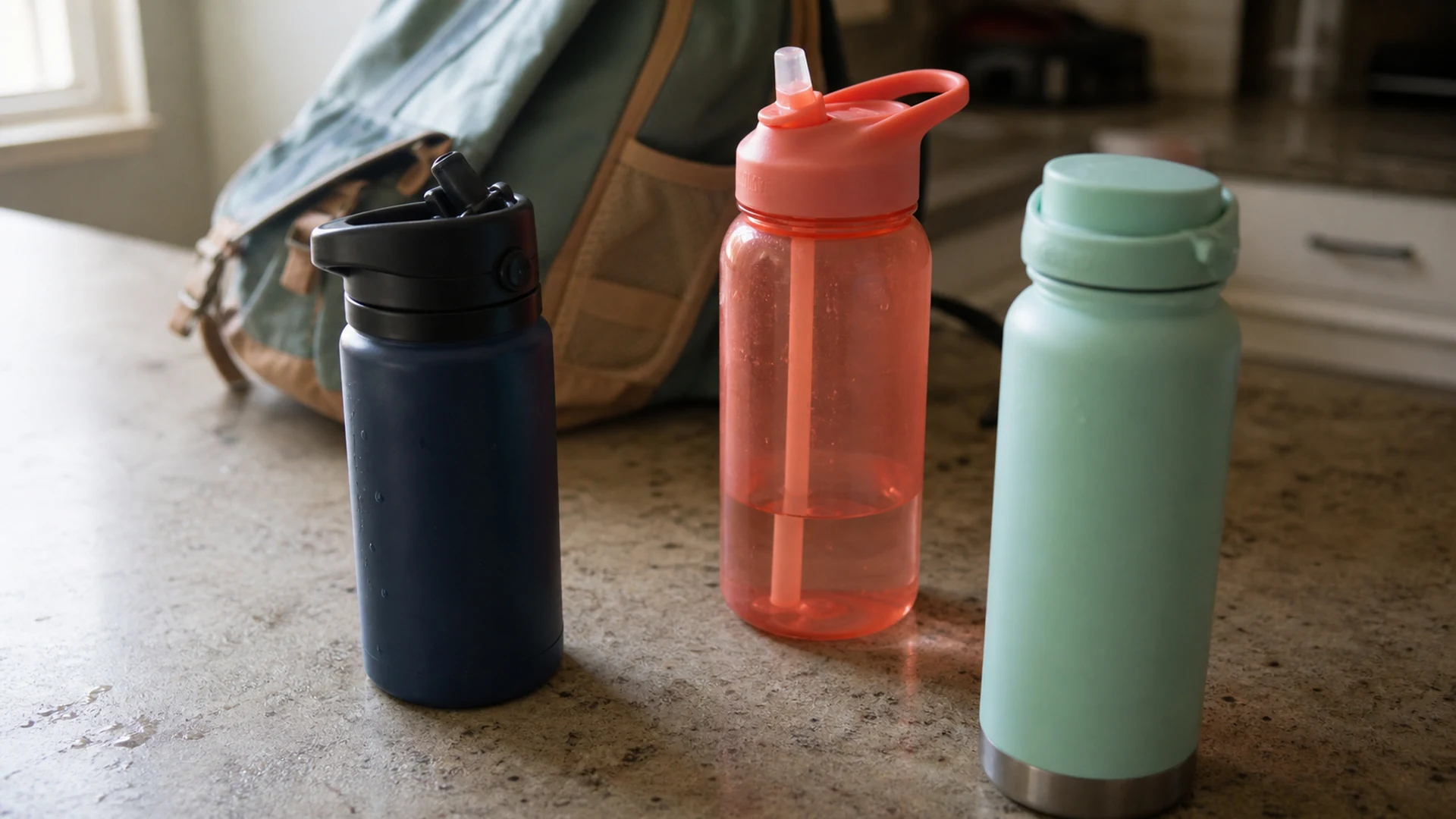
A bottle that leaks beside a Chromebook is not a small design flaw — it is the failure mode that matters. So I read water-bottle reviews the way I read nutrition labels: past the headline rating, into the recurring one- and two-star complaints, looking for patterns.
Kids’ water bottles fail in predictable ways: seals stop sealing, straws and valves are easy to under-clean, and bottles that look child-sized online can turn out too heavy or awkward. Once you know those failure modes, the useful picks become much easier to spot. I compared five leading bottles by exact variant, lid design, capacity, cleaning requirements, replacement parts, manufacturer guidance, and recurring longer-term owner complaints. Below is the best fit by age and use; our family nutrition guide for kids puts hydration into the broader nutrition picture.
This post contains affiliate links. As an Amazon Associate I earn from qualifying purchases. I only recommend products I’ve personally researched and vetted. See my full Affiliate Disclosure.
- CamelBak Eddy+ Kids 12oz Insulated Stainless — best all-around school bottle.
- Hydro Flask Kids 12oz Wide Mouth — best for sports and all-day cold.
- Simple Modern Summit Kids 14oz — best-value insulated stainless pick.
- Contigo Trekker Autoseal 14oz two-pack — best for leak-prone backpacks.
- Thermos Funtainer 12oz — easiest starting point for younger kids.
Table of Contents
- Why Kids’ Water Bottles Fail (and What to Watch For)
- What to Look For Before You Buy
- Find Your Best Match
- Side-by-Side Comparison
- Top 5 Best Kids’ Water Bottles
- Cleaning Without the Mold
- Frequently Asked Questions
Why Kids’ Water Bottles Fail (and What to Watch For)
Most bottle reviews skip this part and go straight to star ratings. But the one- and two-star reviews tell a more useful story than the averages. Three failure patterns show up again and again across every brand:
Seal wear. Gaskets, valves, and lid seals are wear parts. A bottle that seals well when new can become less reliable after months of washing, drops, and daily opening and closing. That is why I pay more attention to recurring long-term leak complaints and the availability of replacement parts than to a brand’s leak-proof headline.
Straw and bite-valve buildup. Rinsing alone does not reliably clean the inside of a straw or the crevices around a bite valve. Moisture and residue can stay trapped, so removable parts that can be brushed, dried fully, and replaced when they no longer clean up well are a real advantage.
Wrong size for the job. A larger bottle means fewer refills, but it also adds weight and can be awkward in smaller hands, backpack pockets, or cup holders. Rather than choosing capacity by age alone, check the filled weight, the child’s grip, the school refill setup, and the bag it actually has to fit.
What to Look For Before You Buy
Five things actually changed which bottle I’d recommend — and which I’d skip:
- Material: Plastic is lighter; insulated stainless keeps water colder but adds weight. For younger kids, comfortable carrying matters more than maximum cold retention.
- Lid and flow: Straw, bite-valve, and push-button lids all trade convenience against cleaning and hand effort. A useful test is simple: can the child open, drink from, close, and carry the exact bottle comfortably before it goes to school?
- Capacity: Smaller bottles are easier to carry but need more refills; larger bottles reduce refill frequency but add weight. AAP hydration guidance is a reminder that a school bottle is only one part of a child’s total daily fluids, with needs changing by age, activity, heat, and humidity.
- Cleaning: Follow the manufacturer’s care instructions. Many bottles are rated for the top rack, but the AAP’s more conservative plastics guidance recommends hand-washing plastic food and drink containers when possible to limit heat exposure.
- Replacement parts: Straws, gaskets, and bite valves wear out before the bottle body. A brand that sells replacements is usually the better long-term buy.
Find Your Best Match
Answer two quick questions — your child’s age and how they mainly use their bottle — and get a direct recommendation.
Answer 2 quick questions to see your best match.
Side-by-Side Comparison
For kids’ water bottles, the trade-off between weight, capacity, and lid design matters more than the brand name alone.
| Bottle | Best For | Size | Main Strength | Watch Out | Price Tier |
|---|---|---|---|---|---|
| CamelBak Eddy+ Kids Insulated | Everyday school use | 12oz | Easy bite valve; cold up to 10 hrs | Heavier than plastic | $$ |
| Hydro Flask Kids Wide Mouth | Sports and outdoor use | 12oz | Cold up to 24 hrs | Premium price; small capacity | $$$ |
| Simple Modern Summit Kids | Value insulated bottle | 14oz; 18oz option | More capacity for the money | Finish shows wear sooner | $$ |
| Contigo Trekker Autoseal | Leak-prone backpacks | 14oz, two-pack | Seals between sips | Button takes hand strength | $ |
| Thermos Funtainer | Younger children | 12oz | Covered soft straw | Needs regular straw cleaning | $ |
Top 5 Best Kids’ Water Bottles
These recommendations are based on the exact linked variants, published specifications and care guidance, cleaning and replacement-part checks, and recurring failure patterns in longer-term owner feedback. Each review names the exact size and variant used by its Amazon button.
CamelBak Eddy+ Kids 12oz Insulated Stainless — Best Overall for School
Best for: Everyday school use, roughly ages 4–8. Linked size: 12oz. Material: Vacuum-insulated 18/8 stainless steel.
The Amazon pick here is specifically the 12oz insulated stainless Eddy+. CamelBak lists it as leak-proof when closed, recommends it for ages 3+, and rates cold retention at up to 10 hours. The flip-bite-sip design is simple, and the straw/valve system can be disassembled for cleaning.
Watch out: At about 9.3oz empty, it is heavier than a plastic Eddy+, and 12oz may feel undersized for older children who cannot refill during the day. The lid also has more parts to clean than a simple screw cap.
CamelBak Eddy+ Kids 12oz Insulated — the easy-sip school pick that keeps water cold without a bulky bottle.
Hydro Flask Kids 12oz Wide Mouth — Best for Sports and Outdoor Use
Best for: Warm-weather activities and kids who care about cold water. Linked size: 12oz. Material: Double-wall stainless steel.
If you want an insulated water bottle for kids and cold retention is the priority, this is the strongest pick in the group. It keeps drinks cold for up to 24 hours, the wide mouth makes ice and cleaning easier, and the boot helps protect the base from playground drops. Hydro Flask also has a strong replacement-cap and straw ecosystem.
Watch out: You pay more without getting more capacity—the linked kids’ model is 12oz. It suits children who can refill; older athletes may be better served by an 18–24oz bottle they can still grip comfortably.
If staying cold all day matters more than price, Hydro Flask Kids Wide Mouth is the one that delivers it.
Simple Modern Summit Kids 14oz — Best-Value Stainless
Best for: Families wanting insulated stainless without the Hydro Flask price. Linked size: 14oz. Material: Double-wall stainless steel.
The 14oz capacity offers a useful step up from the 12oz bottles without becoming an adult-size bottle. Simple Modern lists the 14oz Summit Kids at about 9oz empty, with double-wall stainless construction and a straw lid described as leak-proof when the nozzle is closed. The line also comes in larger sizes; confirm the selected size before checkout.
Watch out: At roughly 9oz empty, it is not especially light, and the nozzle has to be fully closed for the lid to be leak-resistant. I would still keep any straw-lid bottle separated from electronics rather than treating a leak-proof claim as insurance.
Simple Modern Summit Kids 14oz gives you more capacity and insulated stainless at a midrange price.
Contigo Trekker Autoseal 14oz Two-Pack — Best Auto-Seal Backpack Pick
Best for: Backpacks carrying electronics and families needing two bottles. Linked offer: Two 14oz bottles. Material: BPA-free plastic.
If a laptop or tablet shares the backpack, the Trekker’s AUTOSEAL mechanism is the feature that stands out: press to drink and release to seal. Contigo markets the bottle as leak- and spill-proof, but I would still treat correct closure and an intact lid as the real-world requirement rather than putting electronics in the same pocket on faith.
Watch out: The button requires a press-and-hold motion. Contigo markets the Trekker for ages 3–10, but I would still have a younger child try the mechanism at home before relying on it for an independent school day.
Contigo Trekker Autoseal two-pack — the one I’d want beside a Chromebook.
Thermos Funtainer 12oz — Best Compact Covered-Straw Pick
Best for: Younger children and first school bottles. Linked size: 12oz. Material: Vacuum-insulated stainless steel.
Thermos lists the 12oz FUNtainer for kids ages 3–10, with a covered silicone straw, integrated carry handle, top-rack dishwasher-safe parts, and cold retention up to 12 hours. That combination makes it a straightforward starting bottle for younger school-age kids.
Watch out: The straw needs more deliberate cleaning than an open spout, and 12oz means active children will need a refill. It is still the easiest starting point in this group for small hands.
Thermos Funtainer is a compact 12oz option with a covered straw when smaller size and straightforward cleaning are the priority.
Cleaning Without the Mold
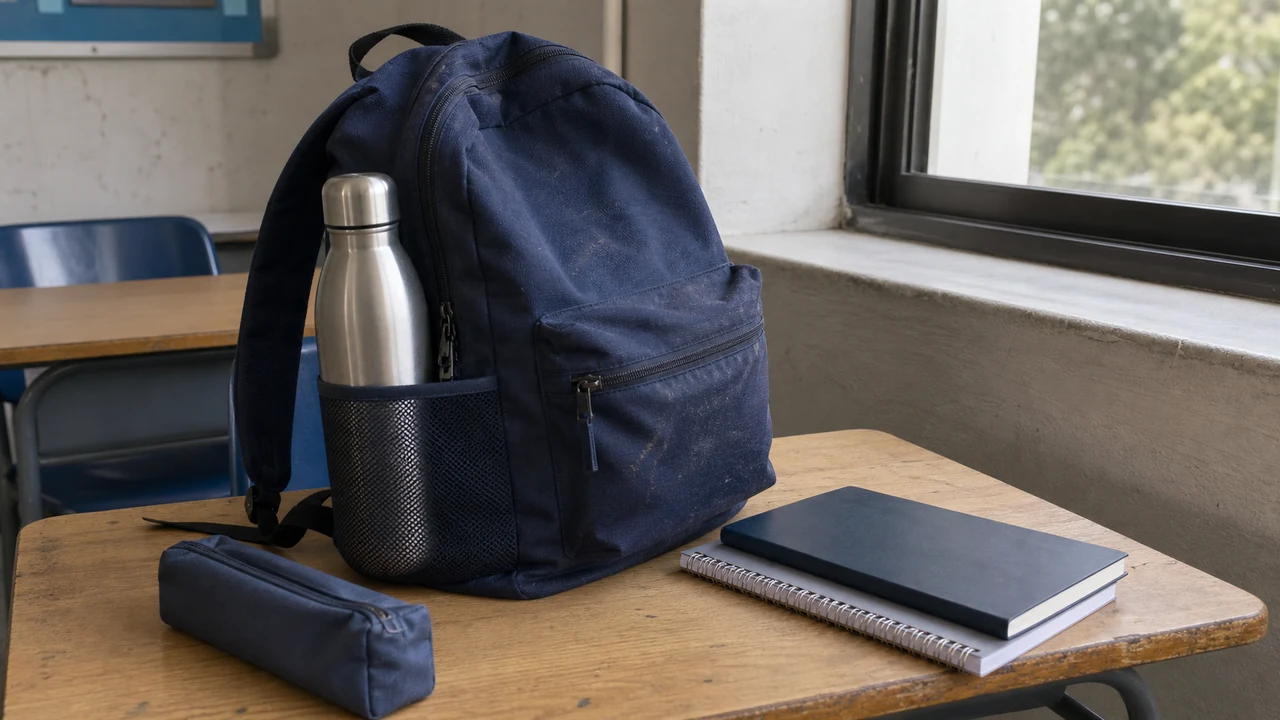
With kids’ water bottles, the bottle body is the easy part. Straws, bite valves, gaskets, and the underside of the lid are where moisture hides.
- Wash the bottle daily. Empty it, separate the removable parts, and use warm soapy water or the manufacturer’s approved dishwasher cycle.
- Brush inside the straw every two or three days. A thin straw brush reaches the damp interior that rinsing misses. If visible mold remains or returns, replace the straw or valve rather than trying to save it indefinitely.
- Air-dry every part separately. Remove gaskets when the manufacturer allows it, rinse beneath them, and leave the lid and seals apart until fully dry. For plastic components, hand-washing is the more conservative choice when practical.
Frequently Asked Questions
All five linked bottles are marketed as BPA-free. Stainless steel avoids a plastic bottle body, although every straw-lid model still uses some plastic and silicone components. If minimizing plastic contact is your priority, choose stainless and follow the manufacturer’s care instructions; that is a preference-based decision, not proof that one bottle is risk-free.
A 12oz bottle is a sensible starting size when you want to keep filled weight and bulk down, but there is no universal age-to-ounce rule. Check whether the child can carry and operate it comfortably, whether it fits the backpack, and how easy refilling is during the school day.
There is no useful universal replacement calendar. Inspect the lid, straw, gasket, and valve regularly; replace a part when it cracks, stops sealing, develops persistent odor or visible buildup you cannot clean, or when the manufacturer says it has reached the end of its usable life. A sound bottle body can often outlast several sets of small replacement parts.
The Contigo Trekker Autoseal is the strongest design here for a backpack — the lid stays sealed unless the button is actively pressed, which prevents accidental opening while the bag is being jostled. The CamelBak Eddy+ Kids is a close second, although its bite valve depends more on the straw seal remaining intact. If backpack protection is the single most important factor, Autoseal is the most structurally reassuring mechanism among these five designs.
Disassemble the straw or valve only as the manufacturer directs, scrub inside it with a thin straw brush and warm soapy water, then rinse and air-dry every part completely. If visible mold remains or returns, replace the affected straw, valve, or gasket. Do not keep using a part you cannot clean fully.
Adult-size bottles can work once the filled weight, diameter, lid, and bag fit are comfortable. For smaller hands or tighter backpack pockets, a kid-specific bottle can be easier to manage. I would choose by the exact dimensions and filled weight rather than treating a birthday as the cutoff.
Tritan bottles are generally lighter, which can matter more than insulation for small children. Double-wall stainless bottles keep water cold much longer but add weight. Neither material is automatically right for a particular age: choose plastic when easy carrying is the priority and stainless when cold retention is worth the extra weight. Remember that stainless straw bottles still use plastic and silicone in the lid.
The American Academy of Pediatrics gives a general target of about 5 cups of total fluids per day for ages 4–8 and 7–8 cups for older children, including water or milk. Individual needs change with age, activity, heat, and humidity. A 14oz school bottle therefore needs refilling; plan for extra access to water on active or warm days.
Bottom Line
If you’re choosing among the best water bottles for kids today: CamelBak Eddy+ Kids Insulated is the best all-around school pick; Thermos Funtainer is the compact covered-straw option; and Hydro Flask Kids Wide Mouth earns its premium when cold retention matters most. Choose Simple Modern Summit for better-value insulated stainless or the Contigo Trekker two-pack when an automatic-sealing lid is the priority.
Whatever you pick, pay more attention to recurring longer-term lid and seal complaints — and to whether replacement straws, valves, or gaskets are available — than to the overall star average. Those details tell you more about the bottle’s likely maintenance burden.
Still deciding? Run the two-question finder again or return to the comparison table.
If you’re building out school nutrition more broadly, our kids’ vitamins guide covers what’s actually worth supplementing (and what’s just expensive gummies), and the kids’ lunch box ideas post walks through what to pack alongside a good water bottle.
A note on materials: I’ve included BPA-free options throughout this list and separated material claims from the broader question of exposure. I’m not a doctor or materials scientist. For specific health concerns about plastic safety for your child, consult your pediatrician. Product availability and specifications can change, so recheck the linked variant before buying. Recommendations here come from product research, published care guidance, and longer-term owner-feedback patterns — not a claim that I personally tested every bottle.