
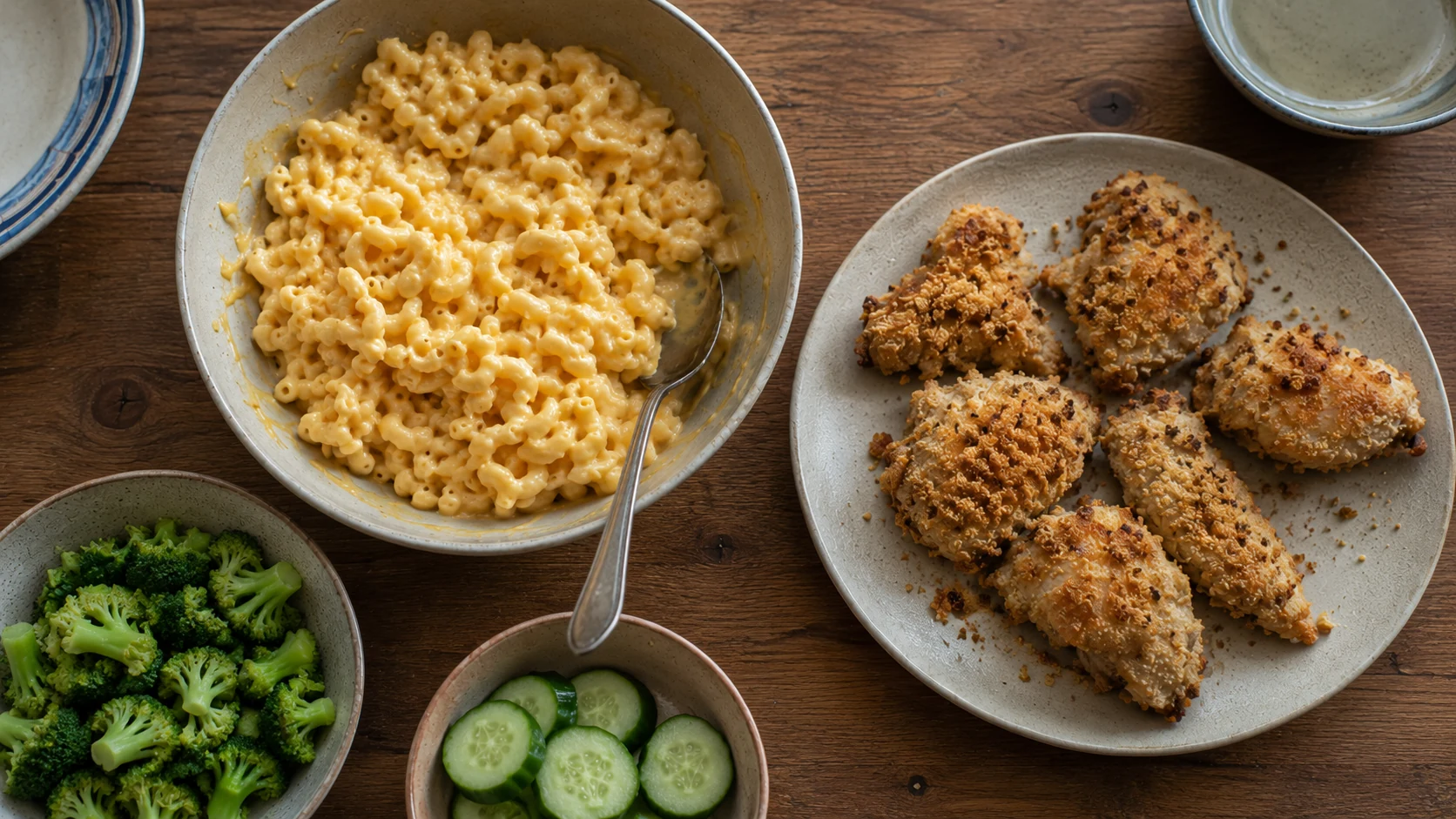
The classic “healthy dinner” pitch — a roasted fillet, a pot of brown rice, roasted broccoli on the side, forty minutes of cooking — is a familiar disaster for a lot of families. The kids eat four bites each and ask for cereal.
“Healthy” and “dinner the kids will actually eat” aren’t opposites — they just require a different approach than most healthy dinner articles suggest. The easy healthy family dinner ideas that hold up aren’t the ones that look impressive. They’re the ones that can actually get executed on a Tuesday at 6pm when everyone is hungry and nobody is being patient.
The mistake usually isn’t cooking something unhealthy — it’s trying to replace dinners kids already love instead of upgrading them. What follows is a rotation built around that idea — with practical notes on what works, common kid reactions, and what to watch for before trying each one.
Short on time? Three dinners from this list that work almost every week for most families:
- Real-cheese stovetop mac and cheese — 20 minutes, one pot
- Baked chicken nuggets — batch-cooked and frozen, 10–12 minutes to reheat
- Turkey taco bowls — kids assemble their own, dramatically less rejection
A lot of the “upgrades” below quietly cut sugar too, since it hides in sauces and condiments more than in the meals themselves — if you want the fuller picture, my guide to how much sugar kids should have per day covers where to watch for it.
Some links on this page are affiliate links. As an Amazon Associate I earn from qualifying purchases. I only recommend tools backed by careful comparison. See my full affiliate disclosure.
Table of Contents
- Why healthy dinner ideas often don’t stick
- Healthy mac and cheese for kids
- Healthy chicken nuggets: baked, not fried
- More easy healthy family dinner ideas
- Small swaps that actually change the nutrition
- What should we eat tonight?
- FAQ
Why Most “Healthy Dinner” Ideas Don’t Survive Contact with Real Kids
There are two failure modes I see over and over. The first is unfamiliarity — meals with ingredients or textures that don’t map onto anything kids already recognize get rejected on sight, not taste. You can spend forty minutes cooking something nutritionally excellent and hear “I’m not eating that” before anyone has tried a bite.
The second failure mode is inconsistency. You find a healthy dinner that works, but it takes 50 minutes and requires two specialty ingredients, so it only happens once. The dinners that actually change a family’s eating patterns are the ones that are fast enough and familiar enough to repeat.
What works is starting from what kids already eat — mac and cheese, nuggets, tacos, pasta — and making those things genuinely healthier rather than replacing them with something theoretically superior. Building an easy healthy family dinner rotation is less about introducing new foods and more about upgrading familiar ones. The switch happens gradually, through repetition.
Even if you’ve solved both problems above, there’s one moment that still breaks most healthy dinner plans: 6pm, the chicken’s still frozen, one kid is already melting down, and the meal you planned now needs 40 minutes you don’t have. This is where having two or three zero-prep fallbacks (egg fried rice, grain bowl, quesadilla plate) matters as much as having good recipes — the plan failing doesn’t have to mean the nutrition failing. I treat the 10-minute options as a feature of the rotation, not a defeat.
Healthy Mac and Cheese for Kids That Actually Tastes Good
Boxed mac and cheese isn’t the enemy, but it’s also not something I want on the table three times a week. A standard serving contains around 580–730mg sodium, an orange cheese powder that contains very little actual cheese, and refined carbs with nothing to slow down blood sugar absorption. The healthier mac and cheese we make now takes about the same time and costs less.
Three approaches worth trying, in order of how much they change the base recipe:
Real-Cheese Stovetop
Cook whole wheat pasta (or chickpea pasta if you want more protein), drain, return to pot with a small pat of butter, a splash of whole milk, and a generous handful of sharp cheddar. Stir over low heat until it comes together. Twenty minutes, one pot. Kids generally don’t notice a difference, because sharp cheddar actually tastes like cheese — a good default starting point.
Cauliflower Blend
Steam a cup of cauliflower florets until very soft, blend them completely smooth, and mix the puree into the cheese sauce before combining with pasta. The key is using a strong-flavored sharp or aged cheddar — mild cheese doesn’t cover the cauliflower taste well enough. This is a cooking technique for adding vegetable nutrition to a familiar meal, not a trick — a smooth, well-seasoned blend genuinely doesn’t register as “vegetables” to most kids.
Butternut Squash Mac
Roast a small butternut squash, scoop out the flesh, and blend it into the cheese sauce. The squash gives the sauce a natural golden-orange color indistinguishable from boxed mac and adds natural sweetness. Works especially well for kids under 7 who accept naturally sweet flavors more readily.
For the cauliflower and squash versions, a food processor is what makes these practical — getting the blend completely smooth matters, or kids detect the texture immediately.
Hamilton Beach 12-Cup Stack & Snap Food Processor — a big-mouth chute and sealed 12-cup bowl handle a whole steamed cauliflower or roasted squash in one pass, so the blend actually comes out smooth.
Healthy Chicken Nuggets for Kids: Baked, Not Fried
Store-bought chicken nuggets reward a closer label read: many popular brands use mechanically separated chicken, various fillers, and 400–600mg sodium per serving. They’re also deep-fried.
Homemade baked nuggets take about the same active effort as cooking frozen ones and taste noticeably better. A reliable version: cut two chicken breasts into bite-sized pieces, dip each in beaten egg, coat in a mixture of panko breadcrumbs, grated parmesan, garlic powder, and salt. Arrange on a parchment-lined baking sheet, spray lightly with olive oil, bake at 400°F for 18–20 minutes until golden.
An air fryer gives a crispier result in about 12 minutes at 375°F and doesn’t require oven preheat time. For nugget-dependent kids, the crispier texture makes a real difference in acceptance.
Cosori Air Fryer Pro LE 5 Qt — enough basket space for a full batch of nuggets, with a shake reminder so a distracted weeknight reheat doesn’t come out uneven.
The batch cooking approach is what makes this sustainable. Make 40 nuggets on a Sunday afternoon — about 25 minutes of active work. Freeze them on the baking sheet first, then transfer to a bag. Reheat from frozen in the oven or air fryer in 10–12 minutes during the week. Homemade versions frequently outcompete restaurant nuggets once kids get used to them.
How Many Nuggets Should You Batch?
This scales the standard recipe up so you know exactly what to buy.
How long do you want to stock the freezer for?
If you make nuggets once every few months, the oven works fine. If you’re reheating frozen batches every week, an air fryer starts earning its counter space: 12 minutes at 375°F, no oven preheat needed.
5 More Easy Healthy Family Dinner Ideas for Busy Weeknights
Beyond mac and cheese and nuggets, these are the healthy family dinner ideas that get made on actual weeknights — not just the nights when I have time and energy to try something ambitious.
Sheet Pan Chicken and Vegetables
This is the dinner I make when I don’t want to think about dinner. Chicken thighs, broccoli, and cherry tomatoes, tossed in olive oil and salt, on one sheet pan. 425°F, 25–30 minutes. Nothing to watch, one pan to wash. Chicken thighs stay moist; broccoli gets the crispy edges kids actually like. A side of rice or bread and dinner is done.
Turkey Taco Bowls
The protein swap barely matters here — it’s the format that does the work. Seasoned ground turkey over rice with black beans, avocado, and salsa. Ground turkey tastes nearly identical to beef in tacos once seasoned — lower in saturated fat, similar price. The bowl format (everyone assembles their own) dramatically reduces rejection. Kids who won’t eat a taco assembled by a parent eat the exact same components when they build it themselves.
Hidden-Veg Pasta Sauce
Of everything on this list, this one does the most nutritional heavy lifting without anyone noticing. Sauté carrots, zucchini, and spinach until soft, then blend them completely into marinara. The hidden vegetables disappear entirely. Top with ground turkey and whole wheat pasta for a complete dinner. This is the most reliable way I’ve found to add significant vegetable volume without a battle.
By now you’ve probably noticed the pattern: none of these depend on kids suddenly liking vegetables. They depend on making familiar foods easier to repeat.
Egg Fried Rice
Leftover rice, eggs scrambled directly in the pan, frozen peas, low-sodium soy sauce. Done in under 10 minutes — a reliable use for leftover rice from the night before. Kids often treat it as a special dinner rather than a leftovers dinner, which is a useful, if slightly baffling, quirk to lean on.
Build-Your-Own Grain Bowls
Cook a big batch of brown rice or quinoa. Set out protein options (shredded chicken, chickpeas, hard-boiled eggs) and whatever vegetables and sauces are in the fridge. Kids who reject plated dinners often eat the same food when they get to assemble it themselves. The perceived control changes the response.
Small Swaps That Actually Change the Nutrition
The healthy family meals principle worth building around: small swaps that kids don’t detect are more effective than big changes they reject. A few that reliably hold up:
Whole Wheat Pasta
Works in any pasta dish. Most kids adapt after 3–4 exposures. If there’s resistance, don’t jump straight to 100% whole wheat — start at about 25% whole wheat mixed into regular pasta for the first week or two, move to 50/50 for another few meals, then shift to mostly or fully whole wheat once nobody’s noticing the difference. Kids rarely object to whole wheat itself — what triggers rejection is a sudden switch, not the wheat, and the gradual ratio avoids that entirely.
Ground Turkey for Beef
In tacos, pasta sauce, meatballs, and stuffed peppers, the difference in taste is nearly undetectable once seasonings are added. Less saturated fat, essentially the same flavor.
Cauliflower in Cheese Sauce and Mashed Potatoes
Steam it soft, blend completely smooth. Strong-flavored cheese covers the taste; smooth texture means kids don’t detect anything different. Requires a good blender or food processor.
Watching Sauce Sugar
Jarred pasta sauce runs 8–12g of added sugar per serving in many popular brands — added sugar the American Heart Association recommends keeping to a minimum. Looking for versions under 5g, or making a simple sauce from canned tomatoes and garlic, is one of the cleanest wins at dinner — invisible to kids, no taste change. Sauces, dressings, and “healthy” condiments add to the daily total faster than most parents expect.
What Should We Eat Tonight?
Answer one question and get a specific dinner idea pulled straight from everything above — no scrolling back up required.
How much time do you have to cook tonight?
Frequently Asked Questions
The easiest healthy family dinner for kids is egg fried rice, taco bowls, or stovetop mac and cheese — all ready in 10–20 minutes using foods kids already recognize. Egg fried rice with real eggs and frozen peas takes 10 minutes and most kids eat it happily. Build-your-own taco bowls with ground turkey take about 20 minutes, and the assembly format reduces rejection. Real-cheese stovetop mac and cheese with whole wheat pasta is also 20 minutes, and kids don’t notice a difference from boxed. All three are faster than ordering food and genuinely more nutritious than their processed equivalents.
Healthy mac and cheese for kids starts with whole wheat or chickpea pasta and a real sharp cheddar sauce instead of powdered cheese mix. Cook the pasta, drain, and stir in a small amount of butter, a splash of milk, and a large handful of sharp cheddar over low heat — the strong flavor of sharp cheddar matters, since mild cheese produces a thin, less satisfying sauce. For a vegetable-fortified version, blend steamed cauliflower completely smooth into the cheese sauce before adding the pasta; with good sharp cheese, kids don’t detect it. The cauliflower blend version consistently goes unnoticed with kids once the cheese flavor is strong enough to cover it.
Yes — homemade healthy chicken nuggets are baked, not fried, and take about the same active effort as cooking frozen ones. Cut chicken breast into bite-sized pieces, dip in egg, coat in panko mixed with parmesan and garlic powder, and bake at 400°F for 18–20 minutes. An air fryer gives a crispier result in about 12 minutes. The batch cooking approach is what makes it practical: make 40 on a weekend, freeze them, and reheat from frozen during the week in 10 minutes. Homemade nuggets have less sodium, no mechanically separated chicken, and most kids prefer the taste after a few tries.
The best easy healthy family dinner ideas for picky eaters combine familiar flavors with some element of choice — turkey taco bowls, grain bowls, and egg fried rice all work on both counts. The build-your-own format is particularly effective: kids who refuse a plated meal often eat the exact same components when they assemble it themselves. Sheet pan chicken with broccoli is hands-off, and the crispy broccoli edges have converted several vegetable-refusers.
The small changes that make family dinners healthier are the ones kids don’t notice — swapping ingredients, not swapping whole meals. Whole wheat pasta in place of regular (most kids adapt after a few exposures), ground turkey in tacos and pasta sauce (nearly identical taste once seasoned), and cauliflower blended into cheese sauces (invisible with strong cheese) are the three most durable swaps. On the sugar side, checking jarred pasta sauce labels is worth it — many popular brands run 8–12g of added sugar per serving, and switching to a lower-sugar version doesn’t change the flavor. For more on where hidden sugar shows up in kids’ meals, my post on how to reduce sugar in kids’ diet covers the dinner and snack context.
Final Thoughts
Finding easy healthy family dinner ideas that kids will actually eat is mostly a process of figuring out which familiar dishes can be made genuinely better — not which new dishes can be introduced. Healthy mac and cheese, baked chicken nuggets, and turkey taco bowls don’t require anyone at the table to eat something unfamiliar. That’s the whole point.
Related posts:
- Sugar-free snacks for kids — the same upgrade-don’t-replace principle applied to after-school snacks
- Healthy breakfast ideas for kids — making the first meal count
- Healthy kids lunch ideas — for the middle of the day
Everything above reflects what’s worked in our own kitchen over three years of trial and error — not medical or nutrition advice. Sodium and sugar figures are general ranges based on common store-bought products and vary by brand, so check actual labels for the specific products you buy. If your child has specific dietary needs, allergies, or a diagnosed feeding issue, talk to a pediatrician or registered dietitian before changing their diet.