
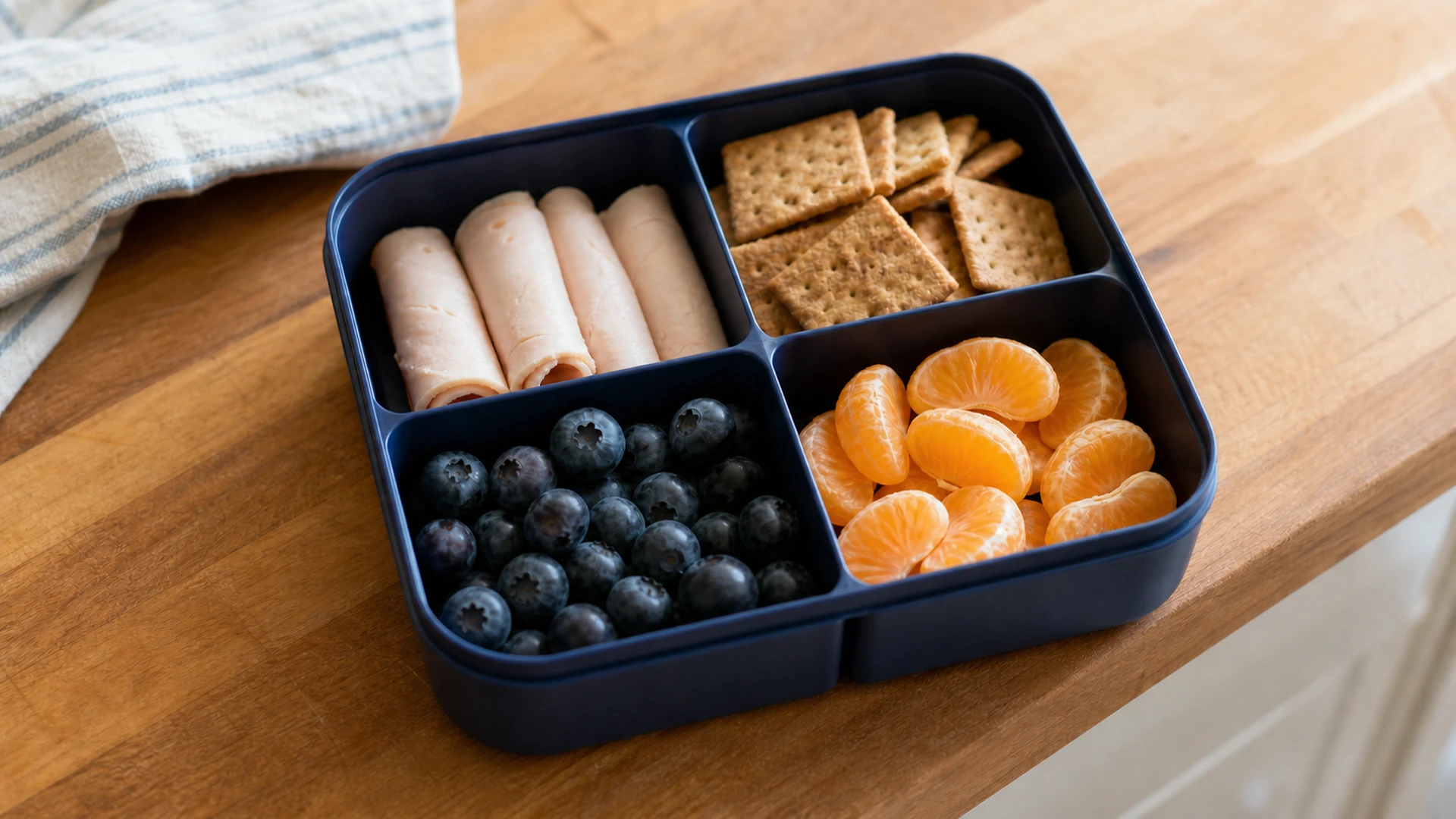
A lunch can look perfect at 7am — turkey pinwheels, cucumber, blueberries, a yogurt tube — and come home at 3pm almost untouched. When that keeps happening, searching for twenty more lunch ideas usually creates more decisions, not a better system.
The useful shift is to stop rebuilding lunch from scratch every morning. The problem often isn’t a lack of foods to pack. It’s the lack of a repeatable decision system. A four-slot framework — protein, grain, produce, extra — turns lunch from a daily creative project into a short assembly task, while still leaving room for preferences, leftovers, and whatever is actually in the fridge.
That is the framework this guide uses: practical combinations, known failure modes, low-pressure picky-eater strategies, and food-safety rules that still work on an ordinary school morning.
Table of Contents
- Why More Kids Lunch Ideas Don’t Help
- The 4-Slot Framework
- Fast Combinations That Fit the System
- What Commonly Fails in a Packed Lunch
- Picky Eater Strategies
- Logistics
- Two-Week Rotation
- Find Your Best Combo
- FAQ
- Build Your Lunchbox System
Short on time? Jump to the lunchbox idea finder →
Why More Kids Lunch Ideas Don’t Actually Help
Most articles with kids lunch ideas give you 30 ideas and you’re back where you started, just with more material you haven’t tried yet. The problem isn’t a lack of ideas. It’s the daily decision of which one to use, modified for whatever you have in the fridge, adjusted for what your specific kid will actually eat, assembled in under ten minutes while everyone’s getting ready for school.
What reduces that cognitive load isn’t more lunch ideas for kids — it’s a smaller decision. If I know Monday is turkey in some form, Tuesday is eggs or cheese, Wednesday is pasta or leftover grains, Thursday is hummus or sunflower seed butter, and Friday is whatever’s left and fast. I’m not generating lunch from zero every morning. I’m filling a slot. The variety comes from how I fill the slot, not from reinventing the whole thing each day.
This is the shift: from what do I pack today to what goes in each slot today. It sounds like a small distinction, but in practice it makes school lunch a 5-minute assembly task instead of a daily creative exercise.
The 4-Slot Framework
The framework uses four slots. It is not a macro calculator or a serving-size prescription — it is a decision shortcut. Fill the four categories with foods that fit the child, the school rules, and the day; if one slot is missing, choose the quickest workable option and move on.
| Slot | What it does | Quick options |
|---|---|---|
| Protein | Adds staying power and helps make the lunch more satisfying | Turkey roll-ups, string cheese, hard-boiled egg, hummus, sunflower seed butter, deli ham, plain Greek yogurt |
| Grain | The base — carbs that travel without getting soggy or sad | Crackers, bagel thin, tortilla wrap, leftover pasta, cold rice, pita, pretzels, rice cakes |
| Produce | Fruit or vegetable — something fresh or plant-based | Grapes, blueberries, banana, mandarin, apple slices, cucumber rounds, cherry tomatoes, snap peas, bell pepper strips |
| Extra | Something small that makes lunch feel complete — or a second produce item | Mini granola bar, applesauce pouch, goldfish crackers, a few chocolate chips, second fruit, trail mix (nut-free), yogurt tube |
Protein + grain + produce + extra. A fast version might be string cheese, crackers, grapes, and an applesauce pouch; a less rushed morning can use the same structure with leftovers or something more involved. The point is that the structure stays stable even when the foods change.
Age note: for younger kids, start with modest portions in each slot and adjust from what reliably gets eaten. Appetite varies by child and by day, so the goal is not to prescribe one perfect serving size. A smaller amount of several familiar foods is often easier to navigate than a lunchbox packed to the lid.
Most of the Extra-slot options above lean toward convenience over ingredient quality — granola bars, goldfish, trail mix. If you’re trying to cut back on the more processed end of that list without losing the grab-and-go convenience, my organic snacks guide covers toddler-friendly picks that still come pre-portioned, including a few sourced through Thrive Market.
If packaged extras are the part of the lunchbox you want to compare more deliberately, the Added Sugars line is the fastest place to start.
A 30-Second Label Check for Packaged Lunchbox Foods
It includes current label examples, common added-sugar names, practical swaps, and printable fridge-and-shop checklists.
Get the checklist and practical kids’ nutrition tips. Unsubscribe anytime.
Something went wrong. Please check your email address and try again.
Fast Combinations That Fit the 4-Slot System
The most useful combinations fall into three practical categories: fast 5-minute lunches, no-sandwich alternatives, and hot thermos options.
5-Minute Combinations
These are built for rushed mornings. All of them come together in about five minutes with no cooking required:
- String cheese + saltines + grapes + applesauce pouch — no cutting, no cooking, and very little decision-making.
- Turkey roll-ups + pretzels + mandarin orange + yogurt tube — roll two or three deli turkey slices into cylinders, done in under a minute.
- Hard-boiled egg + crackers + cherry tomatoes + banana — boil six eggs on Sunday, use through Thursday. The prep investment is Sunday’s, not Monday’s.
- Sunflower seed butter on a bagel thin + apple slices + cucumber rounds + granola bar — nut-free, no mess, everything comes pre-portioned.
- Cream cheese mini bagel + pretzels + cherry tomatoes + strawberries — simple, familiar, and about a two-minute assembly.
No-Sandwich Options
When sandwiches are the thing getting rejected, changing the format is often more useful than inventing a completely different lunch. These options keep the same four-slot logic without requiring a sandwich:
- Cold leftover pasta — buttered noodles, pasta with olive oil and parmesan, even cold mac and cheese. This can be a useful no-sandwich option for children who already accept pasta cold.
- Quesadilla triangles made the evening before or in the morning — cut into triangles, packed flat. Add a small container of applesauce and crackers on the side.
- Turkey roll-ups with a cheese stick — the roll-up replaces the sandwich, the crackers become the grain. No bread.
- Hummus with pita chips, baby carrots, a hard-boiled egg, and fruit — basically a snack plate in lunchbox form. It travels well and keeps each component visible instead of forcing everything into a sandwich.
- Rice and beans, packed safely chilled — for kids who already enjoy them cold. Portion from a cooked batch, cool promptly, and pack with the same cold-source protection you use for other perishable lunch foods.
Hot Thermos Lunches
For a hot thermos lunch, preheating matters. Follow the container instructions: add boiling water first, let it sit for a few minutes, empty it, then add piping-hot food and close the container promptly. The goal is not just better texture — it is keeping hot food safely hot until lunch.
- Tomato soup or minestrone (from a can, warmed) + crackers on the side + orange
- Mac and cheese (boxed or homemade, portioned the night before) + fruit pouch + cheese stick
- Buttered noodles — one of the simplest thermos options, especially for children who prefer plain foods.
- Leftover pasta with red sauce — useful when the child already likes the leftovers and the thermos can keep the food safely hot until lunch.
- Chicken noodle soup + crackers + mandarin orange — a reliable fall/winter rotation for the days when nothing else sounds right.
What Commonly Fails in a Packed Lunch
Most lunchbox advice tells you what to pack. The more useful question is what tends to fail in transit or under school-day constraints — because avoiding one predictable failure can matter more than adding ten new ideas.
Foods that don’t survive the trip
- Lettuce on anything assembled — wilted and unpleasant by lunchtime. If you want greens, pack them separately in their own compartment.
- Apple slices that brown before lunch — browning is harmless, but appearance can matter to some children. If that is a known rejection trigger, a little lemon juice or another anti-browning method is an easy variable to test.
- Crackers stored next to anything damp — moisture migrates in a sealed lunchbox. Pack crackers in a separate dry compartment or a small resealable bag.
- Cucumber slices near other wet foods — they get slippery and strange. Their own compartment only.
- Wet dressings mixed in too early — pasta salads, grain bowls, and similar foods can change texture in transit. If sogginess is the problem, pack dressing separately and add it at lunch.
“Healthy” ideas that often fail in practice
- Plain carrot sticks with nothing — a perfectly reasonable food, but not automatically a useful lunchbox choice. If a dip is already accepted, pairing the carrots with it may make the format more familiar.
- Plain rice cakes — light and convenient, but the dry texture is a poor fit for some children. A spread or dip changes the eating experience without requiring a new food category.
- Veggie chips as a cracker substitute — the vegetable wording on the bag does not make them nutritionally equivalent to vegetables, and they do not need to impersonate crackers to earn a place in a lunch.
- The aspirational bento — a beautiful 20-minute food sculpture can still be a bad school lunch. Put that effort into prep that survives the trip: boiled eggs, washed fruit, or a reliable rotation. Presentation is optional; function is not.
What Actually Works for Picky Eaters
For some selective eaters, foods touching is not a cosmetic issue. If contact between foods is a known refusal trigger, a container with genuinely separate compartments is worth testing before changing the foods themselves. That makes compartment geometry a functional variable, not a bento-box aesthetic.
A few low-pressure principles are more useful than promising one universal picky-eater fix:
Familiar foods vs. stretch foods. One low-pressure option is to make most of the box familiar and include a small amount of something less familiar when it fits the child. Don’t make the stretch item a test or quiz them about it later. This fits the logic of Ellyn Satter’s division of responsibility: the adult decides what is offered, and the child decides what and how much to eat. Repeated exposure is slow work; the American Academy of Pediatrics notes that accepting a new food can take 15–20 tries, so there is no useful 8th- or 10th-exposure deadline.
Vary the form, not necessarily the ingredient. If cheese is already accepted, it can show up as string cheese, cubes, slices with crackers, or quesadilla triangles. Texture and presentation can matter alongside flavor, so changing the format is one variable to test without rebuilding the whole lunch.
Keep unfamiliar portions small. A few cucumber rounds alongside accepted foods create a lower-stakes exposure than filling an entire compartment with a food the child is unsure about. The goal is familiarity, not forcing a serving.
Offer a small choice the night before. “Pasta, wrap, or hummus plate?” keeps the adult in charge of the workable options while giving the child some ownership. The AAP also encourages involving children in food selection and preparation; treat that as an engagement tool, not a guarantee that the lunch will come home empty.
For the fuller picture on picky eating — including what the research says about food exposure and what actually moves the needle over months rather than days — the picky eater lunch ideas guide goes deeper.
Logistics That Changed Everything
Most packed-lunch problems fit into a few repeatable categories. Here is what to check before changing the entire menu.
Sogginess
Keep wet and dry items in completely separate compartments, always. If you don’t have a divided container, use a small resealable bag for crackers and anything dry. Dressings, dips, and sauces go in a separate mini container and get added at school. A divided lunchbox can make this much easier when the compartments genuinely keep foods apart; the container matters more than the brand name alone. For the full breakdown on which containers actually work, our kids’ lunchboxes guide covers the differences.
Temperature
For a lunch with perishable food, use an insulated bag and at least two cold sources. The USDA recommends placing them above and below the perishable items; a frozen water bottle can count as one source when paired with another frozen pack. If the school has a refrigerator, use it.
Nut-free schools
School allergy rules vary, so check your school’s current policy rather than assuming every seed or nut substitute is allowed. Possible alternatives include sunflower seed butter, hummus, cheese, hard-boiled eggs, edamame for children who can eat it safely, and—where the policy permits them—pumpkin or sunflower seeds. The CDC’s school food-allergy guidance also emphasizes following the child’s individual management plan. For more packaged options, the school snack ideas post compares options by age and use case.
Food safety
The challenge with a healthy school lunch is timing: many healthy lunchbox ideas for kids include at least one perishable item. Perishable food should not sit at room temperature for more than 2 hours, but a properly packed school lunch is not meant to sit unprotected. Use an insulated bag with at least two cold sources for cheese, yogurt, deli meat, eggs, hummus, and cut fruit; whole fruit, crackers, bread, and other shelf-stable foods do not need them.
Building a Two-Week Rotation
The 4-slot framework plus about 5 options per slot gives you enough variety to go three or four weeks without repeating — which means you need fewer new lunch ideas for kids than you might think. You don’t need to be that systematic. A two-week rotation is sustainable, doesn’t require a spreadsheet, and is enough to break the feeling of eating the same lunch every day.
Here’s a simple 5-day starter grid if you want the framework filled in once before building your own rotation:
| Day | Protein | Grain | Produce | Extra |
|---|---|---|---|---|
| Monday | Turkey roll-ups | Whole wheat crackers | Grapes | Applesauce pouch |
| Tuesday | String cheese + hard-boiled egg | Pita halves | Cucumber rounds | Freeze-dried strawberries |
| Wednesday | Sunflower butter | Whole grain bread | Apple slices | Pretzels |
| Thursday | Hummus + deli ham | Pita chips or rice cakes | Cherry tomatoes | Mini babybel |
| Friday | Cottage cheese or Greek yogurt | Leftover pasta | Mandarin or berries | Whatever’s left |
A practical sample rotation might use turkey or roll-ups on Monday, eggs or cheese on Tuesday, pasta or leftover grains on Wednesday, hummus or sunflower seed butter on Thursday, and the quickest workable option on Friday. Produce can rotate with what is in season or already in the fridge. Keeping a few familiar extras consistent cuts down on unnecessary decisions.
Lunchbox Idea Finder: Get Your Best Combination
Answer two quick questions and get a specific suggestion for your situation.
Your lunch idea will appear here
Choose one challenge and one age range above.
Frequently Asked Questions
Start by looking for the specific friction rather than changing every food at once. If foods touching is the problem, try a container with fully separated compartments. If choice is the problem, offer two or three options the night before and let your child pick. You’re still setting the boundaries, but their answer can help you distinguish a food issue from a container or control issue.
Two techniques that work: first, spread a thin layer of butter or cream cheese directly against the bread surface before adding any wet ingredients. This creates a moisture barrier between the bread and the filling. Second (and often simpler for younger kids): pack the components separately. Bagel thin or crackers in one compartment, turkey or cheese in another. They assemble it at school. The assembled version travels as something that’s still technically a sandwich but never had time to get soggy.
Start with modest amounts of several familiar foods rather than one large main item: a protein food, a grain, produce, and a small extra. There is no single correct lunchbox portion for every kindergartner, because appetite varies with growth, activity, breakfast, and the child. Notice what returns for several days and adjust gradually; if growth or eating is a concern, ask the child’s pediatrician or a registered dietitian for individualized guidance.
Depending on the school’s policy, sunflower seed butter may be a practical substitute for peanut butter. Other options include string cheese, deli turkey or ham, hard-boiled eggs, hummus, plain Greek yogurt, edamame for children who can eat it safely, and cottage cheese. Check labels and the school’s rules carefully, because a nut-free policy does not automatically mean every seed product is permitted.
Perishable food should not sit at room temperature for more than 2 hours. For a packed school lunch, use an insulated bag with at least two cold sources placed around perishables, or refrigerate the lunch at school. Cheese, yogurt, deli meat, eggs, hummus, and cut fruit need cold support; whole fruit, bread, crackers, and other shelf-stable foods generally do not.
A useful healthy school lunch needs to be realistic enough to get eaten. The best healthy lunchbox ideas for kids combine familiar foods with gradual variety instead of demanding a perfect balance in every compartment, every day. Look at the overall pattern across meals and over time. Some days the practical lunch is crackers, cheese, and a banana; the next meal is another chance to add variety.
If wet and dry foods are mixing, a lunchbox with real compartments can remove a recurring source of friction and make the 4-slot framework easier to use. If temperature is the problem, an insulated bag plus the right cold sources matters more. Buy for the failure mode you actually have rather than assuming one container fixes every lunch problem.
Build Your Lunchbox System
The four-slot framework is the foundation. From here, choose the guide that matches the part of school lunch that is still creating the most friction:
- Best kids’ lunchboxes guide — if the container itself is part of the problem (soggy food, temperature not holding, no good compartment setup), this covers which containers actually work and why.
- School snack ideas — packaged options that have passed the label test, with notes on what’s worth the slightly higher price.
- Picky eater lunch ideas guide — for picky eating as a bigger pattern, not just at lunch. Goes further into what the research says about food acceptance over time.
- Organic snacks guide — reducing processed ingredients without cooking everything from scratch.
- Thrive Market for families — if sourcing packaged pantry and lunchbox staples is the bottleneck and you want to decide whether membership fits how your family shops.
You do not need to rebuild every lunch at once. Pick the one bottleneck that keeps repeating—time, temperature, food touching, or lack of accepted options—and solve that first.
A note on nutrition and safety: I’m Sarah Malik, the editorial voice behind Healthy Boulder Kids — not a dietitian or nutritionist. The food-safety guidance above follows USDA recommendations, but every child’s nutrition, allergy, sensory, and medical needs are different. If your child has specific dietary needs, allergies, growth concerns, or a very restricted diet, check with their pediatrician or a registered dietitian.