
Juice has a reputation as the “healthy” default drink — but a glass of 100% apple juice has roughly the same sugar as a can of soda, once you actually check the label against the can. That one comparison is usually enough to make parents rethink the default.
The harder part is what actually replaces it. Plain water is the obvious swap, but plenty of kids resist it, especially after juice has been the norm. I compared what’s genuinely low- or zero-sugar against what just looks that way, and put together the sugar-free drinks for kids that hold up — the ones with real appeal, not just an absence of juice.
This post contains affiliate links, including Amazon links. As an Amazon Associate, I earn from qualifying purchases at no extra cost to you — that’s how I keep this site running. I only recommend products backed by careful label and research comparison. See my full affiliate disclosure.
Table of Contents
- Why juice isn’t our default anymore
- The sugar-free drinks we actually use
- Infused water for kids: the DIY approach
- How much sugar is your kid actually drinking?
- Quick comparison
- FAQ
Why Juice Isn’t Our Default Anymore
Juice removes most of the fiber from fruit while keeping nearly all the sugar. An 8-ounce glass of 100% apple juice has around 24 grams of sugar — comparable to a regular soda. The American Academy of Pediatrics recommends no juice for children under 1, limiting it to 4 ounces daily for ages 1–3, and no more than 6 ounces for ages 4–6. Most kids who drink juice regularly drink significantly more than that.
This doesn’t make juice toxic — it makes it an occasional treat, not a hydration strategy. The kids juice alternatives below are what we use for everyday drinking, packed lunches, and after-school snacks.
The Sugar-Free Drinks for Kids We Actually Use
These are the healthy drinks for kids that hold up on real comparison — genuinely appealing, not just “not juice.” Most of these are completely sugar-free; a couple contain a small amount of naturally occurring sugar and are included anyway because they’re still dramatically lower than juice and fill a specific need (fizz, electrolytes) that plain water doesn’t.
Hint Kids Flavored Water
The strongest fit for plain-water resistance. Hint Kids is still water with a very light natural fruit essence — 0 sugar, 0 calories, no sweeteners. The flavor is subtle enough that kids perceive it as “not just water” without any sweetness of juice — a format that tends to be the bottle that actually comes home empty, since there’s nothing to negotiate over.
Hint Kids Flavored Water — 0 sugar, 0 calories, light natural fruit flavor. Pack of 32, shelf-stable, travels well.
Spindrift Sparkling Water
For kids who want fizzy, Spindrift is the one I trust most. It uses real squeezed fruit — not flavoring — with a small amount of natural sugar (2–3g per can from the actual fruit juice). Not zero-sugar, but dramatically better than juice or soda. The carbonation gives the “special drink” feeling that makes it easy to swap for soda at gatherings. Best for ages 5+.
Spindrift Sparkling Water — real squeezed fruit, 2–3g natural sugar per can, no artificial anything. Best for ages 5+.
For the kids more focused on hydration than fizz, we reach for something different.
Vita Coco Organic Coconut Water
Coconut water sits somewhere between water and juice — it isn’t sugar-free, but its 6–9g of naturally occurring sugar per serving is nowhere near juice territory. It’s a reasonable option for active kids or post-sports hydration, and a useful bridge drink for kids who aren’t ready to jump straight from juice to plain water. It also travels well poured into a regular cup, so a kid-branded carton isn’t necessary.
Vita Coco Organic Coconut Water — natural electrolytes, no added sugar, 11.1oz cartons (pack of 12). Good post-sports bridge drink.
Celestial Seasonings Herbal Tea (Cold)
Cold-brewed herbal tea is underrated. Celestial Seasonings makes caffeine-free fruit-flavored teas that taste naturally sweet without any added sugar — the fruit flavor does the work. Make a pitcher the night before, chill it, and you have zero-sugar healthy drinks for kids that taste like something special — a reasonable dinner-table alternative to plain water for kids who want more flavor. One label check worth doing: “herbal” doesn’t automatically mean caffeine-free — some blends include yerba mate or other caffeine sources, so confirm “caffeine-free” on the box itself rather than assuming it from the word “herbal.”
Celestial Seasonings Fruit Tea Sampler — caffeine-free, fruit flavors, 0 sugar when cold-brewed plain. Make a pitcher the night before.
Infused Water for Kids: The DIY That Costs Almost Nothing
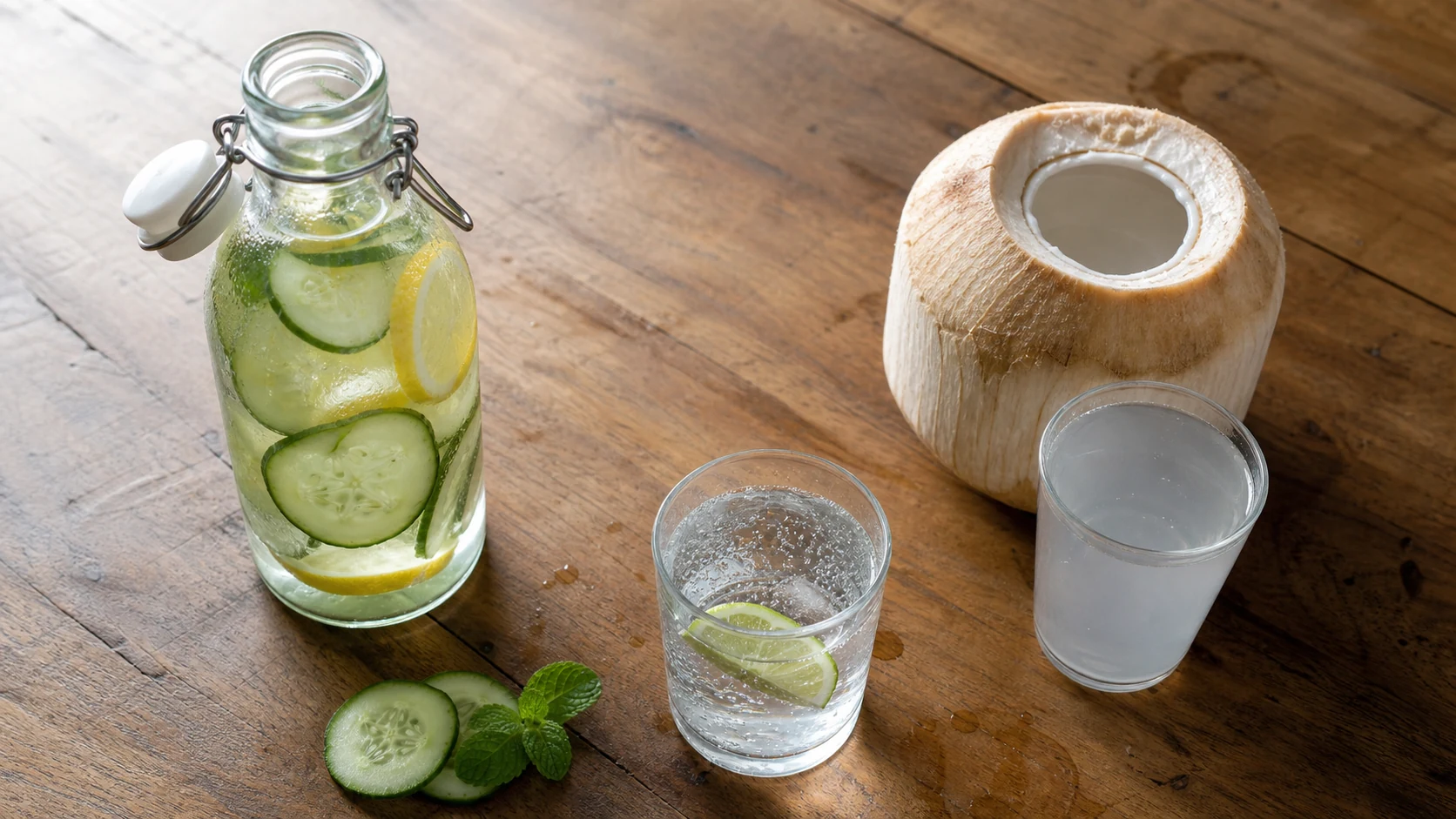
The simplest option is also the cheapest: infused water for kids. Add sliced cucumber, lemon, mint, berries, or watermelon to a pitcher of water, refrigerate for a few hours, and you have flavored water with zero sugar and near-zero cost. Kids often drink more water when it looks interesting — the visual appeal matters more than flavor intensity.
Combinations that work well: cucumber + mint, strawberry + basil, lemon + ginger (milder for kids), watermelon + lime. A water bottle with a built-in fruit infuser chamber makes this easy for school lunches — the fruit infuses throughout the day without making a mess.
Hydracy Kids Fruit Infuser Bottle — 17oz, BPA-free, leak-proof, easy for small hands. The fruit infuses throughout the school day without mess.
How Much Sugar Is Your Kid Actually Drinking?
The numbers above can feel abstract until you add up a real week. Tap how many of each your kid typically has, and this adds up the sugar — then points to whichever swap from the list above would make the biggest dent, based on where most of it is actually coming from. If the number surprises you, my full framework for reducing sugar in your kid’s diet covers the swap in more depth.
If you’d rather not buy anything and just want the shortlist, here’s how these sugar-free drinks for kids compare at a glance:
Quick Comparison
| Drink | Sugar | Best for | Prep |
|---|---|---|---|
| Hint Kids water | 0g | Water resisters, everyday use (all ages) | Ready-to-drink |
| Spindrift sparkling | 2–3g (natural) | Juice/soda switchers (5+) | Ready-to-drink |
| Vita Coco Organic coconut water | 6–9g (natural) | Active kids, post-sports (all ages) | Ready-to-drink |
| Cold herbal tea | 0g | Juice-sweetness seekers (all ages) | Brew ahead, then chill |
| Infused water (DIY) | 0g | Any kid, any age | Slice fruit, refrigerate a few hours |
Take the Same Sugar Check Beyond Drinks
If the drink comparison made you curious about where else added sugar is hiding, the same label-reading method works on cereal, yogurt, bars, sauces, and snacks. Inside: the 30-second label check, current label examples, and a shopping checklist.
Get the checklist and practical kids’ nutrition tips. Unsubscribe anytime.
Something went wrong. Please check your email address and try again.
Frequently Asked Questions
Plain water is always the best choice, but for kids who need variety: Hint Kids flavored water (0 sugar, light flavor), cold-brewed herbal tea (0 sugar, naturally sweet taste), and infused water are the most practical healthy drinks for kids for everyday use. Sparkling water works well for older kids transitioning from soda or juice. All of these are either zero sugar or contain only small amounts of natural sugar.
Coconut water for kids is a reasonable occasional choice — natural electrolytes, no added sugar, but 6–9g of naturally occurring sugars per serving. It’s significantly better than juice and useful for active kids or post-sports hydration. Not the best everyday option if you’re closely managing total sugar intake, but a solid alternative to juice. Watch serving size — coconut water pouches vary considerably in how much they contain.
The best kids juice alternatives depend on what your child likes about juice. If it’s the sweetness — cold herbal tea or a gradual dilution strategy (50/50 juice and water, then more water over time). If it’s flavor variety — Hint Kids or infused water. If it’s the “special drink” experience — sparkling water. The transition is easier when you replace the ritual, not just the liquid.
Add sliced fruit, cucumber, or herbs to a pitcher of cold water and refrigerate for at least 2 hours. Combinations that work well: strawberry + basil, lemon + mint, watermelon + lime, cucumber + ginger. Kids often drink more when the water looks interesting — a clear bottle with colorful fruit makes it feel like a special drink. Zero sugar, zero cost beyond the fruit itself.
It depends on the brand. Look for flavored water with no added sugar, no artificial sweeteners (including stevia and sucralose — research on sweeteners in young children is still developing), and no artificial colorings. Hint Kids and similar brands using only natural fruit essence are safe for everyday use. Avoid flavored waters with sweetener blends — they’re not meaningfully better than the sugar they replace for kids’ hydration habits. For more on what else to watch for beyond drinks, my post on hidden sugar in kids’ food goes deeper.
Final Thoughts
None of these swaps required a fight — that’s really the whole point. Plain water is still the long-term goal, but flavored water, cold herbal tea, and infused water get most kids there without the daily juice negotiation.
Follow-up reads: hidden sugar in kids’ food (for what else to watch beyond drinks) and sugar-free snacks for kids (the food side of the same switch).
This post reflects general American Heart Association and AAP guidance — it isn’t medical advice. If your child has a diagnosed condition (diabetes, allergies, a sensitivity to specific sweeteners), talk to your pediatrician before changing what they drink.