
At 7am, the real breakfast question is not “what is the most impressive thing I could make?” It is what can be ready fast, carry some protein and fiber, and still feel familiar enough to eat? A flavored yogurt pouch plus a granola bar can look like the practical answer — until you check how quickly the sugar adds up.
Most breakfast roundups hit the same wall: beautiful smoothie bowls, elaborate egg-muffin variations, overnight chia pudding that looks great online and much less convincing at 7am. The useful list has to survive an ordinary school morning, not just a recipe photo.
What follows is a practicality-first list: twenty healthy breakfast ideas for kids organized by how long they take. Some are five-minute grabs. Some need ten minutes of real cooking. Five require weekend prep but almost no weekday effort. I flag the texture, prep, and picky-eater tradeoffs instead of pretending every idea works for every child. If you’re working through how much sugar kids should actually have per day — the companion post in this series — that one has the full age-by-age budget breakdown this post keeps referencing.
This post contains affiliate links and may include sponsored content. As an Amazon Associate, I earn from qualifying purchases at no extra cost to you. Amazon links are labeled #ad; other affiliate links may be marked as “affiliate link,” “Sponsored,” or “(paid link).” Affiliate Disclosure.
Table of Contents
- What Actually Makes a Good Kids’ Breakfast
- What Can I Make This Morning?
- 5-Minute Breakfasts (8 Ideas)
- 10-Minute Breakfasts (7 Ideas)
- Make-Ahead Breakfasts (5 Ideas)
- Smart Swaps: Upgrade What You’re Already Serving
- Frequently Asked Questions
What Actually Makes a Good Kids’ Breakfast
When you’re looking for healthy breakfast ideas for kids that actually hold them through a school morning, three things matter more than the rest:
Protein makes breakfast more substantial and contributes to a child’s daily protein needs. There is not one universal pediatric protein target for breakfast, so I would focus on including a meaningful protein source — eggs, Greek yogurt, cottage cheese, milk, beans, or nut/seed butter — rather than chasing a 10–20g rule at 7am.
Fiber adds bulk and helps make breakfast more filling. Whole-grain bread, oats, fruit, vegetables, beans, nuts, and seeds can all contribute. The useful goal is a more substantial meal, not a promise that fiber prevents a behavioral ‘crash.’
Less added sugar matters because breakfast is one of the easiest meals to make less sweet by default. The American Heart Association uses a 25g/day ceiling for ages 2–18, while the newer 2025–2030 federal guidance is stricter: no added sugar for children younger than 11; for adolescents and adults, no amount is considered part of a healthy diet and a meal should contain no more than 10g. That does not turn one sweetened breakfast into a medical event. It does make unsweetened defaults and measured sweeteners the clearer baseline.
Added sugar reference: HealthyChildren.org has practical AAP guidance on reducing added sugar and the foods worth checking most closely; the newer federal age cutoffs are stricter, so I use the AHA number as a comparison benchmark rather than the only rule.
What Can I Make This Morning?
Pick your time and your kid’s pickiness to get 3 matched ideas from the list below.
Best matches for a pickier 10-minute morning:
Pick one option in each row to see matching breakfasts.
5-Minute Breakfasts
These are for the mornings when you overslept, someone can’t find their backpack, and you have roughly five minutes before chaos wins. Each is a quick healthy breakfast for kids built around familiar ingredients and enough substance to be more useful than grabbing a sweet snack on the way out.
1. Plain Greek Yogurt with Berries and Honey
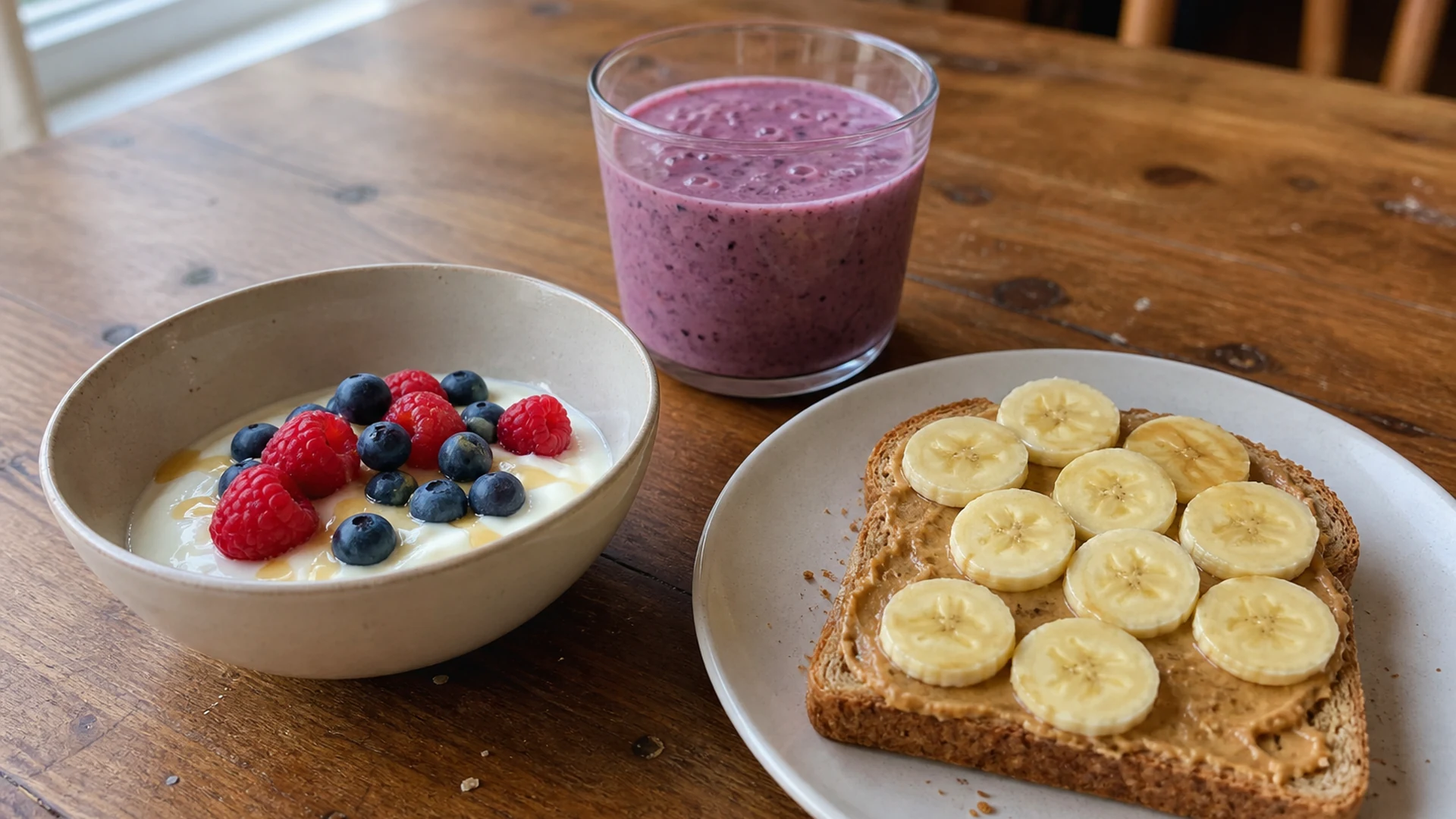
Not the flavored kind: plain whole-milk Greek yogurt topped with berries (frozen works) and, if needed, a small measured drizzle of honey. Some flavored versions carry much more added sugar, while plain Greek yogurt gives you control over the sweetness and usually more protein. Picky note: The texture and tang are different from flavored yogurt, so a gradual blend can make the change less abrupt.
2. Peanut Butter Toast with Banana
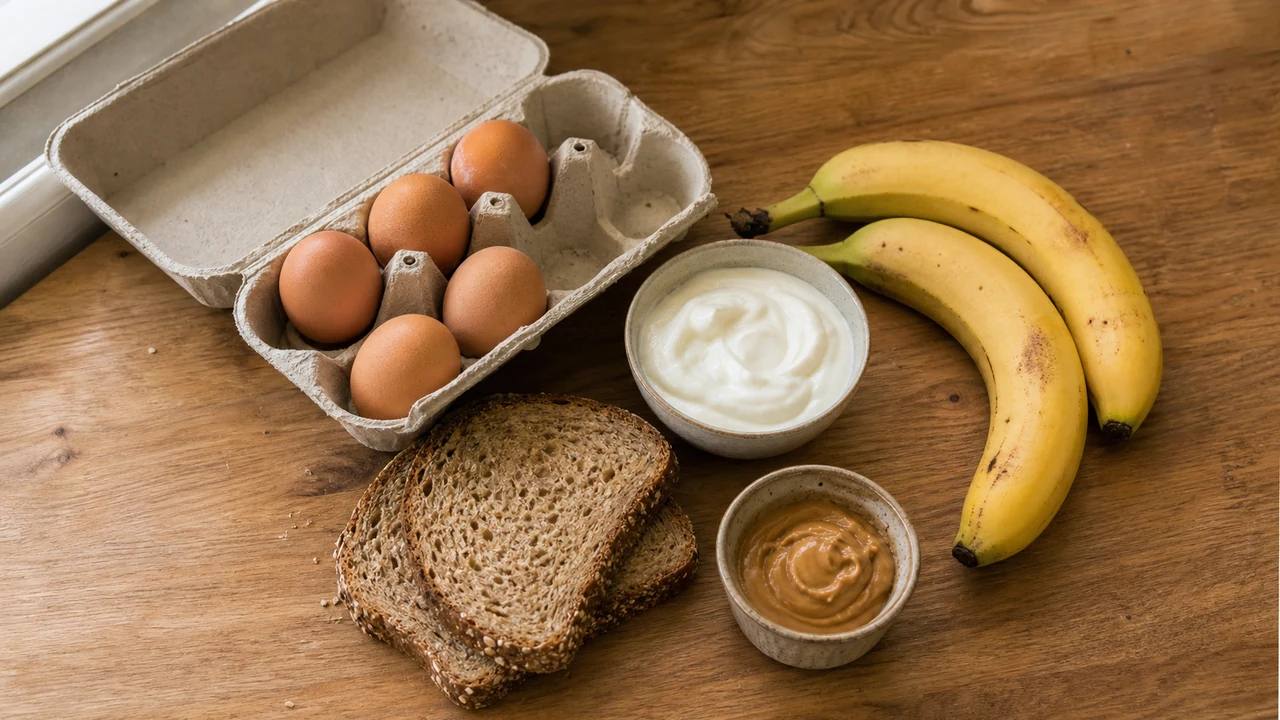
Whole wheat toast, natural peanut butter, half a banana sliced on top. Protein, fat, fruit, and whole-grain fiber in under three minutes. It also works with sunflower seed butter where nuts are not appropriate. The flavor is familiar enough that this is one of the lowest-friction ideas on the list.
3. Microwave Scrambled Eggs with Cheese
Two eggs with a splash of milk, beaten in a mug, microwaved on 70% power for 90 seconds (stir at 45 seconds), shredded cheese on top, rest 30 seconds. About 13g of protein, zero pans to wash. This is the egg solution for mornings when the stovetop isn’t realistic. Picky note: Texture-sensitive kids sometimes accept microwave eggs better than stovetop — they come out softer, not rubbery, if you don’t overcook them.
4. Cheese Quesadilla (Whole Wheat)
A whole wheat tortilla folded over shredded cheese, microwaved briefly or toasted in a dry pan, then cut into triangles. You get protein from the cheese and carbohydrate from the tortilla, with the option to add scrambled egg or beans if the child already accepts them. It is familiar, handheld, and unusually practical on a rushed morning.
5. Berry-Banana Smoothie
One banana plus a cup of frozen berries plus a scoop of Greek yogurt plus enough milk to blend. About three minutes total. The banana provides sweetness and thickness, which is how the yogurt’s protein gets in without kids noticing. Skip juice — it just adds sugar without the fiber that whole fruit provides. A small drizzle of honey if they want it sweeter. This is also a reliable solution for kids who don’t want to chew anything at 7am.
6. Cottage Cheese with Fruit
Half a cup of cottage cheese with peaches, pineapple, or berries can provide a substantial amount of protein with almost no prep. Honest assessment: this is a texture-dependent option. If the curds are the problem, blending it smooth changes the experience completely; introduce it when there is time for a “maybe,” not on the most rushed morning of the week.
7. Low-Sugar Cereal + Milk + Fresh Fruit
Not all cereal is a problem. Look for options with 6g or less of added sugar per serving: plain Cheerios, plain shredded wheat, Kashi Heart to Heart. Add milk for protein and fresh or frozen fruit for fiber. The issue with cereal is usually the serving size (most people pour three times what the label suggests) and eating it alone without protein or fiber additions. Cereal is also one of the foods most likely to look healthier than it is — see Hidden Sugars in “Healthy” Kids Foods if you want the full list. Cereal plus milk plus fruit is a reasonable breakfast most mornings.
8. Hard-Boiled Eggs + Crackers + Cheese Cubes
This only counts as five minutes if the eggs are already cooked. Batch-boil them ahead of time; in the morning, add whole-grain crackers and a few cubes of cheese. The make-ahead step is the whole trick. Without it, this does not belong in the five-minute section.
10-Minute Breakfasts
Ten minutes is a real window — enough to scramble eggs, cook proper oatmeal, or make something warm without it turning into a production. These ideas are still fast, just not five-minutes fast.
9. Scrambled Eggs with Toast and Fruit
Classic for a reason. Scrambled eggs, whole wheat toast, and a piece of fruit cover the basics without turning breakfast into a project. If you are feeding more than one child, use a wider pan and cook the eggs at once rather than in batches. This is the kind of default worth keeping because it is simple enough to repeat.
10. Stovetop Oatmeal (Real Oats, Not Instant Packets)
Real rolled oats take about 5 minutes on the stove — not 30. Unlike a sweetened instant packet, plain rolled oats let you control what gets added. Top with cinnamon, sliced apple or banana, and start with a measured teaspoon of maple syrup if you want extra sweetness; adjust from there instead of free-pouring. Stir in a spoonful of peanut butter if that works for the child. Cinnamon also adds aroma and perceived sweetness without adding sugar.
11. Mini Whole Wheat Pancakes
A simple from-scratch batter or a lower-sugar boxed mix with an extra egg stirred in for more protein. Make them silver-dollar size rather than large: smaller pancakes cook faster and are easy to portion. Top with fresh fruit instead of syrup, or serve a measured amount of syrup in a tiny dish on the side so the quantity stays visible. Make extras and freeze them; they reheat from frozen in the toaster in about 2 minutes.
12. Breakfast Burrito (+ Freezer Version)
Scrambled eggs, shredded cheese, and salsa wrapped in a whole wheat tortilla make a portable breakfast that can also take black beans if that texture is already familiar. Batch-prep version: make several at once, wrap individually, freeze, and reheat on school mornings. The real advantage over overnight oats is that nothing has to happen the night before.
13. Yogurt Parfait (Watch the Granola)
Plain Greek yogurt plus fresh berries plus a small sprinkle of granola. The problem is the granola: most commercial options carry 8–15g of added sugar per serving, and a “sprinkle” easily becomes a half cup without measuring. Read the label once and you’ll be a lot more careful. The yogurt and fruit are doing the nutritional work here. A small amount of lower-sugar granola is fine; just treat it as a texture element, not a main ingredient.
14. Avocado Toast with a Fried Egg
Half an avocado mashed on whole wheat toast with a fried egg on top gives you fat, protein, whole grain, and fiber in one breakfast. Honest assessment: avocado is a strong preference food. If a child already likes it, this is easy; if they have never touched it, a rushed school morning is not the time to make it a required experiment.
15. Veggie Egg Scramble
Two eggs plus whatever vegetables are in the fridge, plus cheese. Spinach wilts quickly; diced bell pepper needs a little longer. For a texture-sensitive eater, chop vegetables small so the bite stays familiar — but I would not make secrecy the whole strategy. A blended or finely chopped vegetable can be a cooking technique while the same foods still appear openly in other meals.
Make-Ahead Breakfasts
These are for Sunday evenings or whenever you have 30–40 uninterrupted minutes. The payoff is weekday mornings where breakfast is already done. You’re just reheating or grabbing from the fridge.
16. Overnight Oats
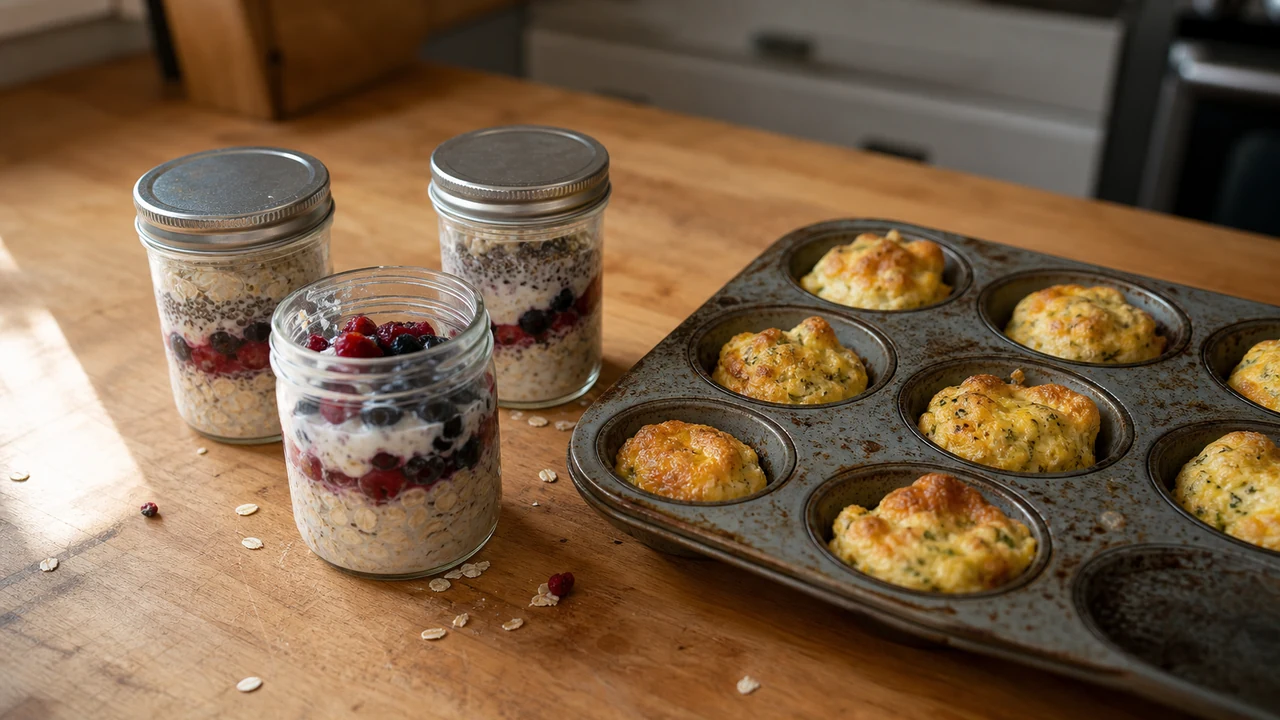
Rolled oats plus milk, Greek yogurt, chia seeds, fruit, and a small measured drizzle of honey can be assembled the night before and refrigerated. Active prep is only a few minutes, and making several jars at once turns it into a genuine weekday shortcut. Letting a child choose the fruit or toppings can also give them some ownership without pretending participation guarantees they will eat it.
17. Mini Egg Muffins
Beat a dozen eggs with a splash of milk. Pour into a greased muffin tin. Add mix-ins: shredded cheese, diced vegetables, diced ham, baby spinach — whatever you have. Bake at 350°F for 20–22 minutes. Makes 12 muffins, keeps in the fridge for 4–5 days, reheats in 30 seconds in the microwave. They also freeze well; make a double batch and freeze half. High protein, zero morning effort after Sunday prep, and kids find them more interesting than plain eggs because of the mix-ins.
18. Homemade Waffles (Waffle Iron)
Make a batch of whole wheat waffles on a weekend, freeze the extras in a single layer, then transfer them to a bag. On school days they can go straight from freezer to toaster. Compared with many store-bought frozen waffles, homemade gives you control over flour and added sugar. A waffle maker earns its space here only if batch cooking is a routine you genuinely plan to use.
If you don’t already have one, here’s the model I’d actually buy again.
My practical pick: the basic Cuisinart Round Classic Waffle Maker — simple, widely available, and enough for the batch-freeze method above without paying for extra features.
19. Banana Oat Muffins
Two ripe bananas (mashed) plus two eggs plus two cups rolled oats plus a quarter cup of milk plus a small handful of mini chocolate chips. Stir, pour into a muffin tin, bake at 350°F for 15–18 minutes. No flour, no refined sugar beyond the chocolate chips — the banana does the sweetening. Makes 12 muffins. Kids who have never voluntarily eaten oats will eat three of these without needing to know what’s in them. Freeze extras. These also work as an after-school snack.
20. No-Bake Energy Bites
One cup rolled oats plus half a cup of natural peanut butter plus a quarter cup of honey plus a quarter cup of mini chocolate chips plus two tablespoons of ground flaxseed if you have it. Mix, refrigerate 30 minutes, roll into balls, store in the fridge. Each bite has real protein and fiber with controlled sugar — very different nutritionally from a store-bought granola bar even if they look similar. Best paired with a piece of fruit. Not a full breakfast on their own, but much better than skipping on a morning when someone truly can’t sit down — and if you want more grab-and-go options in this vein, the best sugar-free snacks for kids roundup compares more grab-and-go swaps by sugar, ingredients, and practicality.
Smart Swaps: Upgrade What You’re Already Serving
If your kids eat any of these defaults, small substitutions can cut the added sugar significantly without changing the morning routine or starting a food fight — the same approach covered in more depth in how to reduce sugar in your child’s diet if you want the full strategy beyond breakfast.
| Instead of… | Try this instead | What changes |
|---|---|---|
| Flavored yogurt pouch (20–25g sugar) | Plain Greek yogurt + ½ tsp honey + berries | ~14g less added sugar, roughly 2× the protein |
| Sweetened instant oatmeal packet | Real rolled oats + cinnamon + banana | ~10g less added sugar, higher fiber, lower glycemic load |
| Orange juice with breakfast | A whole orange or half a cup of berries | Keeps the fiber and intact fruit structure; less concentrated than juice |
| Frosted or honey-coated cereal | Plain Cheerios or shredded wheat + fresh fruit | ~10–12g less added sugar per serving |
| Pancakes + heavy syrup pour | Pancakes + nut butter + fruit, or syrup in a dipping dish | ~15–18g less added sugar, adds protein and fat |
| Store-bought granola bar | No-bake energy bites (#20) or banana oat muffin (#19) | ~8–12g less added sugar, no mystery ingredients |
If the swaps table is the part you want to use this week, start with the breakfast packages already in rotation. A quick Added Sugars check usually shows you where the easiest comparison is.
Use the Hidden Sugar Checklist on Breakfast Labels
Inside: the 30-second label check, current label examples, common added-sugar names, practical swaps, and fridge-and-shop checklists.
Get the checklist and practical kids’ nutrition tips. Unsubscribe anytime.
Something went wrong. Please check your email address and try again.
Frequently Asked Questions
There is not a single official breakfast-specific protein target for school-age children. Daily needs vary by age and body size, so I would use breakfast to contribute a meaningful protein source rather than chase a fixed 10–20g number. Two eggs, Greek yogurt, milk, cottage cheese, beans, cheese, or nut/seed butter can all help.
Some kids genuinely aren’t hungry first thing — their appetite wakes up later than they do. A few things that can help: offer something small and portable (one of the energy bites, a piece of fruit with peanut butter, a smoothie they can sip on the way to school) rather than pushing for a full sit-down meal. If school allows it, a mid-morning snack that hits protein and fiber can fill the gap. If this is consistent and affecting their energy or focus, it’s worth mentioning to their pediatrician.
More than you’d think. Plain Greek yogurt (10–15g per half cup), cottage cheese (14g per half cup), nut butter on toast (7–8g per two tablespoons), milk in a smoothie or with cereal (8g per cup), and cheese in a quesadilla or scramble (6–7g per ounce) all deliver meaningful protein without eggs. A breakfast burrito works with just cheese and beans if eggs are the issue. The egg-free list is genuinely long once you start looking.
Look at the “Added Sugars” line on the nutrition label — not total sugars. Natural sugars in whole fruit and plain dairy are not counted as added sugars on the label. For ages 11–18, a breakfast item above 10g uses a large share of the AHA 25g/day benchmark and also reaches the current federal per-meal cap. For children younger than 11, current federal guidance recommends no added sugar. The categories worth checking closely include flavored yogurt, granola bars, sweetened oatmeal packets, sweetened drinks, and cereal because the front of the package often tells you less than the Added Sugars line.
Yes, especially when made from real rolled oats rather than sweetened instant packets. Plain rolled or instant oats can both be unsweetened and fiber-rich; the important distinction is the ingredient list and Added Sugars line, not whether the oats are instant. Top with cinnamon, banana, or a small drizzle of honey to keep kids interested. Some flavored instant oatmeal packets carry substantial added sugar, so check the label. Unsweetened instant oats are also a perfectly workable fast option.
For a school morning, I would build breakfast around a protein source, a fiber-rich food, and reasonable added sugar. That makes the meal more nutritionally complete and more substantial. It does not guarantee better concentration or prove that a sweet breakfast causes a blood-sugar crash; sleep, total diet, neurodevelopment, stress, and many other factors also affect attention.
Several options on this list need zero cooking: plain Greek yogurt with berries and honey, a peanut butter banana smoothie, hard-boiled eggs made ahead (grab and peel in the morning), or peanut butter toast. If you have a microwave, scrambled eggs in a mug take 90 seconds and add warm protein without a stovetop. Having two or three of these stocked and ready means even the most chaotic morning has a fallback.
Final Thoughts
The goal isn’t to rotate through all twenty. Pick three or four healthy breakfast ideas for kids that sound realistic and make those the default rotation. A short list you can repeat is more useful than a different “perfect” breakfast every morning.
Start with the ideas your kids are most likely to accept based on what they already like. Peanut butter toast is a fine staple if that’s what gets eaten. Scrambled eggs three times a week is great. Don’t aim for variety. Aim for repeatable. Once you have two or three easy healthy breakfasts that your kids will eat without a fight, everything else is optional.
If you’re also working through what your kids eat beyond breakfast — the family nutrition guide covers the full picture, including vitamins, omega-3s, and what a balanced week of eating actually looks like.
A note on nutrition information: Protein and sugar figures in this post are general estimates based on commonly available nutritional data. Individual products vary — always check the label for the specific brand you’re using. If your child has food allergies, intolerances, a diagnosed condition, or you have specific concerns about their diet, talk with their pediatrician or a registered dietitian before making changes. I research nutrition information carefully, but I’m not a healthcare professional.