
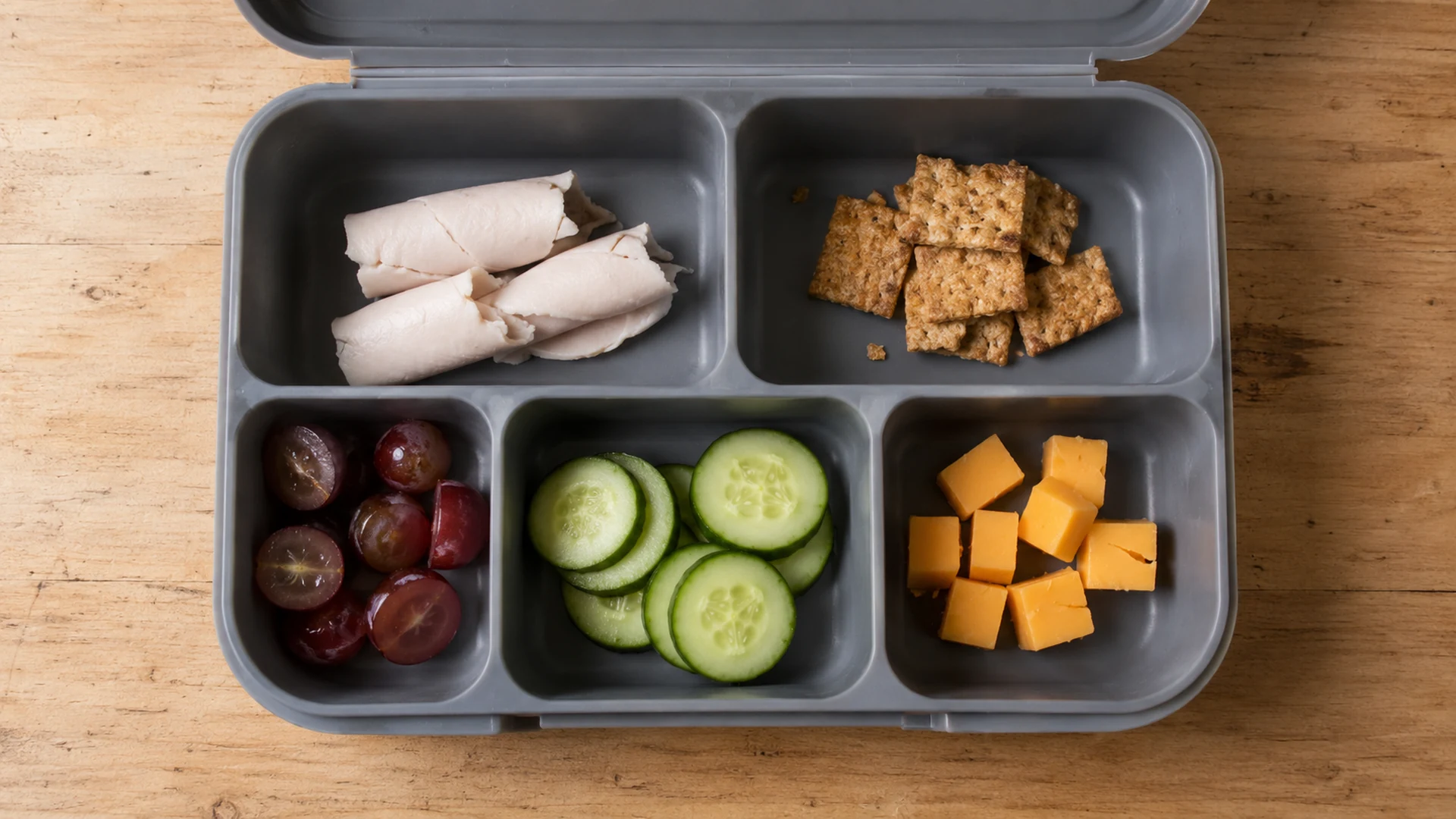
When lunch keeps coming home half-eaten, changing the menu every day can make the pattern harder to see. A more useful starting point is to make the structure predictable and change one variable at a time.
This guide uses that idea to build picky eater lunch ideas around a consistent four-slot framework, familiar foods, low-pressure exposure, and a container setup that makes the food easier to predict. The point is not to promise a universal success rate. It is to make the lunch easier to troubleshoot.
For the complete lunchbox foundation, start with the healthy kids lunch ideas guide.
In This Guide
- Why School Lunches Fail for Picky Eaters
- The 4-Slot Framework
- Picky Eater Lunch Ideas by Slot
- The 3 Yes + 1 Stretch Approach
- The Container Factor
- Tips for Picky Eaters at School
- Find Your Best Starting Point
- FAQ
Why School Lunches Fail for Picky Eaters
When a lunch for picky eaters keeps coming home full, a few patterns are worth checking before you replace every food in the box.
Foods touching each other. Some selective eaters have very specific rules about food contact. If a grape touching a cracker is a known trigger for your child, treat that as useful information rather than stubbornness: a container with genuine physical separation may be worth testing before you change the foods.
Too many unknowns at once. A lunch with several unfamiliar foods can create more uncertainty than one small change beside familiar options. The goal is not to avoid variety; it is to make exposure gradual enough that the lunch still includes foods the child is comfortable eating.
Too much visual load. Large portions of unfamiliar foods can make a selective eater’s box feel like a challenge. Start unfamiliar items small, while letting the child decide how much to eat from what is offered. Portion needs vary by child, so do not turn the four-slot framework into a serving-size prescription.
Temperature and texture changes in transit. A sandwich can become soggy, pasta can change texture in a thermos, and chilled foods may feel different by lunchtime. If a child rejects a food at school that they accept at home, compare the packed version with the version they usually eat before assuming the ingredient itself is the problem. Keep food-safety requirements separate from preference: perishable food still needs safe cold holding, and hot food needs an appropriate insulated container.
The 4-Slot Framework
The framework uses the same four slots each time: a protein, a grain or cracker, a fruit or vegetable, and something familiar and low-stakes. That last slot is an anchor — not a reward — so the box is not made entirely of uncertainty.
The familiar slot is the anchor, not a treat. It might be pretzels, a favorite cheese, or a cracker the child already accepts. The job of that slot is simply to make sure the lunch includes something predictable while the rest of the box varies gradually.
Here’s what each slot looks like in practice:
Slot 1 — Protein
- Turkey roll-ups (just turkey, no condiments)
- String cheese or cubed mild cheddar
- Hard-boiled egg (halved)
- Hummus (in a separate dipping container)
- Sunflower butter with crackers
- Deli chicken, plain
Slot 2 — Grain or Cracker
- Annie’s Cheddar Bunnies
- Whole grain crackers (Triscuits, simple varieties)
- Bread triangles (no crust if that’s the issue)
- Plain pasta (cold, small shapes)
- Mini rice cakes
- Pita triangles
Slot 3 — Fruit or Veg
- Grapes prepared in a developmentally appropriate shape and size for the child
- Apple slices (with lemon juice to prevent browning)
- Clementine sections
- Cucumber rounds
- Cherry tomatoes (halved)
- Freeze-dried strawberries or mango
Slot 4 — Familiar Anchor
- Whatever they always eat — same thing every time
- A few pretzels
- Goldfish crackers
- Annie’s Bunnies (the classic)
- A small piece of their favorite cheese
- A couple of chocolate chips (yes, really)
One note on that last slot, because it comes up almost every time I mention it:
Picky Eater Lunch Ideas by Slot
The slot grid above is a menu, not a prescription. Here are simple combinations that keep the structure predictable without claiming every child will accept the same foods.
Simple combinations to try: Turkey roll-up + crackers + grapes + familiar anchor. Hard-boiled egg + pita triangles + cucumber + familiar anchor. Hummus + crackers + apple slices + familiar anchor. String cheese + cold pasta + clementine sections + familiar anchor. Sunflower butter on bread triangles + freeze-dried strawberries + familiar anchor.
What to avoid in early rotation: Condiments mixed into the protein (mayo in tuna salad, mustard on turkey) unless you know they’re accepted. Mixed dishes where individual ingredients aren’t visible — a pasta salad with vegetables can look fine but feel wrong if something’s hidden. Anything that changes color or texture by lunchtime (avocado, cut apple without lemon juice, soft cheese that separates).
Temperature notes: Some picky eaters have strong preferences about food temperature and texture. If a thermos lunch is repeatedly rejected, compare the food’s texture at packing time with its texture at lunch. But do not use room temperature as a food-safety shortcut: keep perishables properly chilled and hot foods appropriately hot.
The 3 Yes + 1 Stretch Approach
One practical approach to how to feed a picky eater at school is to make most of the box familiar and, when it fits the child, add one small stretch food — something new or previously rejected — without turning it into a test.
The stretch food goes in its own compartment in a small amount, and the goal is exposure rather than a test. Avoid pressure, bargaining, or turning the lunch into a scorecard. The American Academy of Pediatrics notes that a child may need 15–20 tries before liking a new food, while other AAP guidance simply emphasizes that it can take many tries. Treat the number as reassurance about repetition, not a deadline.
If a stretch food is ignored for several exposures, that does not mean the exercise failed. Keep the amount small, keep accepted foods in the lunch, and offer the food again later without turning the response into a performance review.
The Container Factor
The container can matter when food contact or migration is a known trigger. In that situation, genuine physical separation between compartments is a useful variable to test before changing the foods themselves.
If foods touching is a known refusal trigger, test a container with genuinely separated compartments before changing the foods themselves. The point is to remove one variable from the lunch and see whether separation helps; the response will vary by child.
If you haven’t looked at the container as a variable, it is worth examining. The kids lunch box guide compares compartment and seal designs so you can see which options create genuine physical separation and which rely on shallow dividers.
Tips for Picky Eaters at School
Let them help choose or pack when practical. The AAP encourages involving children in selecting and preparing foods. That can increase engagement and gives you useful information about preferences, but it is not a guarantee that the food will be eaten at school.
Keep the stretch portion low-pressure. A small amount of an unfamiliar food can make the exposure easier to ignore if the child is not interested. The four-slot framework is not a serving-size prescription; use portions that fit the child and let them decide what and how much to eat from what is offered.
Keep lunch feedback neutral. If questions about what was eaten start to feel like evaluation, switch to curiosity rather than pressure. You might ask what was easiest to eat, what changed texture, or what they would pack differently next time — and you can also learn plenty by simply noticing what came back.
Keep new-food exposure low-pressure. If the day is already unusually stressful, there is no prize for forcing a new-food experiment into lunch. Use the framework flexibly and keep the familiar base intact.
Offer bounded choices where possible. “Grapes or apple slices this week?” gives the child a real choice without turning the grocery store into an unlimited menu. Treat choice as participation, not proof that the selected food will be eaten.
Snack time can involve the same practical variables — texture, predictability, portability, and how the food changes in transit. The organic snacks for toddlers guide compares packaged options by label, format, and trade-offs, while school snack ideas for kids gives a broader age-by-age list.
Find Your Best Starting Point for Picky Eater Lunches
Answer two quick questions to see where to start.
Frequently Asked Questions
Final Thoughts
The best picky eater lunch ideas are structured, not clever. Four consistent slots, several reliable foods, one quiet stretch when appropriate, and a container that respects known texture or food-touching sensitivities give you a system you can actually troubleshoot. Structure does not solve every feeding problem, but it is more useful than reinventing the lunch every morning.
If foods touching is a known trigger, the container is an easy variable to test: use genuine compartment separation and see whether that removes one source of friction before changing the menu again.
Nothing in this post is medical or therapeutic advice. If you have concerns about your child’s eating that go beyond typical picky eating — including significant food refusal, anxiety around food, or a very limited food range — talk to your pediatrician about a referral to a feeding specialist.