
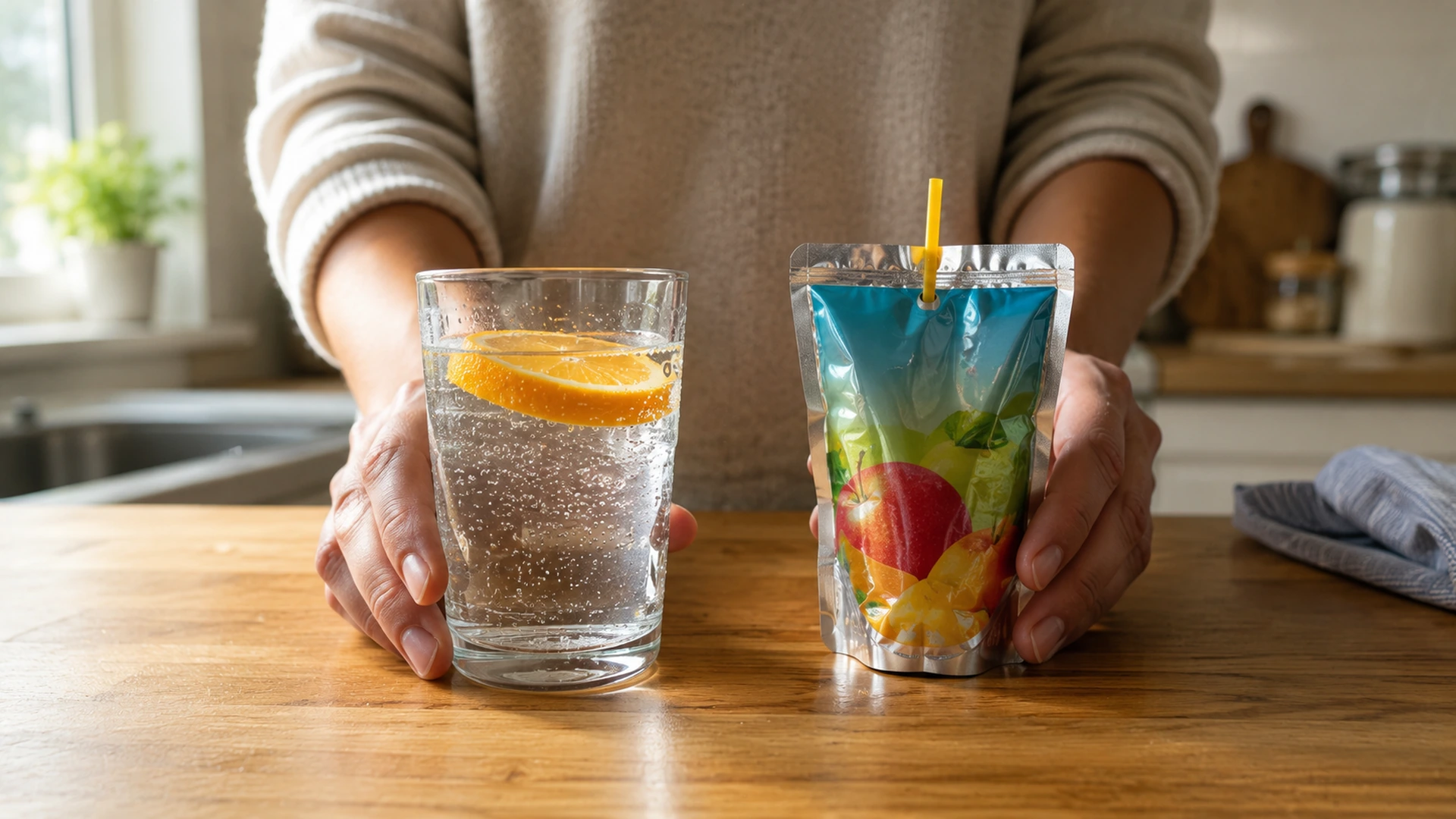
Cold turkey sounds decisive. With kids, it can turn a simple food change into a fight. The problem isn’t the kid — it’s the method.
The approach I would start with — and the framework for how to reduce sugar in kids’ diet without turning every snack into a negotiation — is gradual and practical. Not tips. A method: reduce, replace, then rebalance. This post walks through the framework, resistance scripts, realistic swaps, and a two-week starting experiment.
Table of Contents
- Why Reducing Sugar Feels Harder Than It Should
- The Mistake That Makes Everything Harder
- The Framework: Reduce → Replace → Rebalance
- The Phased Plan
- What to Say When They Push Back
- What to Expect: Progress Is Usually Uneven
- Real Swap Table: Breakfast, Snacks, and Drinks
- Three Mistakes Worth Avoiding
- A Two-Week Starting Plan
- Frequently Asked Questions
If you want the numbers first — daily limits, AHA guidelines, what the 2025–2030 Dietary Guidelines changed — my guide on how much sugar should kids have per day covers that.
Why Reducing Sugar Feels Harder Than It Should
Sweet foods are rewarding, but I would not frame a child asking for a familiar snack as a dopamine problem that needs to be “reset.” A lot of the resistance is simpler: routines are changing, the new food tastes different, and children do not control most of what gets bought or served. If the change also removes a favorite drink or snack overnight, of course they may object.
Sweet preference is influenced by biology and experience, but there is no reliable two- or three-week pediatric palate-reset clock. In a randomized study of 4–7-year-olds, two weeks of different sweet-taste exposure did not change sweetness preference; a four-month randomized trial found that a lower-sugar snack plus caregiver-education program reduced added-sugar intake without shifting the children’s most preferred sucrose concentration. That is good news in a different way: you can improve the eating pattern without waiting for a dramatic biological “reset.”
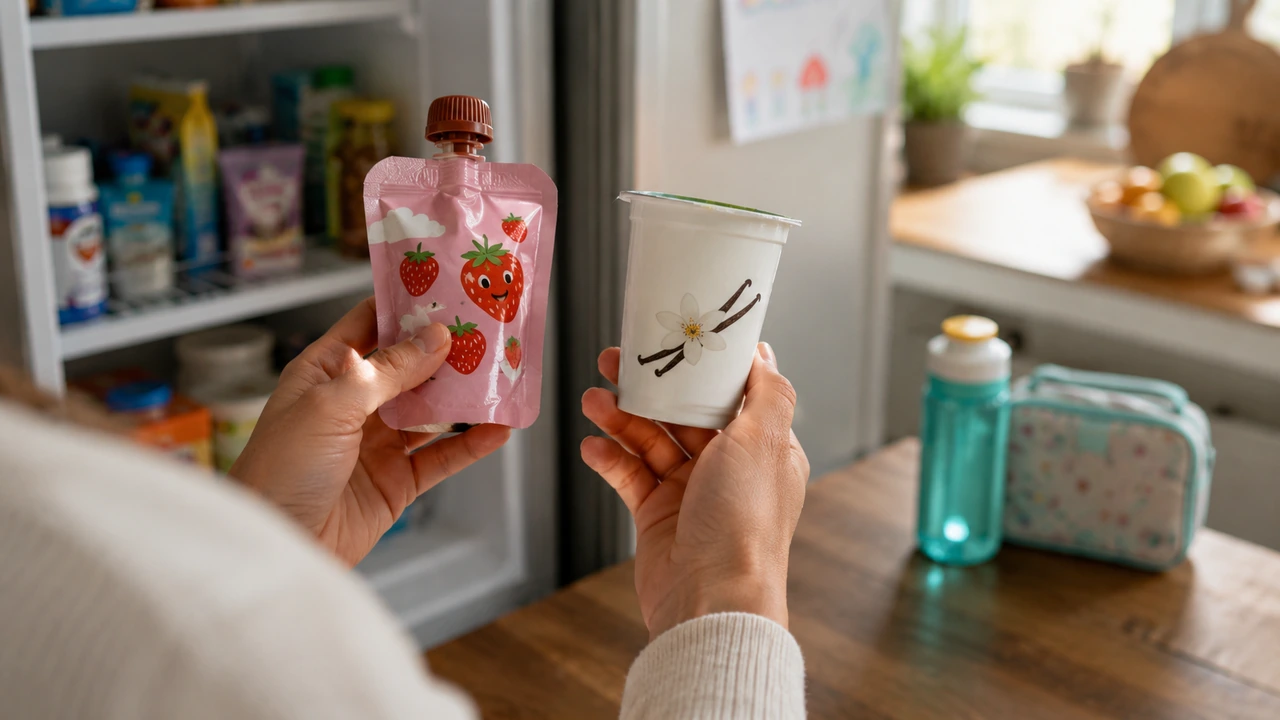
I would also be careful with the classic “sugar crash” story. A rough afternoon after a sweet snack can be real without proving that a blood-glucose spike caused the behavior. If afternoons are consistently difficult, look at the whole pattern — lunch size, snack composition, sleep, timing, hydration, and context — rather than treating mood or focus as a glucose test.
The Mistake That Makes Everything Harder
There are two versions of the same mistake: cutting everything at once, and making sugar the enemy.
Both can create unnecessary friction. An abrupt change may bring more requests simply because the routine changed, while moralizing sugar as “bad” can turn food into a bigger emotional event than it needs to be. I would rather change the environment and the repeated choices than make sweets the villain.
The goal isn’t a purity contest. The American Heart Association uses less than 25 grams of added sugar per day as a ceiling for ages 2–18. AAP parent guidance also says to aim below 25 grams for children 2 and older and avoid added sugar under 2. The 2025–2030 Dietary Guidelines are stricter in direction: avoid added sugars in early childhood, recommend none for ages 5–10, and keep the overall pattern low in added sugars. Treat 25 grams as a ceiling, not a daily budget to spend.
Average U.S. intake is above the recommended pattern. But the practical path down does not have to be a cliff jump. A gradual slope is often easier to implement.
The Framework: Reduce → Replace → Rebalance
Before getting into the phases, here’s a principle I like: add before you subtract. Instead of leading only with what is disappearing, make the existing meal or snack more substantial — plain yogurt mixed with a sweeter version, eggs alongside breakfast, cheese or hummus with crackers, or an age-appropriate nut/seed butter where allergies and choking risk are not concerns. The point is not to promise that protein or fiber switches off sugar requests; it is to improve the meal while you work on the repeated sweet item.
Here’s the spine of the method — the three moves that make sugar reduction for kids feel manageable rather than like a war:
- Reduce — Find where the biggest sources are and start cutting there, not everywhere at once.
- Replace — Swap in something that satisfies the same need (sweetness, texture, the feeling of a treat), so you’re not just removing.
- Rebalance — Once the swaps are working, build a structure where sugar exists in a predictable, low-drama way. Not forbidden fruit, not a reward — just a normal occasional thing.
These phases aren’t weeks one, two, and three on a rigid calendar. They overlap. You might be in the Replace phase with drinks while still in the Reduce phase with snacks. That’s fine. The point is to avoid trying to do all three simultaneously.
The Phased Plan
Phase 1 — Find Where the Sugar Actually Is
Before you change anything, spend a few days just noticing. Not judging — noticing.
Start with the categories where sweet drinks and added sugar often hide:
- Sugar-sweetened drinks — soda, fruit drinks, sports drinks, sweetened water. These can add a lot quickly.
- 100% juice — it usually has 0g added sugar, so count it differently, but portions still matter because it is easy to drink quickly and lacks whole-fruit fiber.
- Flavored yogurt and flavored milk — compare the Added Sugars line with the plain version.
- Sweetened cereal and breakfast bars — health-halo packaging can hide a double-digit label.
- Snack bars, fruit snacks, sweetened pouches, and sauces — repeated small amounts are where the day can stack up.
You don’t need to read every label in your kitchen. Look at the five categories above and see how many show up in your child’s average day. That’s your starting list.
If Phase 1 is where you’re starting, the job is not to change everything yet — it’s to see what the labels actually say. The checklist below gives you a repeatable way to do that before you pick the first swap.
Start the Sugar Audit With the Hidden Sugar Checklist
Inside: the 30-second label check, current label examples, common added-sugar names, practical swaps, and fridge-and-shop checklists.
Get the checklist and practical kids’ nutrition tips. Unsubscribe anytime.
Something went wrong. Please check your email address and try again.
Phase 2 — One Swap at a Time, Drinks First
Start with drinks if they are a repeated source. Water and milk are the default beverages the AAP recommends for hydration, and sweetened drinks can contribute a lot of added sugar without much effort. That makes drinks a high-leverage place to look first — not because every child adjusts fastest there.
First separate fruit drink from 100% juice. A sugar-sweetened fruit drink is an added-sugar target. Unsweetened 100% juice usually has 0g added sugar, but the AAP still recommends age-based portion limits. If a child is used to a larger juice serving, diluting it gradually with water can be a transition tactic; there is no need to pretend that the transition follows a fixed three-week clock.
After drinks, move to one snack swap. Not all snacks — one. Swap the highest-sugar item (usually a flavored yogurt or a granola bar) for something lower. Keep everything else the same for now.
Move to the next swap when the current change feels routine enough that adding another one will not overload the week. That may be a few days for one family and several weeks for another. I would use behavior and logistics as the checkpoint, not a five-to-seven-day rule.
Phase 3 — Structure + Kid Involvement
This is the part that can reduce unnecessary negotiation: make the structure predictable and give the child some choices inside it.
Here’s the shift: the adult decides what options are available, while the child gets a real choice between those options. That keeps a boundary without turning every snack into a yes/no contest.
In practice it sounds like this: “You get to pick your snack today: apple slices with an age-appropriate nut/seed butter, or cheese and crackers. Which one do you want?” Both options are acceptable to the adult; the child still gets a meaningful choice.
I would not claim that food resistance is mostly about control — appetite, sensory preferences, routine, neurodevelopment, and plain old taste all matter. But choice is one low-pressure tool you can use:
- The two-option snack rule — Always offer two pre-approved choices, never an open-ended “what do you want?”
- The treat structure — If sweets are part of the routine, decide when they fit instead of renegotiating every request. Predictability matters more than prescribing one sweet every day.
- The taste-test vote — Let them rate a new option on a smiley-face scale. The point is to give them a low-pressure role in evaluating it, not to guarantee acceptance.
If you’re making one manageable change, keeping the boundary calm, and paying attention to what is actually workable, you’re using the framework.
What to Say When They Push Back
This is where a prepared script can help. Pick the situation before the conversation turns into a fight.
My child is:
What to Expect: Progress Is Usually Uneven
There is no scientifically established four-day “sugar withdrawal” phase in children and no dependable week-three palate reset. Some children accept a lower-sugar swap quickly; others keep asking for the familiar version for quite a while.
What I would track instead: Is the repeated sweet drink showing up less often? Did one lower-sugar breakfast become normal? Are you checking labels faster? Are negotiations shorter because the rule is predictable? Those are useful signs of progress even if a child still prefers sweet food.
Repeated exposure can help foods become more familiar, but sweetness-preference studies do not support promising a simple countdown. A 14-day randomized trial in children found no intervention-driven change in sweetness preference, and a four-month lower-sugar intervention reduced added-sugar intake without clearly shifting preferred sucrose concentration.
The thing to hold onto: habit change can work without a dramatic biological “reset.” Judge the plan by whether the household can keep doing it and whether the repeated sources of added sugar are actually coming down.
Real Swap Table: Breakfast, Snacks, and Drinks
| Current item | Approx. added sugar | Lower-sugar swap | Why it works for kids |
|---|---|---|---|
| Apple juice (1 cup) | 0g added sugar if it is 100% juice; total sugar varies | Water as the default; if 100% juice is already a habit, dilute gradually while staying within AAP age-based juice limits | Preserves the drink routine while reducing how much juice is served; no fixed timeline required |
| Flavored kids’ yogurt pouch (most brands) | 10–14g added sugar | Plain or lower-sugar yogurt + fruit or mashed banana | Keeps the yogurt format while giving you more control over the Added Sugars line |
| Popular sweetened cereal | 10–14g per serving | Lower-sugar cereal mixed with the current cereal, if a gradual blend makes the change easier | Same bowl and texture; the label comparison does the work without promising a reaction |
| Chewy kids’ granola bars | 8–12g added sugar | Cheese + whole-grain crackers, or fruit + age-appropriate nut/seed butter where safe | Portable and more substantial without relying on a “sugar spike” explanation |
| Flavored applesauce pouches | Varies — check the Added Sugars line | Unsweetened applesauce pouch — compare the current label | Preserves the pouch format while removing added sugar in products that list 0g |
Three Mistakes Worth Avoiding
1. Assuming “sugar-free” automatically means better. Some sugar-free snacks and drinks use nonnutritive sweeteners or sugar alcohols. They can reduce added sugar, but the AAP notes that long-term pediatric evidence for nonnutritive sweeteners is limited. I would compare the whole product — ingredients, nutrition, purpose, and how often it is used — rather than making “0 sugar” the only criterion.
2. Using sweets as rewards. “If you eat your vegetables, you can have a cookie” can make the cookie more valuable precisely because it is the prize. AAP parent guidance recommends avoiding sugar as a reward. Use non-food rewards when you need one, and let dessert be part of the food routine rather than payment for taking bites.
3. Turning the swap into a moral lecture — or a trick. You do not need to announce, “This is the healthy cereal now,” but I also would not build the plan around deceiving a child. Keep the language neutral: “We’re trying this one today.” If they dislike it, that is useful feedback, not a failed nutrition lesson.
A Two-Week Starting Plan
If you want a concrete starting point rather than a full overhaul, here it is:
| When | Your one action | What to watch for |
|---|---|---|
| Week 1 | Audit the main drink and snack categories. Pick one repeated source to change first; if it is a drink, distinguish sugar-sweetened drinks from 100% juice. | Can you make one change without turning the rest of the week into a food project? |
| Week 2 | Once the first change feels manageable, pick one snack to compare or swap. Use the two-option choice structure if it helps. | Is the new option workable on a normal school/work day? Keep it only if the answer is yes. |
| Weeks 3–8 | Add another change only when the current ones feel routine. No fixed cadence is required. | Track the pattern: fewer repeated sweet drinks/snacks, easier label decisions, and a plan the household can sustain. |
The goal when you reduce added sugar for kids isn’t a perfect zero. It’s a direction. Use the two-week plan as a starting experiment, not a promise that a child’s taste preferences will transform on schedule. When the first changes are routine, decide whether another change is worth the effort. There is no universal three-month finish line.
For specific snack options with the Added Sugars line and practical trade-offs compared, I’ve done the research in Best Sugar-Free Snacks for Kids: Label Comparisons, Swaps & Picks.
Frequently Asked Questions
Conclusion
Learning how to reduce sugar in kids’ diet does not require a purity challenge or a countdown to a palate reset. Start with the biggest repeated sources, make one workable change, preserve the function of the food you are replacing, and use structured choices when they help. Reduce → Replace → Rebalance is useful because it gives you a sequence — not because every child follows the same timeline.
Added sugar guidelines referenced throughout are from the American Academy of Pediatrics, the American Heart Association, and the 2025–2030 Dietary Guidelines for Americans (released January 2026), which now state that no amount of added sugars is recommended as part of a healthy diet for children. This post is informational only — not medical advice. Always consult your child’s pediatrician before making significant changes to their diet, especially for children under 2 or those with any health conditions.