

“Wired but exhausted” is one of the more common bedtime problems parents search for a fix to — a kid who is genuinely tired but can’t settle, running through the day’s leftover energy instead of falling asleep. Magnesium comes up constantly as the answer, and just as constantly, the actual signal gets buried under product marketing.
So I went looking for what’s real: what magnesium actually does in the body, why the form matters more than the brand, and — just as important — what the evidence does and doesn’t support for kids specifically, since most of the research behind the marketing claims was done in adults.
Here’s what I found comparing forms, products, and the current research — why form matters more than brand when it comes to the best magnesium supplement for kids’ sleep, and what I’d want to know before starting. No dosage recommendations from me; that part is your pediatrician’s job.
This post contains affiliate links. If you buy through a link, I may earn a small commission at no extra cost to you. I only recommend products backed by careful label and research comparison. As an Amazon Associate I earn from qualifying purchases. See my full disclosure.
Table of Contents
- What Magnesium Does for Sleep (and Why Form Matters)
- Magnesium Forms Compared: Which Type Works for Sleep
- Best Magnesium Supplement for Kids’ Sleep: What I Compared
- Which Magnesium Is Right for Your Child?
- A Closer Look at Each One
- What to Know Before Starting
- Signs Your Child Might Be Low in Magnesium
- FAQ
What Magnesium Does for Sleep (and Why Form Matters)
Magnesium is involved in hundreds of enzymatic reactions in the body, and its proposed relevance to sleep comes down to a few specific mechanisms. It’s involved in activating GABA receptors — part of the same system tranquilizers work on, though far more mildly — which is thought to reduce neurological excitability. It’s also involved in melatonin production and cortisol regulation, the stress hormone connected to a racing mind at bedtime. These are real, well-documented biochemical roles; whether they translate into a noticeable sleep effect for a given child is the less settled question below.
The reason form matters is bioavailability. Not all magnesium reaches cells equally. Magnesium oxide — the most common and cheapest form — is often cited at around 4% absorption. You’re mostly paying for something that passes through. Magnesium glycinate has much higher absorption and is specifically noted in sleep research for its calming effect, partly because it’s bound to glycine, an amino acid that independently has a mild sedative effect.
For kids, two additional factors matter: gentleness on the stomach (citrate can cause loose stools at higher amounts, which is not what you want at bedtime) and format (kids who won’t swallow capsules need a powder or gummy option). The combination of form and format is really what determines which product makes sense for your specific child.
Magnesium is one piece of a bigger sleep picture — for a lot of families it’s not the only piece. If screens are part of your child’s bedtime struggle, the AAP screen time guidelines cover what the research actually says about screen timing and sleep.
Magnesium Forms Compared: Which Type Works for Sleep
Here’s how the main forms compare on the factors that matter most for children’s sleep:
| Form | Absorption | Good For | Watch For |
|---|---|---|---|
| Glycinate | High | Sleep, restlessness, bedtime anxiety — the top pick for sleep specifically | More expensive than oxide or citrate; fewer kid-specific products |
| Bisglycinate | High | Essentially the same benefits as glycinate; gentle on stomach | Often labeled interchangeably with glycinate — check the label |
| Citrate | Good | Widely available, commonly used, good absorption | Can cause loose stools at higher amounts — especially relevant for kids |
| L-Threonate | Good (brain-specific) | Crosses blood-brain barrier; some adult research on sleep quality | Expensive; limited pediatric data; most research is in adults |
| Oxide | Poor (~4%) | Nothing meaningful — mostly used to inflate mg numbers on labels | Laxative effect without meaningful sleep benefit; skip it |
When choosing magnesium for kids’ sleep specifically, glycinate or bisglycinate is almost always the right starting point. Citrate is fine if your child tolerates it and you start conservatively — per your pediatrician’s guidance. The jump to l-threonate rarely makes sense as a first choice for a child; most of the sleep research supporting it is adult data.
Best Magnesium Supplement for Kids’ Sleep: What I Compared
I’m sharing how these four compare on form, format, and label quality — not specific amounts. That part depends on your child’s age and weight, and it’s worth a conversation with your pediatrician before you start. The pattern that held up across the comparison: form matters more than brand. Decide glycinate vs. citrate first, then format (capsule, powder, gummy), and the brand choice gets much clearer.
| Product | Form / Format | Best For | Main Downside |
|---|---|---|---|
| Natural Vitality CALM Kids | Citrate powder | Easiest starting point | Can cause loose stools at higher amounts |
| MaryRuth’s Magnesium Gummies | Citrate gummy | Kids who refuse pills/powders | Less elemental magnesium per serving |
| KAL Magnesium Glycinate | Glycinate capsule | Best value, school-age kids | Not a kid-specific formula — confirm amount with your pediatrician |
| Thorne Magnesium Bisglycinate | Bisglycinate, unflavored powder | Clean-label, sensitive kids | More expensive |
If you’re unsure where to start: glycinate or bisglycinate is the better first choice for sleep specifically, unless your child won’t take a capsule or powder — in which case format wins and a gummy is the practical answer.
Which Magnesium Is Right for Your Child?
Two questions, one starting recommendation based on your child’s age and your biggest challenge.
A Closer Look at Each One
Natural Vitality CALM Kids
Glycinate is usually my first recommendation for sleep specifically, but I’m starting this list with CALM Kids because it’s the easiest entry point for most families — no capsules, no convincing, just powder in juice.
This is usually the most visible option in the category, and it’s a reasonable place to start. It’s a magnesium citrate powder for kids — dissolves in water or juice, and comes in flavors most kids will actually drink. The format is genuinely useful for younger children who won’t swallow pills or chew gummies — it mixes into a small cup of juice as part of the evening routine.
The honest tradeoff with citrate is digestive: at amounts large enough to be worth taking, some children get loose stools, since citrate draws water into the intestines more readily than glycinate does. Some kids handle it fine; others don’t. If your child tolerates it, this is an accessible and affordable starting point. If you notice digestive changes, switch the form rather than the brand.
No pills, no fighting: Natural Vitality CALM Kids mixes into juice or water in flavors kids actually drink.
MaryRuth’s Magnesium Gummies for Kids
If compliance is your main issue — the child who won’t drink a powder or take any capsule — gummies solve the problem. MaryRuth’s uses magnesium citrate at a low per-serving amount, and the gummies are genuinely palatable. The tradeoff: gummies deliver less elemental magnesium per serving than powders to keep the format manageable, so they work best as a daily top-up rather than a higher-amount supplement.
The format is the whole point here: nothing to swallow, nothing to mix, nothing to negotiate over at the end of the day. For a child who refuses everything else, that alone can be the deciding factor — a supplement that doesn’t get taken isn’t helping anyone.
Won’t take a pill or powder? MaryRuth’s Magnesium Gummies — sugar-free, kid-dosed, no melatonin added.
KAL Magnesium Glycinate
This is the value pick for a school-age child who can swallow small capsules. It’s magnesium glycinate without the premium price of cleaner-label brands, and the formula is straightforward. Not specifically kid-branded, but the capsule size is manageable for most children in this age range.
The main case for it: it’s the glycinate form — the one with the strongest connection to sleep specifically — without a “children’s product” price markup, from a supplement brand with a long, consistent track record. It’s available on Amazon at a good price point for magnesium glycinate without the premium markup some brands charge.
With that caveat logged — for the right family who has the pediatrician conversation, it’s the value pick I keep coming back to.
If your child can swallow a capsule: KAL Magnesium Glycinate — pure glycinate, no fillers, no premium markup.
Thorne Magnesium Bisglycinate Powder
If clean-label matters to you — and for a supplement you’re giving a child every night, it’s a reasonable thing to care about — Thorne is the brand I’d point to. The bisglycinate powder has minimal additives, mixes well, and doesn’t have the flavoring that some powders use to mask the taste. It’s unflavored, which means you can mix it into whatever your child is already drinking without changing the flavor.
Like KAL, this is an adult-labeled product rather than a children’s formula — so the amount is a pediatrician question, not a guess. It’s also more expensive than the alternatives. Whether that premium is worth it depends on how much formulation matters to your family — this is the pick for households prioritizing a minimal-ingredient label over a lower price point.
Want the cleanest label? Thorne Magnesium Bisglycinate — unflavored powder, no additives.
My Picks at a Glance
If you want the short version, this is the order I’d actually work through — easiest to get started with first, best form for sleep second.
- Easiest to actually get into your kid — MaryRuth’s Magnesium Gummies. A supplement your child refuses is 0% effective, so the format that gets taken is worth a lot. Just be clear on the tradeoff: this is citrate, not glycinate — it’s the compliance pick, not the absorption pick.
- Best form for sleep specifically — KAL Magnesium Glycinate. If your child can swallow a capsule, glycinate is the form with the strongest connection to sleep. It’s an adult-labeled product, so confirm the right amount with your pediatrician before starting.
- Best clean label — Thorne Bisglycinate. Unflavored powder, minimal additives, mixes into anything without changing the taste. The premium option, and priced like one.
- Easiest to hide in a drink — Natural Vitality CALM Kids. Flavored citrate powder that disappears into juice. Accessible and affordable — just watch for loose stools.
Still not sure? The quick selector above ↑ matches a pick to your child’s age and biggest challenge.
What to Know Before Starting
Talk to your pediatrician first. Not boilerplate — I mean it practically. Your pediatrician can tell you whether there’s a reason to test magnesium levels before supplementing, advise on an appropriate starting amount for your child’s age and weight, and flag any interactions with other medications. Magnesium is generally well-tolerated, but “generally well-tolerated supplement” and “appropriate for my specific child” are different questions.
If getting an appointment is the bottleneck — and for a question this small it often is — you can ask a pediatrician online and get a read on the right amount before you buy anything. Especially worth it if your child takes other medication or has an existing condition.
Loose stools are your early warning sign. Too much magnesium — regardless of form — draws water into the intestines. If your child starts having loose stools after beginning a supplement, the amount is too high for their system. Back down and talk to your pediatrician about the right starting point. This is more common with citrate than glycinate, but can happen with any form.
A common approach is 30–60 minutes before bedtime. Building it into the pre-bed routine — alongside teeth brushing — makes compliance easier and connects it to the sleep cue.
Supplements work alongside sleep habits, not instead of them. If your child’s sleep fundamentals are solid and there’s still a settling problem, that’s where magnesium is most likely to help. If the basics aren’t in place yet, start there. The sleep needs by age guide covers what appropriate sleep looks like from toddlerhood through adolescence.
Signs Your Child Might Be Low in Magnesium
Most children in the US don’t consistently meet dietary magnesium recommendations. Magnesium deficiency symptoms in kids can be subtle and easy to miss — partly because the foods highest in magnesium are ones children often don’t eat enthusiastically: leafy greens, legumes, nuts, seeds, whole grains.
Patterns that may suggest lower magnesium status include:
- Difficulty falling asleep despite tiredness
- Restlessness at night, frequent position changes, leg cramps
- Irritability or emotional dysregulation out of proportion to circumstances
- Muscle cramps or twitches, particularly at night
- Constipation
- Frequent headaches in school-age children
None of these are specific enough to diagnose a deficiency — they overlap with many things. But if several are present, it’s worth mentioning to your pediatrician and asking whether checking magnesium levels makes sense. Supplementing at sensible amounts without knowing exact status is generally low-risk, but knowing gives you more to work with — and it’s a fair question to put to your pediatrician.
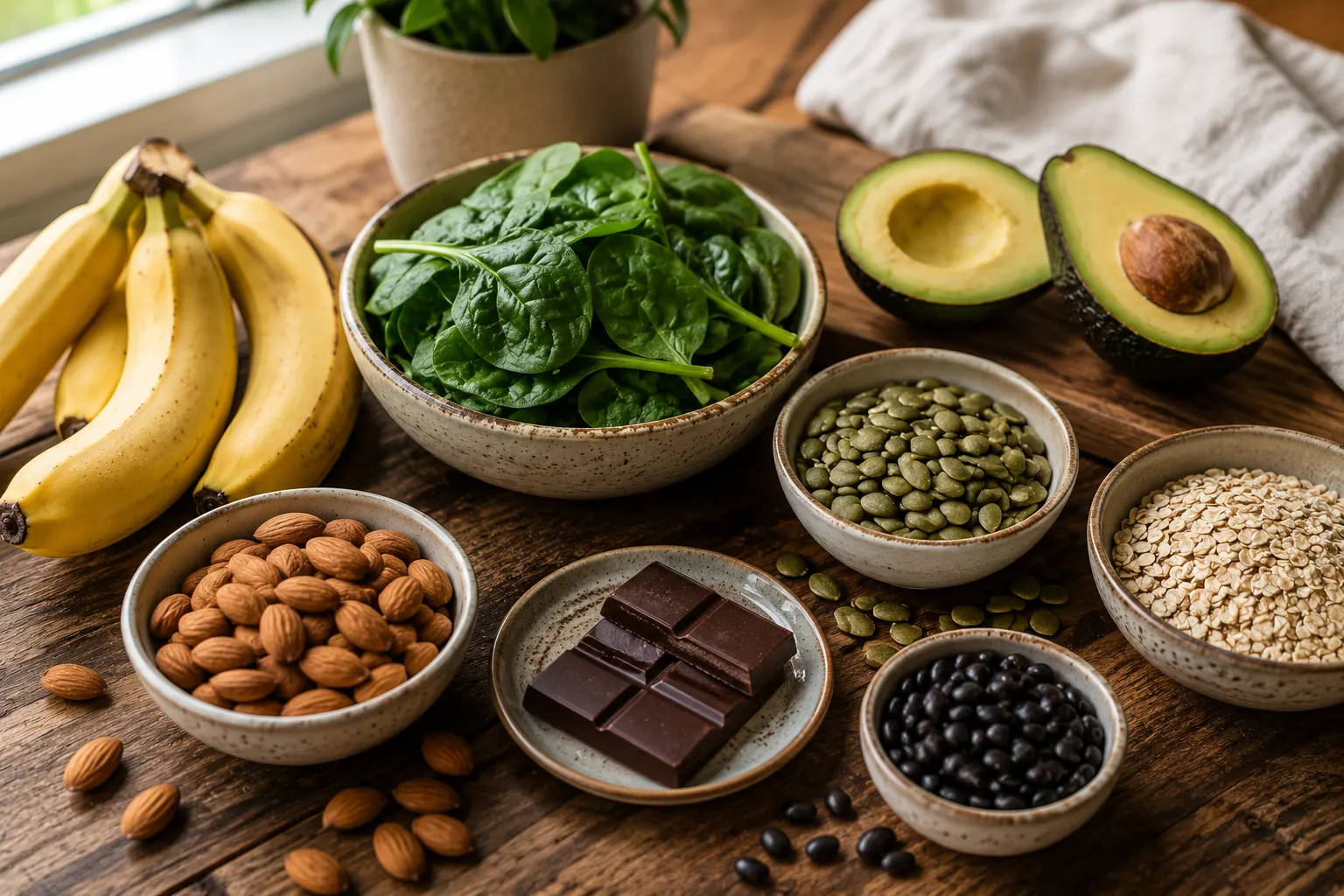
Dietary sources worth prioritizing if your child will eat them: pumpkin seeds (exceptionally high), almonds, dark chocolate, avocado, spinach, black beans, edamame. Getting more of these into meals is the ideal first step — supplementation is a useful backup when diet alone isn’t doing the job.
Frequently Asked Questions
Still unsure? These are the questions I hear most often from other parents going through the same thing.
Final Thoughts
There is no single proven “best” magnesium for kids’ sleep — the pediatric research simply isn’t there yet, whatever a product label implies. What the comparison above does support: the best magnesium supplement for kids’ sleep is whichever form your child will actually take consistently, in a format they’ll tolerate, from a brand that doesn’t load the formula with fillers. Glycinate is the form with the strongest mechanistic case for sleep specifically, and the format — powder, gummy, capsule — matters almost as much as the form for a child who has opinions about what they’ll swallow.
Don’t skip the pediatrician conversation. Not because magnesium is dangerous at appropriate amounts, but because it’s the fastest path to getting the amount right and making sure you’re addressing the right problem. Sleep fundamentals first, supplement as support — that’s the order that tends to work.
Nothing in this post is medical advice or a recommendation to supplement your child without professional guidance. Dosage questions, medical conditions, and individual suitability should be discussed with your child’s pediatrician or a qualified healthcare provider. Supplement research in children is more limited than adult research — what works in adults does not always translate directly.