
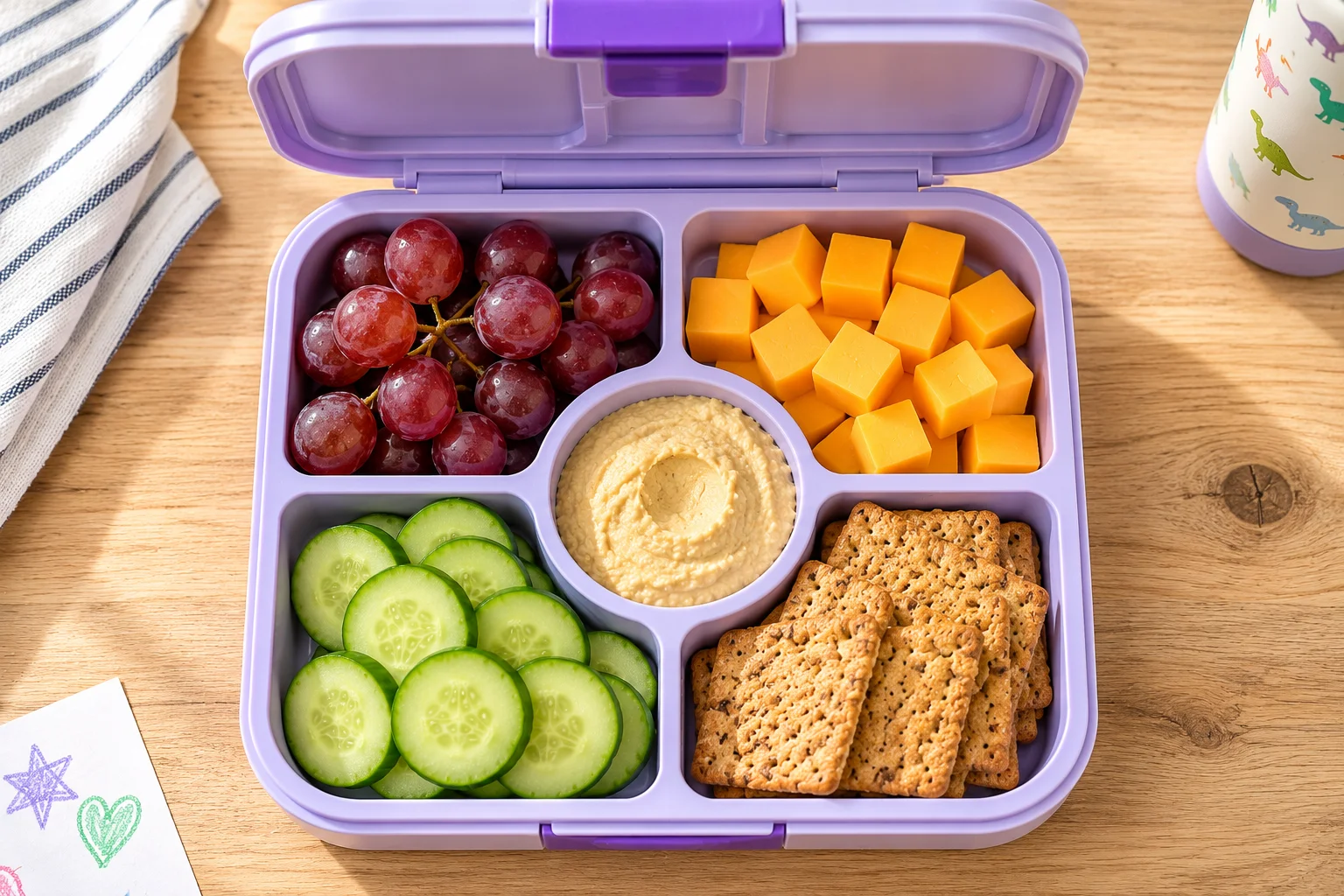
When a lunchbox leaks onto a library book or a tablet, “mostly leak-proof” stops being a minor product detail. Leaks, sogginess, temperature control, and foods crossing compartments are the failure modes that matter.
So this comparison starts with the hardware rather than a star average: lid and gasket design, compartment geometry, capacity, materials, cleaning requirements, manufacturer care guidance, replacement parts, and recurring longer-term owner complaints. The goal is to match the container to the problem you actually need it to solve.
I compared five leading kids lunch box options on those criteria, with honest limitations for each. Looking for what to pack rather than what to pack it in? That’s in the healthy lunchbox guide.
This post contains affiliate links, including Amazon links. As an Amazon Associate, I earn from qualifying purchases at no extra cost to you — that’s how I keep this site running. The recommendations below are based on transparent product research rather than a claim that I personally tested every container. Affiliate Disclosure.
- Need wet and dry foods kept separate? Yumbox Original uses a silicone-lined per-compartment seal and is explicitly sold as leak-resistant for foods like yogurt and dips.
- Packing hot food? OmieBox is the only container here that combines a real thermos section with a bento tray in one unit.
- Want a stainless main tray? PlanetBox Rover is the all-stainless tray option in this group, with separate lidded dippers for wetter foods.
Table of Contents
- Which Type of Lunchbox Do You Need?
- Size and Age Guide
- The Best Kids Lunch Boxes Compared
- What “Leak-Proof” Actually Means
- The Eating Connection
- What “BPA-Free” Actually Means
- Comparison at a Glance
- Find Your Best Lunchbox
- FAQ
Which Type of Kids Lunch Box Do You Actually Need?
Before brand, pick type. Most buyer confusion happens here, and no amount of reading reviews will help if you’re evaluating the wrong category.
Bento-style container (divided tray with lid) — This format is useful when organization and food separation matter. The exact leak performance, latch effort, capacity, and cleaning rules vary by model, and most bentos do not insulate on their own. For perishable food, pair the container with an insulated bag and the cold-source setup recommended by USDA.
Soft-sided insulated lunch bag + containers inside — The bag handles temperature while the inner container handles organization. That usually means more pieces, but it lets you solve the two jobs separately. For perishable lunches, USDA recommends an insulated bag with at least two cold sources; a freezable bag can be part of that setup, but I would not treat it as an automatic replacement for the second cold source.
Hot-food hybrid (thermos compartment + bento tray) — The OmieBox lives here. One container with a vacuum-insulated hot food section alongside a divided cold food tray. Heavier than a standard bento, but it solves the “how do I pack soup and crackers in one container” problem cleanly. Right for families who pack hot food 2–3 days a week.
Kids Lunch Box Size and Age Guide
Lunchbox capacity matters, but I would not prescribe it from age alone. The useful checks are whether the box fits the backpack, whether the child can open and carry it, whether the compartments fit the foods you actually pack, and whether the total packed amount matches that child’s appetite.
| Stage | What to check | Practical fit notes |
|---|---|---|
| Younger school-age | Independent opening, filled weight, compartment size, backpack fit | Start with the child’s appetite and the foods you actually pack. Manufacturer age ranges can help narrow the field, but practice the latch and carry the box fully packed before relying on it at school. |
| Elementary school | Enough room for the usual meal plus any needed snack, without wasted bulk | Do not assume every kids’ bento is sized for the whole age band. Bentgo Kids, for example, is manufacturer-positioned for ages 3–7, while Yumbox Original is positioned for preschool through about age 8. Compare the exact model rather than an age-based volume rule. |
| Older kids / tweens | Appetite, school-day length, sports needs, and whether a second container is easier | Some little-kid bentos may feel too small. A larger-format lunchbox or a main container plus a separate snack can make more sense, but there is no universal milliliter target that fits every child. |
The second size factor is lid usability. Latches and gasketed lids feel different from one model to another, and manufacturer “kid-friendly” language cannot tell you whether a particular child can operate the exact box independently. For younger children especially, test the full open-close routine at home with the box packed.
For age-appropriate snack ideas that work well with these container sizes, school snack ideas for kids has options organized by age.
The Best Kids Lunch Boxes: Five Options Compared
For each pick, I compared the exact linked variant, compartment and seal design, capacity, materials, cleaning requirements, manufacturer guidance, and recurring owner-feedback patterns. That lets the article make a useful buying call without pretending every product went through the same hands-on field test.
Yumbox Original Best for Leak Resistance
Current direct price: about $33 | Manufacturer fit: preschool–age 8 | Capacity: 6-compartment tray — five 1/2-cup sections + dip well
Yumbox’s current Original uses a silicone-lined lid that seals the six-section tray and is specifically described by the manufacturer as leak-resistant for wet foods such as yogurt, applesauce, and dips alongside dry foods. It is not intended for free-flowing liquids, but the per-compartment seal is the reason this remains the strongest separation-first pick here.
Bentgo’s current Kids line is also marketed as a leak-proof divided bento, so the useful distinction is no longer “Yumbox seals and Bentgo doesn’t.” Choose between them on the exact compartment layout, total capacity, latch feel, care instructions, and the foods you pack most often.
- Silicone-lined lid is designed to keep wet foods and dry foods separated between compartments
- Removable tray is top-rack dishwasher safe; outer shell should be hand-washed
- Compartment sizes work well for 5-slot lunch (protein, grain, produce ×2, extra)
- Simple one-piece tray and gasket design with no loose internal dividers
- No small parts to lose
- Latch feel is worth practicing at home; manufacturer calls it kid-friendly, but hand strength varies
- Seal performance depends on closing the box correctly and keeping the sealing surfaces clean
- No insulation on its own — pair with an insulated bag and adequate cold sources for perishables
- Fewer design options than Bentgo
- Compartment layout is fixed — can’t remove dividers for larger items
Best for: Smaller snack-style lunches where keeping yogurt, hummus, applesauce, or other wet foods separate from dry items is a priority. Practice the latch at home and remember that the current Original is sized by Yumbox for preschool through about age 8.
Yumbox Original — the strongest pick here when keeping wet and dry foods separated is the main problem you are trying to solve.
Bentgo Kids Prints Best for Ease of Use
Current direct price: around $30 | Manufacturer fit: ages 3–7 | Capacity: 5 compartments, 2.4 cups / 568 mL
Bentgo Kids Prints is a smaller bento aimed at ages 3–7, with five compartments totaling 2.4 cups. The current manufacturer page explicitly describes the lid as leak-proof and says the separate compartments are intended to handle foods such as yogurt, applesauce, and hummus.
That makes it a real alternative to Yumbox rather than a dry-food-only box. I would choose Bentgo when the smaller 2.4-cup capacity and two-latch design fit the child better; choose Yumbox when you prefer its five half-cup sections plus dip well and silicone-lined per-compartment sealing layout.
- Two kid-friendly latches; practice at home to confirm the child can operate them independently
- Multiple print options if appearance matters to the child
- Removable tray is top-rack dishwasher safe; outer shell is best hand-washed
- Good price for a 5-compartment container
- Widely available, easy to replace if lost
- Manufacturer describes it as leak-proof, but any seal still depends on correct closure and an undamaged tray/lid
- Outer shell is bulkier than a simple single-wall food container
- Doesn’t hold temperature itself — the cold has to come from the bag
- Latches and sealing surfaces are the wear points to inspect over time; do not assume a fixed lifespan
Best for: Younger children who fit the manufacturer’s 3–7 age range and need a compact five-section bento. It can handle saucy foods according to Bentgo; confirm the latch and seal at home before trusting any bento beside electronics or books.
Bentgo Kids Prints is the compact 2.4-cup pick for younger kids, with five separate compartments and a manufacturer-rated leak-proof lid.
OmieBox Best for Hot Food
Price: check current retailer | Weight: about 1.7 lb with thermos | Capacity: 47 oz box volume + 8.5 oz thermos
The OmieBox solves the problem that no other container on this list addresses: you want to send hot food (soup, mac and cheese, pasta) alongside cold food (grapes, cheese, crackers) in one container that fits in a standard lunchbox bag. Every other option requires a separate thermos plus a separate bento tray. The OmieBox combines both.
The redesigned OmieBox thermos holds 8.5 oz. OmieLife’s current instructions say to pre-condition it with hot or cold water for 5 minutes before filling, then follow the manufacturer’s temperature and handling guidance. For hot food, keep food-safety requirements separate from marketing claims and use the container exactly as instructed.
- Hot + cold in one container — nothing else in this category does this cleanly
- Built-in 8.5 oz vacuum-insulated thermos for hot or cold food
- Current care guidance favors hand washing the OmieBox; thermos must be hand-washed
- Good for kids who rotate between sandwich days and hot days
- Heavier than a standard bento — noticeable for young kids
- More parts to clean (thermos section, lid, tray)
- Cold compartments are smaller than a standard bento — less room for sides
- The thermos opening is narrow — mac and cheese goes in fine; soup is messier
- Thermos lid operation should be practiced at home before school use
Best for: Families that genuinely need hot and cold foods in one unit. If lunches are almost always cold, a simpler bento gives you less weight and fewer thermos parts to clean.
Soup and mac and cheese, packed alongside cold sides, in one container — OmieBox is the only one here that does it.
PlanetBox Rover Best Stainless Tray
Current direct price: check current listing | Capacity: 5 compartments, 4.5 cups | Weight: about 1.6 lb
The Rover’s main lunchbox tray and lid are stainless steel, and the current set includes stainless Dipper bowls with silicone tops. That makes it the clearest pick here when a stainless main food-contact tray is the priority, without pretending the entire set contains zero polymer components.
The honest tradeoffs: it doesn’t insulate (just metal — you need a bag with ice pack), it’s heavier than plastic options, and it’s significantly more expensive. The price is easier to justify only if the stainless construction and long service life are priorities for you. I would not assume a specific number of years from marketing or resale listings; inspect hinges and latches over time and treat cosmetic wear separately from functional damage.
- Stainless steel main lunchbox tray and lid
- Stainless construction avoids the cracking failure mode of a plastic tray
- Flat design fits easily in any standard lunchbox bag
- Magnetic closure is simple — kids figure it out quickly
- Separate stainless Dipper bowl(s) with silicone top(s) for wetter foods, depending on the exact set
- Simple metal tray is designed for long-term reuse
- No insulation — purely a container, so perishables still need an insulated bag and adequate cold sources
- Heavier than plastic, especially when full
- Main tray compartments are not the wet-food solution; use the lidded Dipper for sauces or runny foods
- Higher upfront price than basic plastic containers; compare the current listing rather than assuming a fixed premium
- Dents if dropped hard on hard floors (cosmetic, not functional)
Best for: Families prioritizing stainless food-contact surfaces and willing to pay more for a durable metal tray. Not for budget buyers, and not a sensible first experiment if you are still figuring out what lunchbox format works.
PlanetBox Rover is the stainless-main-tray pick, with five compartments, 4.5 cups of capacity, dishwasher-safe care, and a five-year manufacturer warranty.
EasyLunchboxes Best Budget Option
Price range: ~$15–20 for a 4-pack | Ages: 5–12 | Capacity: 3 compartments, ~1,200 ml
The EasyLunchboxes set is the honest budget answer. They’re BPA-free polypropylene, dishwasher safe, simple to open, and come four to a pack for around $15–20 — which means having a clean one available every day even if you’re behind on dishes. The compartments are fewer and shallower than the Yumbox or Bentgo, and there’s no seal of any kind — these are not leak-proof in any scenario, for any food.
What they’re good for: older kids (ages 8+) who pack mostly dry foods and don’t need the organized bento layout, or as a secondary container for extra snacks. Also useful as a test container before spending $35+ — if your kid loses lunchboxes, refuses to use them, or goes through a phase of not eating at school, a $5 container per unit is a lower-stakes baseline.
- Price — four containers for less than one Yumbox
- BPA-free, dishwasher safe
- Simple lid, easy for all ages to open
- Lightweight
- Useful pre-test before committing to a premium container
- Not leak-proof — at all, for any food
- Only 3 compartments (not enough for a 4-slot lunch without doubling up)
- Shallow compartments — food can slide over dividers if bag is jostled
- Less durable — lid hinges wear faster than premium options
Best for: Budget buyers, older kids (8+) packing dry foods, or as a backup container. Not a replacement for the Yumbox or Bentgo if leak resistance or portion organization matters.
Four containers, about $15–20, no premium features — EasyLunchboxes is the honest budget answer, real tradeoffs included.
What “Leak-Proof” Actually Means
“Leak-proof” means something different on every lunchbox that uses the label — and almost no manufacturer is specific about which foods will and won’t leak.
The honest breakdown by container type:
- Yumbox Original: The silicone-lined lid is designed to seal individual compartments and the manufacturer explicitly calls it leak-resistant for foods such as yogurt and dips (not free-flowing liquids).
- Bentgo Kids Prints: Bentgo currently describes this five-compartment model as leak-proof and specifically lists yogurt, applesauce, and hummus as suitable foods. That is different from a basic storage container such as EasyLunchboxes, which should not be treated as a sealed wet-food bento.
- PlanetBox Rover: The stainless tray organizes food, while the separate lidded Dipper is the better place for sauces or runny foods. Do not treat the open main wells like individually sealed compartments.
- OmieBox: The built-in thermos is the wet-food compartment; OmieLife’s current instructions direct foods such as soup or yogurt to the thermos, with the side compartments used according to the current seal/divider guidance.
The soft bag that holds any of the above also matters. No bento container is designed to contain a catastrophic lid failure. A zippered soft-sided insulated bag catches the overflow if the container fails — which is rare with a quality bento but worth knowing.
The Eating Connection: When Compartment Design Matters
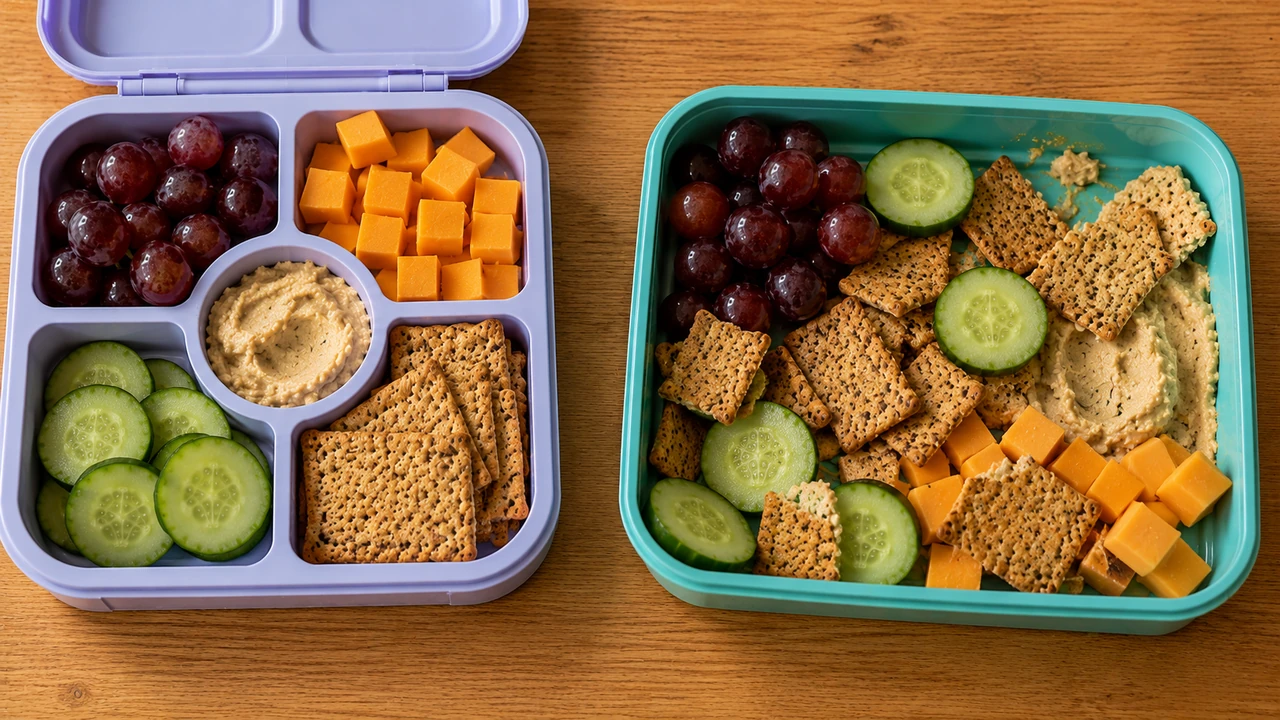
For a child who is bothered by foods touching, compartment geometry can be a meaningful buying criterion rather than a cosmetic feature. A shallow divider and a gasketed, individually sealed compartment do not behave the same way once a box is tipped in a backpack.
If food contact is a known refusal trigger, testing genuine physical separation before changing the foods can remove one variable from the lunch. It will not solve every picky-eating problem, but it gives you a cleaner way to tell whether food migration is part of what is going wrong.
That is where gasketed compartments differ from trays that mainly organize food while upright. If separation is the buying reason, look closely at how the lid meets each compartment rather than assuming every bento design seals the same way.
If lunches are still coming home untouched after the container issue is addressed, the easy school lunch ideas for picky eaters guide looks at the food and routine side separately.
What “BPA-Free” Actually Means
“BPA-free” answers one narrow materials question: the product is marketed without bisphenol A. It does not make every other food-contact question disappear, and I would not treat the badge as a blanket safety certification.
The practical distinction in this roundup is simpler. PlanetBox uses stainless steel for the main food-contact tray. Yumbox, Bentgo, and EasyLunchboxes use plastic components, while several designs also use silicone seals or gaskets. Check the exact linked variant and the manufacturer’s current materials and care instructions because product lines can change.
If minimizing plastic food contact is your priority, stainless steel is the straightforward route. If you use plastic containers, the American Academy of Pediatrics advises hand-washing plastic food containers when possible and avoiding heating food in plastic. That is a more useful habit than treating a “BPA-free” badge as the whole decision.
For this article, materials are one buying factor alongside seal design, cleaning, weight, durability, and how the lunchbox will actually be used. If you have a specific health concern about food-contact materials, ask your child’s clinician rather than relying on a product label or roundup.
Comparison at a Glance
Here’s every kids lunch box from this review at a glance — use case, leak rating, material, and price in one place.
| Container | Best for | Leak resistant? | Insulation? | Material | Ages | Price (approx.) |
|---|---|---|---|---|---|---|
| Yumbox Original | Wet/dry separation in a smaller bento | Yes — manufacturer-rated leak-resistant between sections | No — needs bag + ice pack | PP plastic + silicone seal | Preschool–8 | ~$33 direct |
| Bentgo Kids Prints | Compact bento for younger kids | Yes — manufacturer-rated leak-proof | No — needs bag + ice pack | PP plastic | 3–7 | Check current price |
| OmieBox | Hot food + cold food in one container | Thermos for wet foods; follow current side-compartment guidance | Yes — thermos section only | PP plastic + stainless thermos | Check fit/independence | Check current price |
| PlanetBox Rover | Stainless main tray | No — use dipping containers for wet foods | No — needs bag + ice pack | Stainless tray/lid + silicone Dipper top | 3+ per manufacturer warning | Check current price |
| EasyLunchboxes | Budget, older kids, dry foods | No | No — needs bag + ice pack | PP plastic | 5–12 | ~$15–20 (4-pack) |
Honest note on price: Price is not a proxy for lunch success. The expensive options here cost more because they solve different hardware problems — hot-food insulation, stainless construction, or a particular sealing system. Compare the exact current price against the failure mode you need to fix, then buy one and test the workflow before multiplying the set.
Find Your Best Lunchbox
Answer two quick questions to find the lunchbox that fits your child.
Choose a challenge and age range to see your best match.
Kids Lunch Box FAQ
Depends on what broke with the cheaper one. If leaking was the problem — yes, a $35 Yumbox with a real compartment seal is worth it, because the $15 soft-sided bag with a tray insert won’t fix leaking; the seal design is what changes. If your problem was temperature (food wasn’t cold enough by lunchtime) — the container isn’t the fix; an ice pack strategy is. A $35 Bentgo won’t keep food colder than a $15 bento if both use the same soft bag and the same ice pack placement. Match the upgrade to the actual failure.
For a kindergartner, I would start with independence and fit rather than a universal capacity target. Bentgo Kids is manufacturer-sized for ages 3–7 and holds 2.4 cups; Yumbox Original is aimed at preschool through about age 8 and uses five half-cup sections plus a dip well. Practice both the latch and the full packed weight at home, then choose the layout that matches the foods you actually send.
For perishable lunches, USDA guidance recommends an insulated lunch bag with at least two cold sources. Put the cold sources around the perishable food — for example, one above and one below. A frozen water bottle can count as one source when it is paired with another frozen pack.
Different problems. Bento containers organize and separate food — they’re the right choice when your problem is food mixing, portions, or a picky eater who won’t eat if foods touch. Insulated bags regulate temperature — they’re the right choice when your problem is food arriving warm or cold packs not lasting. Most families need both: a bento container inside a soft insulated bag. Buying one to replace the other usually leaves one problem unsolved.
Follow the exact model’s current care instructions. Yumbox Original’s removable tray is top-rack dishwasher safe while the outer shell should be hand-washed. Bentgo Kids’ removable tray is top-rack dishwasher safe while hand-washing the outer shell is recommended. OmieLife says hand washing is best for the current OmieBox and the thermos must be hand-washed. PlanetBox Rover is dishwasher safe; remove the magnets before washing and dry the box thoroughly. For EasyLunchboxes, check the current package or manufacturer instructions for the exact set you buy.
Start by identifying the failure mode. If foods touching is a known trigger, test a container that keeps compartments genuinely separate. If the issue is unfamiliar foods, texture, or a lunch that feels unpredictable, the school lunch ideas for picky eaters guide covers the food-and-routine side without assuming the container is the whole answer.
PlanetBox Rover has the simplest durability case in this group because the main tray is stainless steel rather than molded plastic. For plastic options, durability depends heavily on the latches, lid, and gasket staying functional. I would not promise a five-year lifespan or a six-to-eight-month failure date from anecdotal owner reports; inspect the exact wear points and check whether replacement parts are available.
Final Thoughts
The right kids lunch box comes down to one question: which hardware problem are you actually trying to solve? Yumbox Original for a smaller separation-first bento. Bentgo Kids for a compact 2.4-cup five-section option with a manufacturer-rated leak-proof lid. OmieBox when a built-in hot-food thermos is the point. PlanetBox Rover when a stainless main tray is the priority. EasyLunchboxes when you want a low-cost, simple baseline or backup.
If you’ve got the container sorted and need ideas for what to fill it with, my healthy lunchbox guide covers the 4-slot framework, picky-eater strategies, and a faster way to build a repeatable school-lunch rotation. And for more on the snack side of the equation, best organic snacks covers what’s worth buying and what’s just clever packaging.
The materials and BPA information in this post is based on current published guidance and is meant for general awareness — not as regulatory or medical advice. Product formulations, safety classifications, and FDA guidance can change. If you have specific health concerns about food contact materials, consult your pediatrician.