
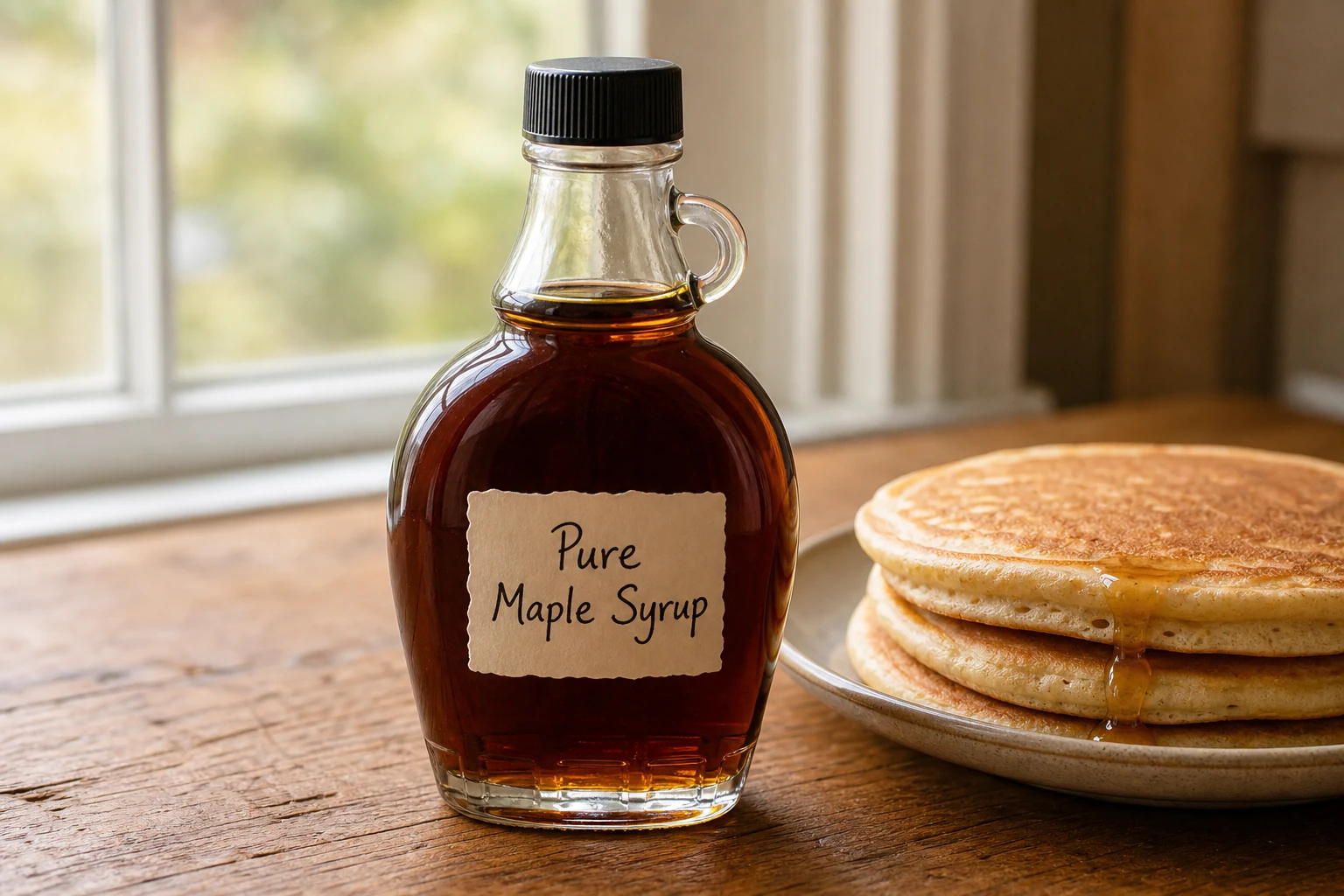
The $12 bottle gets sold as the healthier choice. I wanted to know whether it actually earns the premium: is maple syrup meaningfully better than white sugar, or mostly a more expensive health halo?
So I looked it up — specifically whether maple syrup is healthier than sugar for kids, and what the research actually shows versus the marketing version. I read through the research on natural sweeteners for kids — the current dietary guidelines, pediatric safety guidance for honey and stevia, and what the nutrition literature actually shows. What I found was more nuanced than most of what you’ll read on this topic — not “maple syrup is amazing” and not “it’s all the same.”
This page contains affiliate links. As an Amazon Associate, I earn from qualifying purchases at no extra cost to you. Affiliate Disclosure.
Table of Contents
- Quick Comparison Table
- Is Maple Syrup Healthier Than Sugar?
- Is Honey Safe for Kids?
- Is Stevia Safe for Kids?
- Agave and Coconut Sugar
- Which Sweetener to Use When
- Find the Right Sweetener for Your Kid
- How I Think About These Sweeteners in Practice
- Frequently Asked Questions
This post is about whether maple syrup specifically is a better choice — not the full picture on daily sugar limits. For that, my guide on how much sugar kids should have per day covers where added sugar hides and what the daily numbers actually mean.
Quick Comparison: Maple Syrup vs Sugar vs Honey vs Stevia
| Sweetener | Glycemic Index | Calories (1 tsp) | Notable Nutrients | Child Safety | Best Use |
|---|---|---|---|---|---|
| White sugar | ~65 | 16 | None | ✅ Ages 2+ (within limits) | Baking baseline |
| Maple syrup (pure) | ~54 | 17 | Manganese, zinc, polyphenols | ✅ Ages 1+ (within limits) | Toppings, oatmeal, baking |
| Honey (raw) | ~50–58 | 21 | Antioxidants (raw only) | ⚠️ NEVER under 12 months — ✅ Ages 1+ | Drinks, yogurt, older kids |
| Stevia extract | 0 | 0 | None | ⚠️ Probably fine ages 2+ — limited data under 2 | Drinks, yogurt — not ideal for baking |
| Agave nectar | ~15–30 | 20 | None meaningful | ⚠️ Not recommended — very high fructose | Worth avoiding despite low GI |
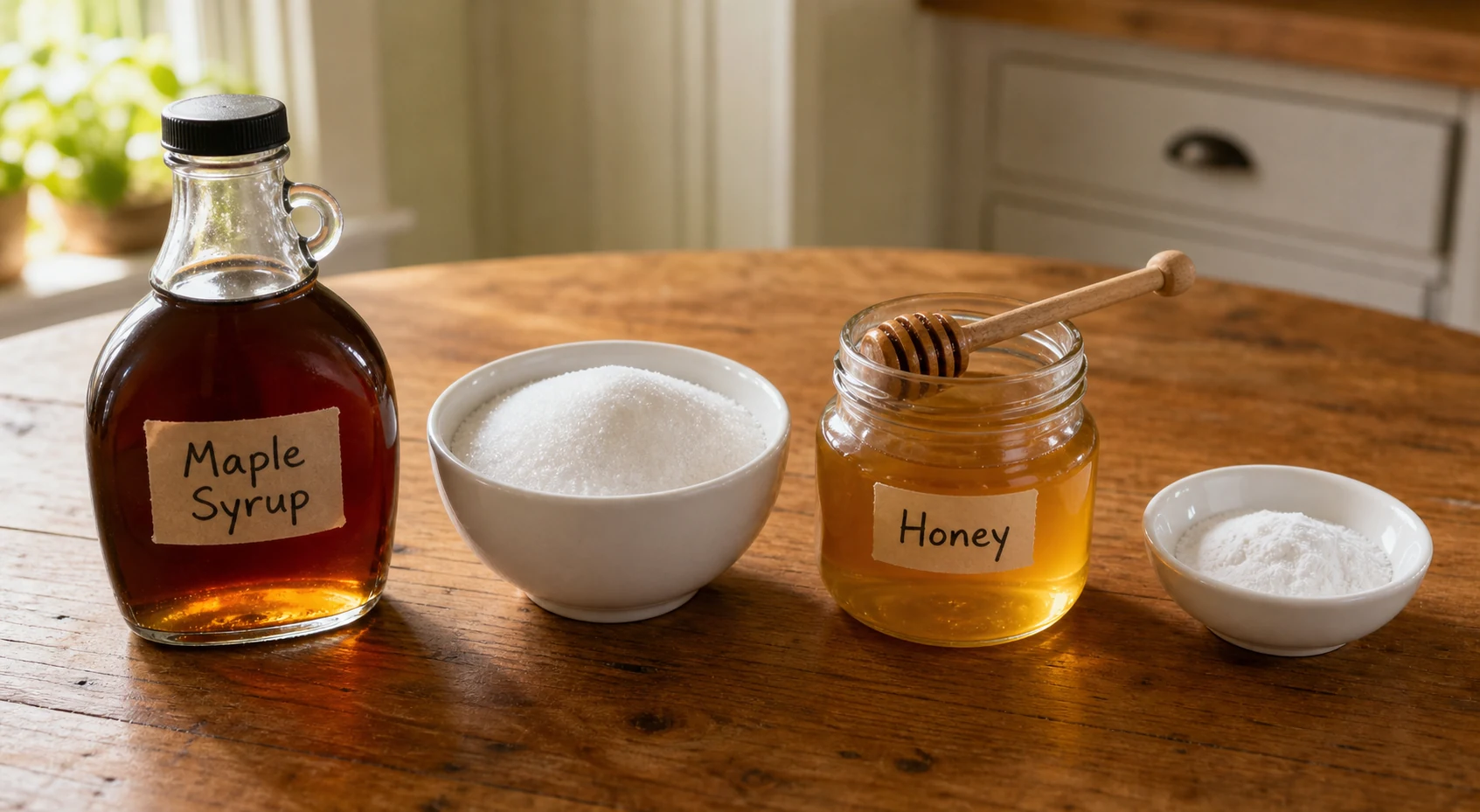
Is Maple Syrup Healthier Than Sugar? What the Switch Actually Gives You
“Is maple syrup healthier than sugar?” The standard online answer is they’re both mostly sugar, so the switch doesn’t really matter. That’s technically accurate and also incomplete. Here’s what the research actually shows.
The glycemic index difference is real
Published glycemic-index estimates often place pure maple syrup somewhat below sucrose, but GI varies by product and test conditions and is not a strong reason by itself to choose one sweetener for a child. In ordinary serving sizes, total added sugar and frequency matter much more than an 11-point GI difference.
The trace minerals are real — in context
Maple syrup contains manganese, small amounts of zinc, and polyphenols. Those differences are real, but serving size matters: a teaspoon provides only a fraction of what a tablespoon does. I would treat the micronutrients as a small distinction between sweeteners, not a reason to use more maple syrup.
Where this gets overstated: some articles imply you’re meaningfully supplementing your child’s mineral intake with maple syrup. You’re not getting there on maple syrup alone, and I wouldn’t use it as a reason to use more of it. But the minerals are there, and white sugar isn’t even in the conversation on this front.
The flavor concentration angle — this is the part most articles miss
Maple syrup’s strong flavor can make a small measured amount feel like enough in toppings or oatmeal. In baking, recipes often use a smaller volume of maple syrup than granulated sugar and adjust other liquids, but that is a recipe change — not evidence that people automatically consume less sugar.
The practical advantage is control: when maple syrup is used as a measured topping, you can decide exactly how much goes on the food. The per-gram sugar difference is small, so the amount used matters more than the fact that the bottle says maple.
What the Current Dietary Guidelines Say
The 2025–2030 Dietary Guidelines for Americans are stricter than the previous edition: they recommend no added sugar for children younger than 11. For adolescents and adults, no amount is considered part of a healthy diet and one meal should contain no more than 10g of added sugar. The AHA’s 25g/day ceiling for ages 2–18 remains a useful separate benchmark.
This applies to maple syrup the same as to white sugar. A tablespoon of maple syrup contains about 12 grams of sugar. Keep the tablespoon in mind when you’re reaching for the bottle at breakfast.
One area where maple syrup offers no advantage over regular sugar: dental health. Both break down into sugars that feed cavity-causing bacteria the same way. Rinsing after sweet foods, or avoiding sweet toppings right before bed, matters regardless of which sweetener you use.
Is Honey Safe for Kids?
Is honey safe for kids? Yes, after 12 months. It’s one of the better natural sweetener options for children over 1, with one firm safety rule you need to know first.
This is a firm American Academy of Pediatrics (AAP) guideline. Honey can contain Clostridium botulinum spores, which produce a toxin that causes infant botulism. Babies’ digestive systems aren’t developed enough to neutralize it. Infants can become seriously, life-threateningly ill. This applies to all honey — raw, pasteurized, organic, local, in baked goods, in tea, in everything.
For kids over 12 months, honey is a good option. Raw honey — unfiltered and unheated — contains modest antioxidants and has a glycemic index similar to white sugar (around 50–58, depending on floral source). It’s not dramatically healthier on the numbers alone, but many kids respond well to the flavor, and a small amount in yogurt or oatmeal is a reasonable choice.
One note on raw vs. processed: the clear, squeezable honey on most grocery shelves has been heated and filtered in ways that remove most of the antioxidants. If you’re buying honey specifically for its nutritional properties, raw honey delivers more. For sweetening oatmeal or a cup of herbal tea for an older child, the difference probably isn’t significant — but it’s worth knowing.
Is Stevia Safe for Kids?
Most articles wave stevia through with one word — GRAS-approved, therefore fine. The pediatric picture is thinner than that, and here’s where the uncertainty actually sits.
What “GRAS” means — and what it doesn’t cover
The FDA has granted GRAS (Generally Recognized as Safe) status to high-purity stevia leaf extracts — specifically steviol glycosides, sometimes labeled as rebiana. This is the refined compound in commercial stevia products: Stevia In The Raw, Truvia, Pure Via, and the “stevia” listed in most packaged kids’ snack bars and yogurts.
Important distinction most articles skip: whole-leaf stevia and crude stevia extract are not covered by GRAS status. They’re not approved for use as food additives in the US. When you see “stevia” on a label, it’s the refined extract — not the whole leaf. The regulatory status is specific to the refined compound, not stevia in general.
The pediatric data gap — be honest about this
Here’s what I didn’t find clearly stated anywhere else: the GRAS determination for steviol glycosides is based primarily on research in adults. The pediatric-specific data is limited. Animal studies at very high doses raised some questions, but the doses involved were far beyond what any child could consume through food.
The Acceptable Daily Intake (ADI) for steviol glycosides is set at 4 mg per kilogram of body weight per day. For a 20 kg (44 lb) child, that’s 80 mg per day. Most commercial food products contain well below that threshold — even if a child eats several stevia-sweetened items. But if your child is eating multiple stevia-sweetened products across a day, it’s worth being aware of the cumulative amount.
My honest read: small amounts of refined stevia extract in food are probably fine for children ages 2 and up based on current evidence. For children under 2, I’d personally hold off — not because there’s evidence of harm, but because there’s also no strong evidence of safety in very young children specifically. That gap is worth acknowledging rather than waving past with “it’s GRAS.”
What About Agave and Coconut Sugar?
Agave: worth avoiding
Agave nectar has a low glycemic index — around 15 to 30 — which is why it landed in so many “healthy” kitchens over the past decade. The problem: that low GI comes from a very high fructose content, typically 70 to 90%. Fructose is metabolized primarily in the liver and doesn’t trigger satiety signals the way glucose does. At high intake levels, it’s associated with increased liver fat accumulation and poor metabolic outcomes in children. Despite the health-food image, most pediatric nutritionists now put agave near the bottom of the sweetener list — not the top. I stopped buying it after I actually looked into it.
Coconut sugar: marginally better, not magical
Coconut sugar has a glycemic index of roughly 35 to 54 and contains small amounts of inulin, a fiber that may slightly slow glucose absorption. It’s modestly better than white sugar on those numbers. The research in children specifically is limited, and the premium price doesn’t feel justified based on the evidence. Fine occasionally; not worth treating as a health food or using more of it because it sounds better.
Once you know maple syrup, honey, agave, and coconut sugar all count as added sugar, the next practical question is where those sweeteners show up in packaged foods. The checklist below turns that into a fast label check.
Spot Added Sweeteners With the Hidden Sugar Checklist
Inside: the 30-second label check, current label examples, common added-sugar names, practical swaps, and fridge-and-shop checklists.
Get the checklist and practical kids’ nutrition tips. Unsubscribe anytime.
Something went wrong. Please check your email address and try again.
Which Sweetener to Use When: A Quick Decision Table
| Use Case | Best Option | Why |
|---|---|---|
| Pancake or waffle topping | Pure maple syrup | Lower GI, real minerals, and kids naturally use less by volume |
| Oatmeal topping | Maple syrup or raw honey (ages 1+) | Both work well; raw honey adds modest antioxidants |
| Plain yogurt sweetener | Maple syrup (small drizzle) or raw honey (ages 1+) | Keeps sugar far lower than pre-sweetened yogurts |
| Baking (muffins, quick breads) | Maple syrup (¾ cup per 1 cup sugar) or white sugar | Maple adds moisture + lower GI; white sugar = simpler, neutral texture |
| Drinks or smoothies | Small amount maple syrup, or stevia (ages 2+) if zero sugar needed | Maple dissolves well; stevia is zero sugar when that matters |
| For babies under 12 months | No honey. Tiny amounts of maple syrup occasionally only. | Current federal guidance recommends no added sugar for children younger than 11; honey = firm no under 12 months |
Use the interactive tool below to get a personalized recommendation based on your child’s age and what you’re making.
Which Sweetener Is Right for Your Kid?
Select your child’s age and what you’re making — you’ll get a specific recommendation based on current pediatric guidance.
Step 1: How old is your child?
With those guidelines in mind, here’s how I would turn the comparison into actual serving decisions.
How I Think About These Sweeteners in Practice
The practical version is simple: use measured amounts of caloric sweeteners, keep honey completely off the menu under 12 months, and treat stevia as an optional tool rather than a default for children.
If I wanted a stronger-flavored maple syrup for measured toppings, Coombs Family Farms Grade A Dark is the kind of product I’d compare. A teaspoon of pure maple syrup contributes roughly 4–5g of sugar — very different from an unmeasured pour.
My measured-topping pick: Coombs Family Farms Grade A Dark — a teaspoon is roughly 4–5g of sugar.
For yogurt, one practical swap is plain yogurt with a small measured amount of maple syrup or fruit. That gives you direct control over added sugar instead of accepting the amount built into a flavored cup.
The honey rule deserves to stay blunt because it is a safety issue, not a sweetener preference: do not give honey to infants under 12 months because of infant-botulism risk. It is an easy rule to miss in the noise of new-parent nutrition advice, which is exactly why it belongs near the practical section rather than buried in a footnote.
Given the thinner pediatric-specific evidence and current pediatric advice to avoid making sweetened drinks the default, I wouldn’t make stevia my first-choice sweetener for children. That is an editorial preference, not a claim that approved stevia products are inherently unsafe.
Frequently Asked Questions
Yes. Despite being natural and less processed than white sugar, maple syrup counts as added sugar under current dietary guidelines and on nutrition labels. The AHA’s daily limit for kids (under 25 grams of added sugar per day for ages 2–18) — applies to maple syrup the same as to white sugar, honey, and any other sweetener you add to food.
Honey is safe from the infant-botulism standpoint after 12 months, but both honey and maple syrup still count as added sugar. The 2025–2030 Dietary Guidelines recommend no added sugar for children younger than 11, so the guideline-aligned default for toddlers is unsweetened food with fruit used for sweetness when helpful.
Marginally. Pure maple syrup GI is around 54. Honey ranges from approximately 50 to 58 depending on type — so they’re roughly comparable. Both are meaningfully lower than white sugar (GI ~65). For practical purposes, choosing between maple syrup and honey comes down to flavor preference and use case more than GI difference.
Agave’s low GI comes from its very high fructose content — typically 70 to 90%. Fructose is metabolized primarily in the liver, doesn’t trigger satiety the same way glucose does, and in excess is associated with worse metabolic outcomes in children than the GI number suggests. Most pediatric nutritionists now consider it one of the less ideal sweetener choices for kids, despite the low GI on the label.
The American Heart Association uses a 25g/day added-sugar ceiling for ages 2–18. The 2025–2030 Dietary Guidelines are stricter: no added sugar for children younger than 11; for adolescents and adults, no amount is considered part of a healthy diet and a meal should contain no more than 10g. Maple syrup, honey, and table sugar all count as added sugar.
Yes — pure maple syrup is what all of the above applies to. Many “pancake syrups” on store shelves are made primarily from high-fructose corn syrup with maple flavoring. Check the label: the first (and ideally only) ingredient should be maple syrup or pure maple syrup. Grade A Light, Amber, or Dark refers to flavor intensity, not quality. All grades have similar nutritional profiles.
Yes, modestly. Maple syrup’s glycemic index (~54) is about 11 points lower than white sugar’s (~65), so it causes a slightly slower rise in blood glucose — not dramatic, but real. The bigger factor in practice: because maple syrup is sweeter by volume, most people naturally use less of it, which compounds the advantage beyond what the GI number alone suggests.
Final Thoughts
Is maple syrup healthier than sugar for kids? Yes — modestly, and in ways that compound in practice. A lower GI, genuine trace minerals, and the practical reality that most people use less of it by volume. It’s worth the premium, but it’s not a free pass on daily sugar limits.
The most important thing I took away from this research: the sweetener you choose matters less than the total amount and the age-specific guidance. Current federal guidance recommends no added sugar for children younger than 11; avoid honey under 12 months, and be cautious about making any sweetened drink or food a routine default. One more thing worth saying plainly: all sweeteners — natural or not — feed the bacteria that cause tooth decay. Maple syrup, honey, coconut sugar: they’re all in the same category as white sugar when it comes to dental health. Everything else is a smaller conversation.
If you’re working through the rest of the Sugar & Kids series, two posts tie directly into this one: how to reduce sugar in your child’s diet for the practical day-to-day framework, and how to read nutrition labels with your kids for the 30-second method that makes spotting all of this automatic at the store.
A note on this information: I read nutrition research and pediatric guidance carefully, but I’m not a medical professional. Pediatric nutrition guidance evolves. Always check with your child’s pediatrician before making health decisions — especially for infants and toddlers. The honey-under-12-months rule, in particular, is a firm safety guideline, not a preference.